
New Spanish Government, along with an alliance with separatists, will Madrid change its course towards Pristina?
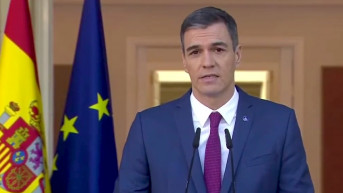
Pedro Sanchez, who will lead the Spanish Government for the third time since 2018, secured a new mandate only after reaching agreements with Catalan, Galician, and Basque nationalist parties. Such political maneuvering raised the question of whether official Madrid, which does not recognize Kosovo's independence, will change or perhaps adopt a "softer" stance on Kosovo in the coming period. Analysts familiar with Spanish politics, speaking to Kosovo Online, believe that this is unlikely.
To form a government, Sanchez, among other things, requested in Brussels that, in addition to the Spanish language, Catalan, Basque, and Galician become official languages of the European Union. He promised to grant amnesty to politicians and activists involved in the failed attempt to secede Catalonia from Spain in 2017. Additionally, he pledged a 20% reduction in the debt owed to the state fund for the nationalist bloc in Galicia, which advocates for the region's independence.
Will the reset of the ruling Socialists' domestic policy also reflect on foreign policy, where they have been consistent on Kosovo so far? Spain does not recognize Kosovo passports, and in April of this year, it voted against initiating the procedure for Kosovo's accession to the Council of Europe. In 2018, at the Interpol General Assembly, Spain opposed Kosovo's admission, as it did in 2015 during the vote on its membership at the UNESCO General Conference.
Political scientist, Hispanist, and researcher at the Institute for European Studies in Belgrade, Rajko Petrovic, believes that, for now, despite the support of separatist parties for the new Spanish Government, it is not possible for Spain, which does not recognize Kosovo, to change its stance.
"Spanish policy regarding the independence of so-called Kosovo is quite simple and consists of Spain not recognizing unilateral secessions, i.e., unilaterally declared independence", Petrovic says for Kosovo Online.
In that sense, he notes that the existing political leadership in Spain will not change the country's stance because, as he points out, the Catalan issue remains important to them.
A change in position, as he states, could be considered if there were to be a referendum on the independence of Catalonia, supported by the state of Spain. He adds that this is mentioned as one of the possible options in the coming period if the ruling socialists want to maintain the support of Catalan and even Basque separatists.
"In that case, it could possibly be considered for Spain to recognize independent Kosovo. However, I think such a referendum in Spain will not happen, and even if it did, if it wants to remain consistent, Spain would have to support Kosovo as a part of Serbia because that referendum would be conducted solely with state support, on a bilateral level rather than a unilateral one", he notes.
Petrovic believes that official Madrid will not vote for Kosovo to become a member of international organizations and points out that Spain has fairly consistently adhered to this, even in the case of some sports activities.
As he emphasizes, if Spain's policy toward Catalonia and the Basque Country changes, which still has little chance, then we might eventually expect something similar, where Spain votes for Kosovo's admission to international organizations.
However, he points out that neither Catalonia nor the Basque Country are the only problems Spain faces.
"Spain is a complex country with different languages, identities, and the like. To avoid what they call 'Balkanization', or the scenario of the former Yugoslavia's breakup, Spain must remain consistent with fundamental principles", Petrovic concludes.
According to Vladimir Stankovic, a long-time correspondent for Serbian media in Spain, Spain is not likely to change its policy towards Kosovo.
"The new Spanish Government, led by Prime Minister Pedro Sanchez, was elected with a narrow majority, requiring 176 votes in the 350-member parliament, and it received 179. The key was the support of nationalist parties from Catalonia, the Basque Country, and Galicia. Nothing unexpected happened, and, as in any political deal, a pact was made, so to speak. Catalan nationalists conditioned their support on amnesty for political leaders who ended up in prison after the attempt to secede and the illegal referendum. Pedro Sanchez, at the end of October, before he was elected, announced the possibility of some form of amnesty, some form of annulment of sentences. We'll see what comes of it", Stankovic explains for Kosovo Online.
He says that, of course, what is most interesting for Serbia is the attitude of the newly elected Spanish Government toward the Kosovo issue.
"What is important and interesting in all these negotiations is that, as far as I could see, the word Kosovo was not even mentioned, so I don't believe there will be any significant change in Spanish policy. Spain will remain one of the five EU countries that do not recognize Kosovo, and this is the policy pursued by previous Prime Ministers Zapatero and Rajoy. Pedro Sanchez continues that line, and what he has agreed to is, so to speak, some internal trade. As in any policy, something has to be conceded to gain something. He received support for a new mandate, and that is the current situation", Stankovic concludes.


0 comments