
Open Balkan achievements - A finished story or a prelude to the future
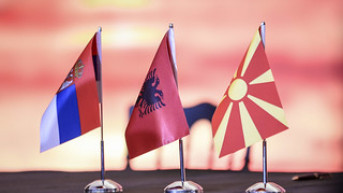
Projects and agreements implemented within the Open Balkan framework, from freedom of movement, recognition of phytosanitary permits, diplomas, and educational qualifications, to toll tag systems, wine fairs, and joint tourist offerings, will continue to thrive in the future regardless of the fate of the initiative itself, according to experts familiar with the economic conditions of the signatory countries - Serbia, Albania, and North Macedonia.
However, their views on the further development of the Open Balkan differ. While experts from Serbia and North Macedonia believe that the initiative will progress and continue to expand to other countries in the region, representatives from Albania believe that the Open Balkan was a path to the Berlin Process and that it is a "finished story".
Opinions about the future of the Open Balkan also vary among political representatives in the region. Albanian Prime Minister Edi Rama stated in June of this year that the Open Balkan had "completed its mission" and that the region should now focus on the Berlin Process. However, experts assess that political representatives of the Western Balkan and the EU have softened their rhetoric regarding the initiative. This is evidenced by the statements of the President of Montenegro, Jakov Milatovic, at the wine fair in Belgrade, where he noted that the Open Balkan had brought about positive developments and that the focus should be on processes that economically strengthen the region.
Economist Mihailo Gajic believes that the Open Balkan Initiative would cease to exist only if the signatory countries, Serbia, Albania, and North Macedonia, decided to abolish all the laws that had been adopted through joint agreements within the initiative. However, he says that this is unlikely to happen considering all the benefits that these agreements bring to the citizens and the economy of the region.
"'Open Balkan' is actually a term for closer cooperation among these three members and, of course, it is open to other countries in the region if they want to join. It is actually a series of agreements among these countries. In other words, 'Open Balkan' cannot be abolished because it, as an institution, does not de facto exist. These are individual sectoral agreements created between member countries. Therefore, 'Open Balkan' would cease to exist only if the countries decide to repeal the laws through which these agreements were adopted in parliaments and say, 'OK, this no longer applies', but I don't see that happening", Gajic said for Kosovo Online.
In his assessment, "Open Balkan" not only is not a "finished project", as some in the region have characterized it but, on the contrary, it has a tendency to expand in terms of new agreements and the accession of new members.
"There is a significant political impetus to maintain the current situation, if not to further improve it with new agreements. We will see what will happen with political changes in Montenegro. There is no serious and strong opposition to Montenegro's membership in 'Open Balkan' anymore, and there are even conciliatory statements in certain political circles within Bosnia and Herzegovina. So, there is no longer a great fear, as it has been realized that this is primarily an economic, not a political process", Gajic said.
Our interlocutor states that there are plans to network the toll collection platform, which has already been implemented in Serbia and North Macedonia. Additionally, work is currently underway to create individual border crossings that would be exclusively for the citizens of the Open Balkan.
"When you look at the economy, from large foreign associations such as representatives of German, American, and other chambers of commerce operating here, to the chambers of commerce of the member states themselves, no one opposes integration processes, and everyone sees the great opportunity created by a larger open market in the Western Balkans compared to small national economies. So, the main fears of the Open Balkan are actually of a political nature, not economic", Gajic concludes.
Discussing the achievements of the Open Balkan, he considers one of the most significant agreements among the three states to be the recognition of phytosanitary certificates.
"In other words, now food between the three signatory countries can cross borders without unnecessary delays and stops at the borders, without the need for obtaining different sets of identical individual papers from laboratories in Serbia, North Macedonia, and Albania. It has been agreed that this documentation will be recognized, which actually speeds up and reduces the cost of trade in agricultural and food products between these three countries", Gajic emphasized.
Commenting on claims that the Open Balkan has fulfilled its mission and that it is now a completed project, Ljupco Janevski, the Director of the Agency for Promotion and Support of Tourism of North Macedonia, warns that blocking the initiative would mean that the countries in the region would have to start "from scratch" again.
"All three countries of the Open Balkan in 2023 have growth in the tourism industry - Albania, which is in the top five in the world, Serbia, which is among the first in Europe in terms of the growth of the tourism economy, and Macedonia, as a country that will have significant, or excellent, growth in foreign exchange inflows. This shows that we are a destination for four seasons, competitive enough with other destinations, but also competitive enough among the three destinations", Janevski said for Kosovo Online.
Janevski believes that political and economic issues should be separated, and the initiative should continue its path of further development. According to him, tourism has benefited the most from joint appearances and markets, so this trend should continue in the future.
In the view of our interlocutor, the Berlin Process and the Open Balkan are "one and the same", and the Open Balkan should be a catalyst and a successful example of how to develop the Berlin Process from an economic standpoint. It would be easiest, he adds, to abandon everything and withdraw from the Open Balkan, but that would mean that individual countries would have to start from scratch.
"In my opinion, the Open Balkan should be maintained and expanded. Actually, what is expected from the Open Balkan are visible results. The Open Balkan should liberate itself from politics and focus on the economy. It should focus on enabling better business conditions for the private sector, but also networking to be competitive enough with other markets", he said.
He points out that a large number of investors have come to the region in the last four years since the initiative was founded, and their interest is not waning. It would be very thoughtless to interrupt that process.
"I see the Open Balkan as a great opportunity for investors, mostly foreign because we are no longer talking about two million people, but about ten million people. We are talking about a market that will be even more attractive, and from a tourism perspective, attracting more foreign brands in the hospitality sector, which will increasingly enable a larger number of foreign tourists and networking the destination with other destinations. A large number of projects and investors are already in our country and within the Open Balkan. I believe that in the next few years, significant funds will enter the tourism and hospitality sector", Janevski assesses.
Bardhi Sejdarasi, the Chief Editor of the economic program at Radio Television Albania and the Director of the Association ProExport Albania, and an analyst believes that all agreements and projects realized by Serbia, Albania, and North Macedonia within the Open Balkan will continue to exist and further develop through the Berlin Process.
"Today, we move more freely, only with documents such as ID cards. This is a positive aspect. It shows that the Open Balkan was a good and right path, which will continue with the Berlin Process, which is an irreversible process until the integration of the region into the EU is achieved. All Open Balkan agreements are valid agreements and should continue. Every government needs to say this. What was signed at the table, what the governments approved, must be implemented without interruption and delay, both by Albania and other countries that were part of the Open Balkan", Sejdarasi said for Kosovo Online.
He agrees with the official stance of Albanian Prime Minister Edi Rama that the Open Balkan has completed its mission, and it is time for the region to fully dedicate itself to integration into the European market through the Berlin Process. According to him, the Open Balkan was a kind of prelude and preparation for the Berlin Process, from which Albania, North Macedonia, and Serbia benefited significantly.
"The Open Balkan is an addition or aid to the Berlin Process, a long-established process since the time of Chancellor Merkel, which continues to this day. Of course, the countries that had high expectations from the Berlin Process could not wait for the bureaucracy of Brussels. They took the initiative among themselves in what was called the Open Balkan, with the good intention of achieving the four main principles of free movement in the Western Balkans, to prepare for the Berlin Process. Despite the fact that six countries in the region were not covered by this process, three still managed to benefit, and this is evident from the signed agreements", Sejdarasi emphasized.
He reminded that in parallel with the Open Balkan, the Union of Chambers of Commerce of the Balkans had been launched, including all six economies of the Western Balkans, led by the President of the Chamber of Commerce of Kosovo. He emphasized that every initiative was very significant for the economy and businessmen in the region.
"Despite the idea that the Open Balkan Initiative has come to an end, I think that states will continue to cooperate, now within the framework of the Berlin Process, because they want to achieve all the standards that this process requires. It is rightfully questioned what benefits we have had from the Open Balkan. I believe that the signed agreements, which are functional, continue to be implemented regardless of whether we call it the Open Balkan or the Berlin Process, because, in the end, the goal and essence are the same", Sejdarasi concluded.

0 comments