
Open Balkan between the desires of the economy and political realities; can this initiative revive?
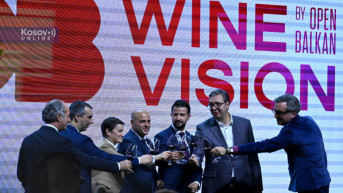
The postponement, at the last minute, of the meeting in Skopje where the implementation of free access to the labor markets of the participating countries – Serbia, North Macedonia, and Albania – was supposed to be marked within the framework of the Open Balkan initiative, because "not all technical conditions for the implementation of this measure have been met", has once again opened the debate on whether this initiative is a concluded matter or if there is a chance for it to be revived. Interlocutors of Kosovo Online, economic experts from Belgrade, Skopje, Tirana, and Pristina, agree that Open Balkan has brought numerous benefits to the economies and citizens of the three states, still, they have different views on the future of this regional initiative.
The Open Balkan Summit was supposed to be held ahead of the gathering of regional leaders in Skopje, in connection with the EU's Western Balkans Growth Plan worth six billion euros, where, as announced, Assistant US Secretary of State for European and Eurasian Affairs James O'Brien will also be present alongside European officials.
This was met with considerable surprise, considering that the closure of the Open Balkan has been predicted for months, and there were interpretations that O'Brien's presence was particularly indicative, suggesting Washington's support for this initiative.
Representatives of regional organizations, the Council for Regional Cooperation, CEFTA, the Chamber Investment Forum of the Western Balkans 6, USAID, as well as several international financial institutions, have also been invited to Skopje.
However, the announced signing of important protocols on free access to labor markets between the countries of the Open Balkan has been postponed. The Government of North Macedonia explained that this delay is due to the need to "meet all technical conditions for the implementation of this measure", emphasizing that "at this moment, the protocols related to the conditions for free access to markets, as well as electronic identification schemes, are fully aligned".
"We take into consideration the citizens' interest in this measure, which is one of the numerous measures and projects arising from the 'Open Balkan' initiative, from which citizens derive real benefits", the statement adds.
Numerous projects and agreements have been implemented within the Open Balkan framework so far, covering freedom of movement, recognition of phytosanitary permits, diplomas and educational qualifications, toll tag systems, wine fairs, and joint tourist offerings. These initiatives are expected to continue to exist in the future, regardless of the fate of the initiative.
Albanian Prime Minister Edi Rama has brought the most pessimism regarding the survival of the Open Balkan, stating on several occasions that this initiative has "done its job" and fulfilled its mission. However, at the end of last year, he mentioned that he had never said that he had "closed the Open Balkan".
The Head of the Center for Regional Cooperation of the Chamber of Commerce of Serbia, Aleksandar Radovanovic, believes that the Open Balkan initiative is still open. Speaking to Kosovo Online, he pointed out that during the Western Balkans leaders' summit on the EU Growth Plan for the region, held on Monday in Skopje, representatives of the states and economies of the region would discuss accession to the common EU market and the formation of a unified regional market. According to Radovanovic, the Open Balkan regional initiative is striving for this and contributes the most to this goal.
Radovanovic explains that protocols on free access to the labor market will enable the mobility of the workforce from the three member countries of the Open Balkan. The issuance of the so-called 'Open Balkan number' is planned, based on which one can apply for a residence and work permit simultaneously. This will greatly simplify the application process for residence and work permits. The application will be done electronically through e-government, saving time and money for citizens, as they will be able to apply more easily for jobs in all three countries.
He emphasizes that discussions in Skopje will revolve around accession to the common EU market.
"This will be one of the topics, and another topic will be the establishment of a common regional market, i.e., the challenges we face in terms of integration into a single market", he stated.
He assessed that the Open Balkan initiative can lead to the realization of a common regional market most quickly, which is why he believes it has a tendency to further expand by welcoming new members.
According to him, Montenegro and Bosnia and Herzegovina have already shown interest in joining the initiative.
"From the very beginning, the Open Balkan initiative has been open to all members of our region; the invitation to join is open to everyone. There has been some interest regarding Montenegro. We believe that, in perhaps some time, Montenegro, Bosnia and Herzegovina, and other members of the region will see that the Open Balkan initiative is in the interest of all and leads to the establishment of a common regional market more quickly", Radovanovic emphasized.
Speaking about the achievements of the Open Balkan so far, Radovanovic highlighted that the greatest benefit is the facilitation of trade in agricultural and food products, including mutual recognition of phytosanitary certificates, reports from accredited laboratories, as well as the introduction of toll tags on highways through Macedonia and Serbia, resulting in faster border crossings for freight traffic, thanks to green corridors.
"We are now working towards establishing a new terminal at Presevo by June, which will provide two separate lanes for freight traffic, thereby increasing throughput for both passenger and freight traffic. I expect there will be much less congestion during the summer period", he announced.
Regarding cooperation in the field of energy and food supply security, Radovanovic says that the Open Balkan has contributed to these processes functioning smoothly within the initiative, regardless of the geopolitical situation in the world.
"All three countries immediately responded, and the bans imposed at the beginning of the war in Ukraine on the export of certain foods and energy sources no longer exist between the members of the Open Balkan", he reminded.
When asked if the Open Balkan had "completed its mission", he says that despite politicians' statements, practice shows that it is not the case, and this initiative is still open.
Economist and Executive Director of the Institute for Economic Research and Policies "Finance Think", Blagica Petreski, says for Kosovo Online that the Open Balkan aims to accelerate structural reforms. Agreements on the free movement of labor are expected to reduce administrative procedures for obtaining residence permits and facilitate obtaining work permits between North Macedonia, Serbia, and Albania.
"The extent to which we will benefit from this initiative depends on three key factors. The first factor is the current structure of the labor market, the second is the level of wages in Open Balkan member countries, and the third part is the political will for structural reforms", she notes.
The organization she heads has analyzed the labor market's structure and trends, identifying imbalances between supply and demand. She explains that occupations involving IT skills are an exception, while, for example, there are drastic surpluses in the field of educational occupations, where there are even 75 interested workers for one job.
"On the other hand, we have a shortage of occupations in the service sector, where the business sector identifies a lack of workers, and we need to find a way to fill these gaps. How this initiative will impact such a situation, we certainly need to make an effort to attract workers from the countries we are opening up to, such as Serbia and Albania, to compensate for workers in occupations where we have fewer workers. Probably such an opportunity exists for border regions of our country, both the eastern and western parts", Petreski emphasizes.
She continues to explain that wage levels significantly influence labor market movements.
"We have noticed that for certain jobs, especially seasonal ones, there are risks because workers in Serbia could be paid more, potentially for occupations in the IT industry where salaries are again higher in Serbia. On the other hand, we can attract workers to the eastern part of the country where we have free zones and foreign investors, where salaries are higher, and the job is more attractive", Petreski says.
She notes that regardless of how the Open Balkan initiative develops and is implemented in the future, it should be a motivation to implement reforms more quickly and efficiently.
"This particularly applies to educational reforms; we need to adapt more quickly to the needs of the labor market because, despite detecting occupations with an excess of workers, we continue to mass-produce such personnel, giving false hope to future students that they will be able to find a job in their chosen profession. The second part is what we do with those individuals who are registered with the Employment Agency and have completed elementary or high school, which constitutes nearly 80% of the unemployed. We need to see how we can retrain them in line with the demands of the labor market. We have also noticed that, for example, the regions of Skopje, Bitola, and Prilep have a huge shortage of workers. This is not the case for the Polog region, where we have a greater supply than demand for all occupations, indicating potential involvement in the informal economy. Therefore, all these analyses show that we need measures that will be tailored to the region, and in some cases, even to the municipality", Petreski concludes.
Meetings in Skopje are a good opportunity to revitalize cooperation and dialogue between countries to mitigate negative rhetoric and create a better environment for higher levels of trade, investment, and greater prosperity for citizens, Selami Xhepa from the European University in Tirana and a former member of the Board of Directors of the Bank of Albania says.
Xhepa emphasizes that there has been a significant increase in tensions, conflicts, and negative rhetoric in the Balkans in the previous period, which contradicts long-standing initiatives aimed at strengthening regional cooperation, as well as the latest initiative of the Berlin Process.
"Of course, the Open Balkan Initiative overlapped with the Berlin Process. I think the main problem, or the main difference, is that all the countries in the region are involved in the Berlin Process, while only three states are a part of the Open Balkan Initiative. This dichotomy obviously creates problems. Nevertheless, the revival of this process, with the meeting held in Tirana last year and the new growth plan proposed by the European Commission for the Balkan countries, clearly expresses the need to move from the Open Balkan Initiative towards broad cooperation, involving all the countries that are already part of the Berlin Process", Xhepa notes.
He points out that the Open Balkan Initiative has made positive contributions because there have been many initiatives and agreements to facilitate cooperation.
"The only problem was that it was not a comprehensive initiative. I think the revitalization of this process through a new Investment Plan for the economic growth of the regional countries has a strong regional dimension. The meeting in Skopje will contribute not only to the improvement of political relations but especially to the aspect of economic development, bringing our countries closer together so that they can truly benefit from this new opportunity. This will prevent EU financing from being paralyzed or implemented by only a few countries. Joint projects of neighboring countries are needed for this", Xhepa states.
He emphasizes that there is no doubt that political problems have halted economic cooperation and especially investments.
"The countries in the region need to be more active in exploring the investment opportunities within European cooperation. Clear technical expertise and joint working groups are needed for this so that our countries can be active in designing projects and then securing funds. In my opinion, joint lobbying groups can also be formed in European financial institutions. This way, synergy is created, bringing countries closer together. It enhances our capacities, helps us learn from each other, and increases our lobbying capability, which is crucial for securing funds today", Xhepa believes.
An economic expert from Pristina, Mustaf Kadriaj, tells Kosovo Online that he has always been in favor of the Open Balkan initiative because, as he points out, economic cooperation should be separated from political issues, and this initiative brings benefits to all economies and the overall business environment in the region.
Kadriaj notes that it is good for the governments of the Western Balkans to give entrepreneurs the opportunity to communicate.
"I have always been in favor of the Open Balkan because, regardless of political problems, the economic side is something else. Since it will be a facilitation for business, for the economies of all Balkan countries, and in that regard, there is no problem if representatives of the governments of the Western Balkans meet and give entrepreneurs the opportunity to communicate. Free cooperation between companies and the economy removes political barriers in the future. I am always for meetings and for governments to give space and opportunities for businesses to communicate because there is no other way and no alternative in the Western Balkans except cooperation. This is also the path leading to the EU. Barriers bring no good to anyone, neither to Kosovo nor to Serbia nor any country in the region", Kadriaj states.

0 comments