
Osmani "sentences" the EU Draft Statute of the CSM—Does her stance affect the EU?
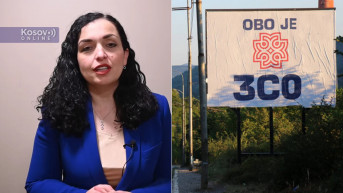
By openly criticizing the EU draft statute for the Community of Serb Municipalities (CSM), which has mostly come from the opposition in recent days, Kosovo President Vjosa Osmani has now joined the discussion. She has "sentenced" the draft before the Constitutional Court: in her view, it contradicts Kosovo’s Constitution. Brussels has not reacted to her assessment, and analysts believe that the EU will not rewrite the document due to Osmani's stance but will instead wait for the Constitutional Court's opinion before making any potential revisions.
Written by: Dusica Radeka Djordjevic
During a meeting last week with the new EU representative for dialogue, Peter Sørensen, Osmani raised objections to the document presented by the EU to Belgrade and Pristina in 2023. The EU had introduced it as a “modern draft,” which both sides had initially accepted. At the time, the then-U.S. Ambassador to Kosovo, Jeffrey Hovenier, stated that the draft was in line with Kosovo’s Constitution.
In a statement to the media after the meeting, Osmani said she had conveyed to Sørensen that the CSM draft statute does not comply with Kosovo’s Constitution—and beyond that:
"Personally, I believe it is not in line with EU values and norms, nor with the standards of the Council of Europe, and it also contradicts the 2015 Constitutional Court ruling. A draft that conflicts with all three of these aspects cannot be implemented, nor do I believe it could pass any Constitutional Court test," Osmani declared.
She also emphasized that her objections are not technical, as the president "does not provide technical but rather substantive objections."
This document was initially presented to Kosovo Prime Minister Albin Kurti on October 21, 2023, by Sørensen’s predecessor, Miroslav Lajcak, along with diplomatic advisors from the French president, the German chancellor, and the Italian prime minister, as well as then-U.S. Special Envoy for the Western Balkans, Gabriel Escobar. Kurti previously stated that the draft was carefully written and aligned with the letter and spirit of Kosovo’s Constitution, yet he has not submitted it to the Constitutional Court for review.
Milan Igrutinovic, a research fellow at the Institute for European Studies in Belgrade, says that Osmani’s stance on the EU-proposed draft statute holds some weight in Brussels. However, he finds it unlikely that EU representatives would return to the drawing board before the Constitutional Court issues a negative ruling.
"It’s poor diplomacy to let a single statement dictate your internal debates and to go back and rewrite a document because of one message from a president. Given the EU’s sanction regime against Pristina, the EU countries’ blocking of Kosovo’s Council of Europe membership attempt last year, and their apparent understanding that excessive leniency toward Pristina is not advisable, I would be very surprised if they rewrote the draft before the formal process in Kosovo concludes, potentially with a negative Constitutional Court ruling," Igrutinovic told Kosovo Online.
Aleksandar Sljuka, an associate of the NGO New Social Initiative, doubts that the European Union will revise its proposed draft statute for the Community of Serb Municipalities (CSM) following Osmani’s remarks. He argues that if the EU were to amend a document it authored—especially after presenting it to both Pristina and Belgrade, where it was conditionally accepted—it would lose credibility in the process.
Moreover, Sljuka believes that modifying the draft would slow down the entire process.
"That would be a major problem because if Pristina were given the opportunity to make its own suggestions, Serbia might also push for changes, leading to a prolonged process with no resolution in sight for a long time," Sljuka told Kosovo Online.
He recalls that Kosovo officials criticized the EU’s draft as soon as it was released, yet the EU has remained silent on whether those criticisms are valid and whether it plans to revise the document.
"This leads me to believe that the EU will not take any action on this matter and considers it a closed issue. However, some who have read the draft statute claim that there are specific provisions the Kosovo Constitutional Court might find unconstitutional—not enough to reject the entire statute, but similar to the 2015 CSM agreement, where certain clauses were deemed incompatible with the Constitution and had to be amended," Sljuka explained.
Constitutional Court Holds the Key
According to political analyst Artan Muhaxhiri, Osmani’s stance has no real impact on the decision-making structures handling the draft statute. The only opinion that truly matters, he asserts, is that of the Constitutional Court.
"The opinions of Prime Minister Kurti and President Osmani have no influence on the international community’s demand that the CSM draft be submitted for Constitutional Court review. That court is the only institution that can determine whether the statute aligns with the Constitution. Everything else is just political maneuvering aimed at gaining populist support," Muhaxhiri told Kosovo Online.
While he hopes Pristina will send the EU’s draft to the Constitutional Court to "untangle the situation," Sljuka also believes that if there are valid concerns about certain provisions conflicting with Kosovo’s Constitution, those should be addressed before submitting the text to the court.
"If the court once again determines that the draft is not fully in line with the Constitution, it could have serious consequences. Pristina officials could use this to further undermine trust in the CSM, claiming that the EU is imposing something unconstitutional on Kosovo," Sljuka warned.
Broader Resistance to the CSM
Analyzing the potential effects of Osmani’s remarks, Milan Igrutinovic identifies three levels of impact.
"This is also a way to reinforce an already established message and to have it come directly from the president’s mouth: ‘We do not want this, and do not bring it here.’ This allows political actors to focus on forming a new government without EU interference or the CSM issue complicating negotiations. For the next few months, they can avoid making the CSM a central topic in Kosovo’s political landscape", our interlocutor says.
The third level, he points out, is Vjosa Osmani’s personal positioning, as she presents herself as a “defender of Kosovo’s interests” and seeks to rally those who believe that the CSM will either never materialize or, if it does, will be of no real significance.
A Key Criterion for Kosovo’s EU Progress
Regardless of Osmani’s reasons for rejecting the EU’s draft at this moment, Artan Muhaxhiri believes that the CSM has become the central issue in the dialogue process.
"I do not believe there is any possibility that the Association will become a secondary issue or be bypassed. All key actors—the U.S. and the EU—are demanding that Kosovo’s leadership address the matter, and the first step is submitting the draft statute to the Constitutional Court. There is no alternative," he stated.
He also dismissed the idea that Osmani’s stance could serve as an "excuse" for Kosovo’s next government to continue delaying the submission of the draft to the court.
"Whoever forms the next government will have to address the statute first, as it has effectively become a criterion for Kosovo’s progress in EU integration," Muhaxhiri concluded.




0 comments