
Political deadlock in Kosovo: Is the final outcome awaiting The Hague?
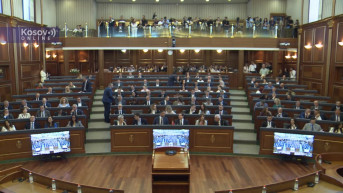
Kosovo once again finds itself in a situation where a political crisis is intertwined with constitutional dilemmas. Following the June elections, the issue of forming institutions remains unresolved, while a date that could further alter political calculations is approaching—September 16, when the Kosovo Specialist Chambers in The Hague are expected to issue a decision in the case against former KLA leaders. Kosovo Online’s interlocutors warn that new legal disputes could deepen the crisis and that the political deadlock could be broken after the ruling in The Hague, although the question remains as to whose advantage it would be.
Written by: Jovana Jovanovic
What remains of the agreement between Self-Determination and LDK leader Lumir Abdixhiku on Bekim Sejdiu’s candidacy for President of Kosovo, and whether the constitutional deadlines for constituting the parliament have been breached, are questions that have been widely debated in recent days, but without any definitive answers.
Political calculations are further complicated by anticipation of the decision in The Hague.
While some believe that a possible conviction of the former KLA leaders charged with war crimes and crimes against humanity would strengthen Albin Kurti’s position, others expect that an acquittal could pave the way for the PDK’s return to power.
Legal dilemmas
Political scientist Ognjen Gogic believes that the parliamentary majority violated the Constitutional Court’s ruling by failing to constitute the Assembly within 30 days of the certification of the final election results, meaning that the opposition could also challenge the possible election of a new President of Kosovo before the Constitutional Court.
“That was formulated very clearly in the Constitutional Court’s judgment, but the parliamentary majority disregarded it. It effectively suspended the Assembly session at which the Assembly was supposed to be constituted in order to buy time for additional negotiations. This therefore raises questions about the constitutionality of all subsequent decisions that may be adopted. The Assembly was not constituted within the constitutionally prescribed deadline. This creates the possibility for all of its subsequent decisions to be challenged before the Constitutional Court,” Gogic explained to Kosovo Online.
Gogic believes that the opposition could challenge the possible election of the president before the Constitutional Court, although he stresses that it is uncertain what the Court’s decision would be.
He particularly points to the issue of Albulena Haxhiu’s mandate, assessing that this too raises a serious legal dilemma.
“There is an interpretation in Kosovo that her mandate as Acting President expires on October 4, but that is not correct. She can no longer serve as Acting President of Kosovo because her mandate in that position is tied to the previous parliamentary legislature, whose term has expired. The Kosovo Assembly should already have elected a new Speaker of Parliament, who would have taken over from Haxhiu and assumed the role of Acting President of Kosovo. This has once again opened up new legal dilemmas and potential legal disputes,” he pointed out.
At the same time, in his assessment, the forthcoming decision in The Hague and the possibility of new elections also play an important role in the political calculations. Gogic believes that Albin Kurti does not want to risk new elections after the Specialist Chambers’ decision and that it is important for him to ensure that the process of electing the president at least reaches the third round in the Assembly.
The key lies in The Hague
Unlike Gogic, who places the legal consequences of the current political deadlock at the forefront, political analyst Nexhmedin Spahiu believes that the key to resolving the political crisis lies in The Hague.
“If the former leaders are convicted, that will provide Albin Kurti with an opportunity to consolidate his hold on power. If they are acquitted, I think they will manage to wrest power from Albin Kurti. I am convinced that more than half of Albin Kurti’s MPs will switch to their side, and that is how the situation, which has been deadlocked for two years, will be resolved,” Spahiu said.
He believes that a new President of Kosovo will not be elected before the Kosovo Specialist Chambers issue their decision in The Hague on September 16 and that the outcome of the proceedings will have a significant impact on subsequent political developments.
Analyzing Bekim Sejdiu’s candidacy and relations among Self-Determination, the LDK and the PDK, he assessed that the outcome of the presidential vote could also depend on the internal calculations of those parties.
Spahiu believes that Bekim Sejdiu is “still in the running,” given that, as he put it, he was selected as a compromise candidate as part of “some strange negotiations” between Self-Determination leader Albin Kurti and LDK leader Lumir Abdixhiku.
He added that Sejdiu was more loyal to the Democratic Party of Kosovo (PDK) and Hashim Thaci.
“He was appointed to the Constitutional Court when Hashim Thaci held absolute power. No one could have been there unless they were strictly under his control and loyal to him. Thaci paid more attention to whom he appointed to independent institutions than to the government because he could dismiss a minister immediately, whereas he could not do that with officials in independent institutions. That is why he was very careful about whom he appointed there,” Spahiu told Kosovo Online.
He added that PDK members were very pleased with the choice of Bekim Sejdiu.
“Although they have said that they will not take part in the vote, a few of their votes could still slip through, providing enough votes to elect the president. I think that Albin Kurti and Lumir Abdixhiku will be disappointed if he is elected, but they will be getting what they deserve,” he said.
Regarding Albulena Haxhiu’s mandate, Spahiu believes that Kosovo could face an even deeper crisis if the institutions are not formed.
“In any event, if the institutions have not been formed by then, Kosovo will further deepen its crisis—not only the political crisis, but even the constitutional one,” Spahiu concluded.


0 comments