
Amendments to Law on Specialist Chambers returned to Assembly: Political calculations or EU pressure?
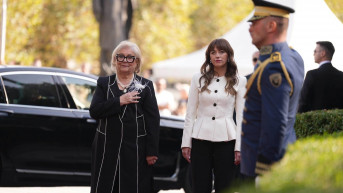
Kosovo President Justina Shiroka Pulja has returned the amendments to the Law on the Kosovo Specialist Chambers to the Assembly for reconsideration, following an official request by the parliamentary group of the Democratic Party of Kosovo, which had itself insisted on the legislation’s urgent adoption. Kosovo Online’s interlocutors believe that this legislative step backward is not the result of an internal consensus among Albanian political parties, but rather a direct consequence of strong diplomatic pressure, primarily from the European Union.
Written by: Ivana Sanjevic
The European Union welcomed Shiroka Pulja’s decision to return the amendments to the Law on the Specialist Chambers to the Kosovo Assembly for reconsideration, stressing that it expected to be consulted should the debate continue in parliament.
“The rule of law and the protection of fundamental rights, including the rights of victims and witnesses, remain of paramount importance,” the statement said, recalling that the EU had consistently expressed deep concern over the initiative to amend the Law on the Kosovo Specialist Chambers, both before and after its adoption by the Kosovo Assembly on October 6.
Within Kosovo itself, the Specialist Chambers remain a deeply unpopular institution, particularly following the first-instance convictions of former KLA leaders for war crimes and the undermining of the narrative of a “war of liberation.” Legal experts in Pristina have also warned that the amendments contain provisions that could be challenged before the Constitutional Court.
The ruling Self-Determination Movement reluctantly supported the amendments to the Law on the Specialist Chambers as part of a political bargain with the PDK that enabled Justina Shiroka Pulja to be elected President of Kosovo, thereby avoiding another parliamentary election. Meanwhile, the Democratic League of Kosovo, which did not vote for the legislation, argues that its return to parliamentary procedure is a sign of the PDK’s political immaturity.
Threat of international isolation
Political analyst Ognjen Gogic told Kosovo Online that strong reactions from the international community, particularly the European Union, were the main reason the amendments were being returned to parliamentary procedure. He said the least problematic scenario for the Albanian public was for the PDK, which had initiated the legislation, to request its return to the Kosovo Assembly.
“At least six times, the European Union told the authorities in Pristina that these amendments were unacceptable and contrary to Kosovo’s international obligations toward the EU. That is, in fact, the main reason why the law is now being returned to parliamentary procedure. It was clear to everyone that this would create problems in relations with the EU, which will not accept Kosovo’s international obligations being undermined in this way,” Gogic said.
He explained that there had also been the possibility of MPs, primarily from the Democratic League of Kosovo, which had not voted for the amendments, referring the matter to the Constitutional Court, or of the Ombudsperson doing so.
“Either scenario would have exposed them to considerable public backlash among Kosovo Albanians. So a compromise was found: the amendments are being returned to the Assembly at the PDK’s request, with the President, who is associated with the PDK, taking that step,” Gogic said, adding that the party had effectively “eaten humble pie” in this case.
PDK’s reasoning insufficiently substantiated
Professor of constitutional law Mazlum Baraliu assessed that the amendments to the Law on the Specialist Chambers contained legal shortcomings and provisions that were not fully consistent with the Kosovo Constitution. Nevertheless, he said their adoption had particular political significance following the first-instance convictions of former KLA leaders.
He therefore believes that the PDK, which had insisted on the legislation’s adoption and is now seeking its return to parliament for “revision,” should provide well-founded reasons for its decision.
“Given that they initiated this process, it would have been better if they had not acted alone, but if all political actors, all of Kosovo and its institutions had participated. That would have carried considerably greater political, legal and diplomatic weight,” Baraliu said, reiterating that the PDK should explain more clearly why it had requested another review of the amendments, particularly if this resulted in delays to the defense strategy of the former KLA leaders.
The fate of the (un)wanted law
Senior researcher at the Kosovo Democratic Institute Vullnet Bugacku pointed to ambiguities in the Rules of Procedure of the Kosovo Assembly, noting that there was no provision explicitly specifying whether MPs or the competent committee could amend legislation that had already passed two readings after President Justina Shiroka Pulja returned it for reconsideration.
“The Kosovo Constitution gives the President the right to return a law to the Assembly if she determines that the law, or certain provisions thereof, undermine Kosovo’s legitimate interests or the rights of its communities. When returning a law, the President is required to provide specific, clear and constitutional reasons why she considers that the law, or its provisions, jeopardize those two areas,” Bugacku explained.
He added that once a law had been returned to parliamentary procedure, the Speaker of the Assembly was required to refer it to the Committee on Legislation, which then had no more than four weeks to prepare a report.
“The problem is that the current Rules of Procedure of the Assembly are not sufficiently clear. There is no provision specifying whether MPs or the competent committee may introduce further amendments once a law has been returned,” Bugacku said.




0 comments