
Prime Minister-Designate Konjufca – What are the calculations at play?
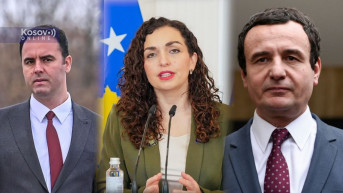
What Albin Kurti failed to accomplish, Glauk Konjufca will now attempt – to secure the support of 61 MPs within the next 15 days so that Kosovo, after the elections held on February 9, may finally form a government. Few believe that this is feasible. Most politicians and analysts doubt that Konjufca’s nomination reflects a genuine ambition to form a government. The general impression is that with this maneuver, the Self-Determination Movement (Self-Determination) has managed to enter the second round of local elections as the ruling party, while the timing of the inevitable new parliamentary elections has been “adjusted” to when it suits them most – when the diaspora is in Kosovo.
Written by: Dusica Radeka Djordjevic
The mandate to form the new Government of Kosovo was given last night by President Vjosa Osmani to Glauk Konjufca, the second candidate from the Self-Determination Movement, after Albin Kurti failed to obtain a sufficient number of votes in the Assembly on October 26.
Forecasts suggest that Konjufca will meet the same fate, as parties that did not vote for Kurti have already stated that another name from the same party makes no difference.
“A vote for him (Konjufca) is a vote for Albin Kurti, so there is no difference. Of course, this is also connected with the second round of local elections on Sunday. You know that last time Prime Minister Kurti also received his mandate on a Friday, two days before the elections, and that was his attempt to show that the ‘Kurti 3’ government was still alive,” said Abelard Tahiri, MP from the Democratic Party of Kosovo, announcing that his party would not vote for Konjufca to become the new prime minister.
Similar sentiments were expressed by the Democratic League of Kosovo (LDK).
“If the LDK had wanted to, it would have voted for the ‘original candidate’,” said Jehona Lushaku-Sadriju from the party, while LDK leader Lumir Abdixhiku described the nomination of Konjufca as a form of “monarchy.”
“In a monarchy, the mandate is inherited – from father to son, from Albin to Glauk,” he stated.
Konjufca cannot count on support from the Nisma party either, whose leader Fatmir Limaj said that Self-Determination proposed Konjufca solely for their “electoral calculations.”
Security studies researcher Nikola Vujinovic told Kosovo Online that by giving the mandate to Konjufca, President Vjosa Osmani effectively bought time for Albin Kurti, allowing him to time the early elections to coincide with the Christmas and New Year holidays, when the Albanian diaspora is in Kosovo.
“This is indeed a constitutional obligation, but at the same time, it is a way of buying time. Mrs. Osmani merely used the constitutional obligation as a pretext to give more time to Albin Kurti and his Self-Determination, since they have been close allies ever since she became president. Over these past nine months, they have jointly violated the Constitution and all prescribed norms for the formation of the Assembly,” said Vujinovic.
He noted that Kurti believes the diaspora is on his side and wants to schedule early elections for a date when the diaspora will be in Kosovo, with December 28 now appearing as a likely date.
“Most of Western Europe celebrates Christmas on December 25, so people are on holiday. This means most of the Albanian diaspora will also be on holiday then. Albin Kurti expects that they will come to Kosovo and Metohija, and that he will manage to secure their votes,” said Vujinovic.
Another reason for Konjufca’s nomination, according to Vujinovic, is the attempt to project a sense of stability ahead of the second round of local elections, which will be held on November 9.
Given that Konjufca has not demonstrated he has the necessary support, and even Kurti himself admitted that the new prime minister-designate currently has 56 sure votes in parliament—with the final number to be revealed only at the plenary session—many see Osmani’s decision to appoint Konjufca as a gesture of service to Kurti.
“Granting the second mandate appears to be nothing more than a favor done by the president for Kurti and Self-Determination,” said former Kosovo ambassador to Italy, Alma Lama.
Vujinovic also believes that Osmani is currently acting as a direct extension of Albin Kurti.
“Now the 15-day period begins, and on November 19–20 a potential constitutional session to vote on the government will be held. All opposition parties from the Albanian majority insist that they will not support Mr. Konjufca. Since secret voting is not possible, it’s unlikely there will be any ‘vote buying.’ The fact that Konjufca himself claims he does not want coalitions but only ‘support,’ whatever that means, tells us that the government will not be formed,” Vujinovic emphasized.
If the government is not formed, he added, there will be a 10-day deadline within which elections must be called.
According to him, early elections would suit the Serbs in Kosovo, as they could reclaim the “stolen” mandate from the previous elections.
“The fact that in the previous snap elections in February one Serbian mandate was stolen by Mr. Rašic and the Albanian majority presents a real opportunity for the Serb List to reclaim its tenth seat. The Serb List is currently the only legitimate representative of Serbian interests in Kosovo and Metohija,” said Vujinovic.
According to university professor Mazllum Baraliu, by assigning the mandate to Konjufca, President Vjosa Osmani acted in accordance with the Constitution.
“She is not favoring any political party—in this case, Self-Determination—but fulfilling her constitutional duty. This is not about political alignment but about acting in line with the Constitution,” Baraliu told Kosovo Online.
If Konjufca fails to secure 61 votes by November 19, according to Eugene Cakolli of the Kosovo Democratic Institute (KDI), the legal deadlines make December 21 and December 28 realistic dates for early elections.
If the vote fails, Cakolli explained, Osmani should dissolve the Assembly on November 20, paving the way for new elections, which must be held within 40 days of their announcement. The electoral law, he noted, gives the president a maximum of 10 days from the dissolution of the Assembly to set the election date.
“Theoretically, December 14 is also possible—if dissolution happens earlier—or January 4, if the announcement of the election date is delayed until the end of November, within the maximum 10-day deadline the president has,” Cakolli concluded.


0 comments