
Pristina introduces address system in the North: Will tsar Dusan or Saint Vasilije of Ostrog be deemed (un)desirable?
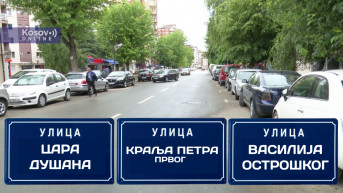
From Saint Basil of Ostrog and Tsar Dusan to Prince Milos, General Misic, King Peter, and Kolasin’s knezes—many streets in northern Kosovo are named after Serbian historical figures. But that could soon change with the implementation of the Address System by the Kosovo Cadastral Agency (KCA). At least, that is the belief of most interlocutors interviewed by Kosovo Online. They warn that this will amount to “erasing Serbian national history through the back door.”
Written by: Djordje Barovic
KCA Executive Director Avni Ahmeti stated that after signing a memorandum of cooperation with representatives of four northern municipalities, the project represents “a significant step toward institutional unification and balanced development of all municipalities in Kosovo.” He said the KCA will provide technical support in the field, prepare the system, and implement the preparatory phase of street naming and address assignment.
“To facilitate this sensitive and important process, the KCA has initiated active cooperation with municipal commissions established to oversee and coordinate the street naming phase,” read a KCA statement.
Just a year ago, workers hired by the Ministry of Infrastructure, assisted by Kosovo Police, removed all Cyrillic road signs on highways in the north and replaced them with new ones in Albanian and Serbian—written in Latin script only.
Until now, changing street names in the four Serb-majority municipalities had not been addressed by either local or central authorities in Pristina.
An exception occurred last year when a street sign was placed on the road between Balaban and Banjska, naming it after Afrim Bunjaku, a police officer killed in 2023.
Citizens’ Involvement
For North Mitrovica’s Mayor Erden Atic, there is nothing controversial about implementing the Address System, as it is part of the integration process not only for the north but for all of Kosovo.
Atic told Kosovo Online that citizens should contribute to the process.
“I invite all citizens to take part in this process. It was initiated for all municipalities in Kosovo, not just North Mitrovica. People can find information on our website or Facebook page. Let them get involved. A commission will complete the procedure to ensure the best possible process,” said Atic.
Serbian Identity
While Atic refrains from commenting on potential street name changes in the north, Petar Ristanovic, a research associate at the Institute for Serbian Culture in Leposavic, believes such changes are inevitable.
“Renaming the streets is unavoidable. If we consider everything the Kosovo regime has done so far, this step seems both expected and inevitable. I truly believe that all street names that reflect any Serbian national theme—names highlighting the Serbian identity of Kosovo and Metohija—will be changed,” Ristanovic told Kosovo Online.
Asked which names would be changed first, he responded: “Practically all streets named after people and dates associated with Serbian history in Kosovo.”
“If we look at the removal of Serbian flags and the covering of all graffiti with any national Serbian themes—even when loosely defined—it’s clear that street name changes are a logical and likely next step,” he emphasized.
He added that the renaming process would be “formally” carried out by municipal decisions, but the real decision-making would take place in Pristina.
“Formally, the decision may be made at the municipal level, regardless of the current illegitimacy of those governments. But I’m certain it will be decided at the highest level—by the circle around Albin Kurti,” Ristanovic noted.
He believes these changes will take place even if Kurti is no longer in power.
“Even if Kosovo’s leadership were to change in the future, I doubt this trend would reverse. Everything done so far and the direction things are moving in show that renaming the streets is a step that, sooner or later, should be expected,” he concluded.
Historical Revisionism
Luka Jovanovic, assistant professor at the Department of History in North Mitrovica, shares this view but goes further. He claims that historical revisionism has been taking place in Kosovo since 1999 and that it would be no surprise if it extended to the renaming of streets bearing Serbian historical themes.
“The visit of the director of the Kosovo Cadastral Agency to northern Kosovo municipalities and the messages sent from those meetings suggest that Pristina has mobilized yet another institution in its so-called psychological war against the Serbian population in the north of Kosovo and Metohija. Of course, all this is justified to the international community under the guise of resolving property issues—one of the most pressing concerns of the Serbian community,” Jovanovic told Kosovo Online.



0 comments