
Jovanovic: Through street renaming, Pristina is already engaged in historical revisionism and will continue in the North
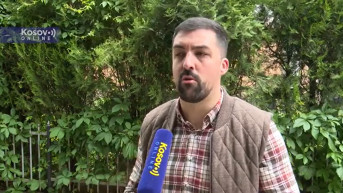
Luka Jovanovic, Assistant Professor at the Department of History at the Faculty of Philosophy in North Mitrovica, stated that Pristina has been conducting historical revisionism through the renaming of streets in Kosovo since 1999, with the tacit approval of the international community, and that this process will continue in the north.
Commenting on the recently signed Memorandum of Cooperation between the Kosovo Cadastral Agency and representatives of the four northern municipalities on the establishment of an Address System—which includes a preparatory phase for naming streets and assigning addresses—Jovanovic described the move as a new form of “psychological pressure” on the Serbian community.
“The visit of the Director of the Kosovo Cadastral Agency to municipalities in northern Kosovo and Metohija, and the messages conveyed during those meetings, indicate that Pristina has mobilized yet another of its institutions in what can only be called a psychological war against the Serbian population in the north of Kosovo and Metohija. Of course, all of this is being justified to the international community under the pretext of resolving property issues, which are among the most pressing problems for the Serbian community,” Jovanovic told Kosovo Online.
He noted that, under Kosovo law, the naming of streets falls within the jurisdiction of local governments, but that the problem in the north lies in the fact that these institutions are now predominantly composed of Albanians.
“The messages we’re receiving, and the expectations of the Serbian community, suggest that we will see, as we already have, the naming of streets in purely Serbian ethnic areas after so-called prominent Albanians,” the historian asserted.
He warned that the issue runs much deeper, as the international community has tolerated, since 1999, the naming of streets after what he described as highly controversial historical figures.
“We can see that in South Mitrovica, both the central and wider urban areas reflect historical revisionism through names of individuals who were confirmed collaborators with Nazis and fascists during World War II—such as Rexhep Mitrovica, Besim Bajgora, the Bajgora brothers, and Shaban Polluzha. There is photographic evidence showing their explicit activity against all liberation movements and even the Allied forces during the war,” Jovanovic stated.
He emphasized that such practices encourage war rhetoric and exert additional psychological pressure on the Serbian community.
“We can expect that the main street in North Mitrovica, currently named after King Petar I, could very easily be renamed by decision of the local Albanian-majority assembly to something like ‘UÇK Liberators Street’—despite the fact that this is a Serbian area and the residents of that street would not recognize such a name. With the involvement of institutions such as the local government, the Kosovo Cadastral Agency, and ministries in Pristina—all controlled by the Albanian community—yet another message would be sent to the Serbian population: that they are living in a territory under Albanian governance, and that, in essence, their only options are submission or displacement,” Jovanovic concluded.

0 comments