
The Racak Case: Can the truth be reached after The Hague and 26 years?
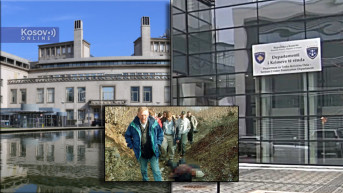
The Kosovo Special Prosecutor’s Office has announced that by the end of the year it may file several indictments for war crimes committed during the 1999 war, including for the events in Racak. Can the truth be reached 26 years later, considering the fact that this incident was already investigated by The Hague Prosecutor’s Office? While officials in Pristina claim it is possible, experts in Belgrade argue that these are political processes without material evidence of Serbian forces' involvement in the alleged war crime committed on January 15, 1999.
Written by: Djordje Barovic
“The Kosovo Special Prosecutor’s Office is making maximum efforts to file indictments by the end of this year for the massacres in Racak and the Dubrava prison, as well as for the expulsion of Albanian civilians from Kosovo,” said Iljir Morina, head of the War Crimes Department at the Special Prosecutor’s Office of Kosovo, for Kosova Press.
He explained that investigative actions had been carried out in Kosovo, and that half of the evidence is located in Serbia and at the Hague Tribunal.
Morina also stated that many international witnesses are planned to be questioned.
One of them already has been.
“I look forward to testifying,” said former head of the Kosovo Verification Mission, William Walker, in late January after being summoned by the Special Prosecutor’s Office.
It was precisely thanks to his report that Racak was declared a massacre and used as a pretext for NATO’s bombing of the then Federal Republic of Yugoslavia.
Walker later received a monument in Racak in 2017, as well as €70,000 from the Government of Kosovo to complete a book about Racak.
At the promotion of “Racak: A History of a War Crime” in January this year, he stated that the event was a historic moment that changed the fate of the Balkans.
Every January 15, international officials in Kosovo reiterate that those responsible for the Racak events must be held accountable.
The incident was one of the key points in the indictment against former Yugoslav President Slobodan Milosevic and the so-called “Group of Six” – Serbian political, military, and police leaders.
Former Serbian President Milan Milutinovic was acquitted of all charges.
The others were convicted, but not for Racak.
In Kosovo, the situation is somewhat different.
In the first trial in absentia, held at the end of last year, Cedomir Aleksic was sentenced to 15 years specifically for the events in Racak and other villages near Stimlje.
Simultaneously, on January 15, 2023, Albin Kurti announced that the Kosovo Special Prosecutor’s Office had issued international warrants for 18 Serbs accused of participating in the Racak incident.
“Based on testimonies from the time, the statements of 63 witnesses, and evidence from the Hague Tribunal, the Special Prosecutor’s Office of Kosovo issued international arrest warrants for 18 Serbian individuals suspected of participating in the Racak massacre,” Kurti said.
Evidence from The Hague
Danica Marinkovic, former investigating judge in Pristina, was one of the witnesses in The Hague. She testified in 2003, specifically about Racak.
“Both the court and the prosecutor’s office realized there was no basis to charge anyone,” Marinkovic told Kosovo Online.
Regarding the investigation in Pristina and possible new evidence collected, she emphasized that nothing has changed in the meantime.
“They have no material evidence for Racak, and even if they raise an indictment, they won’t be able to support it. We collected the material evidence – I did, as an investigating judge during the inquiry: from the crime scene investigation, the weapons found, trenches, uniforms, their headquarters… Everyone knows Racak was a stronghold of terrorists. Even their own commanders who testified in The Hague spoke of their organization, their participation, attacks on civilians, and police killings,” Marinkovic stated for Kosovo Online.
She bases this on evidence she collected and everything she saw during her on-site investigation as the duty judge.
“The bodies we found in the mosque on January 18, 1999, after autopsies carried out as part of the investigation, showed all had died from firearm injuries. There was no evidence of a massacre of innocent civilians, as falsely claimed at the time by the American spy Walker — there was none then, nor is there now. Therefore, the Racak massacre did not happen,” Marinkovic firmly concluded.
Asked why the Pristina Prosecutor’s Office is pursuing the case 26 years later if there’s no evidence, Marinkovic said it’s an attempt to justify the narrative of “Serbian crimes against Albanian civilians.”
“They can’t accept the fact that their staged scenario failed because we entered Racak before they did. Even though they tried to stop us — fired at us for three days — we managed to enter and found material evidence proving it wasn’t a massacre, but that KLA members died in a counter-terrorist operation by Serbian police,” Marinkovic believes.
Asked whether this investigation and a potential trial outcome could bring the truth about what happened in January 1999, Marinkovic is skeptical.
“They claim they’re gathering evidence, that witnesses have been interviewed… That’s all questionable. I don’t believe them. Whatever they initiate will be fabricated, false, staged — just like before. All criminal proceedings led by the so-called Republic of Kosovo have been staged. Serbs were convicted without any basis. Based on false witness statements. It’s sad, disgraceful, and unprofessional. I’m disappointed in the judiciary in Pristina, where judges and prosecutors allow themselves to convict innocent people with harsh sentences for something that never happened,” Marinkovic said.
Trials in Absentia
Amer Alija, a lawyer from the Humanitarian Law Center in Pristina, told Kosovo Online that the Racak investigation is part of broader probes initiated by the Kosovo Special Prosecutor’s Office after the 2019 legal amendments that enabled trials in absentia.
“Since trials in absentia became possible in 2019, the Kosovo Special Prosecutor’s Office began investigating in absentia, and we have information that they are now conducting an investigation into the Racak massacre and other events in Kosovo,” Alija told Kosovo Online.
According to HLC data, 17 indictments have been filed in such proceedings so far.
Regarding the Racak case, Alija says that among the questioned is also William Walker, former head of the OSCE verification mission.
“We have information from both the prosecutor’s office and the court that they are actively working on this, gathering evidence, and that several witnesses have already been questioned in separate investigations. William Walker has been interviewed as well, and we expect the investigation to conclude soon. We’ll then see whether indictments will follow,” Alija said.
He added that, in addition to the investigation, these and other war crimes cases involve collecting relevant documentation, translating witness statements, and providing defense lawyers for those being tried in absentia.
“Meanwhile, several procedural steps must be fulfilled during the investigative phase: verifying the addresses of suspects, issuing arrest warrants, publishing indictments and summons for trial... All of this takes time, as stipulated by criminal procedure,” Alija explained.
False Flag
Former judge of the District Court in Pec and special investigative judge of the Ministry of Justice of the FRY for war crimes in Kosovo, now a lawyer, Goran Petronijevic, claims there is no evidence of a Serbian war crime in Racak.
He is convinced that the Pristina investigation is politically motivated — a “cover” for a major internal crisis in Kosovo.
“This is a kind of cover, a mask. It would have made sense if there had been any suspicion or serious evidence to act 15 or 20 years ago. But bringing it up after 26 years clearly points to political motives only,” Petronijevic told Kosovo Online.
He claims the Racak case is part of a broader picture where legal proceedings are used for internal political purposes.
“These staged trials are launched sequentially. When one ends, another begins. Now a new case is needed to cover several issues: the deep internal political crisis, dissatisfaction with Kurti’s regime, the problem of Serb persecution, and the fact that in The Hague, in the Special Chambers, high-ranking KLA officials are being charged — not only for crimes against Serbs, but also against Albanians,” Petronijevic said.
He pointed out that The Hague prosecutors excluded many events previously attributed to Milosevic and top Serbian leadership.
“Racak was not pursued because Hague prosecutors assessed it was a staged situation. They received credible intel from U.S. intelligence — with whom they were closely connected — that Racak was a setup, a classic false flag operation. A fabricated case designed to blame the Serbian side and provide a pretext for the pre-planned NATO bombing. That’s beyond doubt now. Racak was entirely fabricated for that purpose,” he claimed.
When asked why Pristina would reopen the case and announce indictments, Petronijevic believes it’s politically driven.
“After everything that happened, it’s clear that Pristina now lacks political fuel for Kurti’s regime. They’re clutching at straws. After 26 years, they’re pulling out cases that have already been reviewed — by our courts, the Hague, and theirs — and none of them has ever concluded that any act qualifying as a war crime was committed by Serbian police or army,” Petronijevic concluded.


0 comments