
Fleck: The US is committed to the normalization process and expects Kosovo to fulfill its obligations
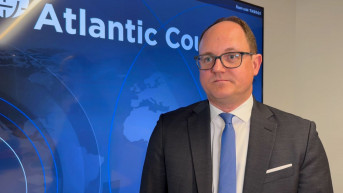
Jorn Fleck, Senior Director of the Europe Center at the Atlantic Council in Washington, said that the United States remains committed to the process of normalizing relations between Belgrade and Pristina, while expecting both sides to fulfill the obligations they have undertaken.
Speaking about the US-Serbia Strategic Dialogue, Fleck said in an interview with Kosovo Online that it represents Washington's strategic decision to further integrate Serbia into US and Western frameworks, particularly in the fields of energy, defense, the economy and technology. He stressed that regional security and stability, limiting the influence of Russia and China, and economic prosperity are among the Trump administration's key priorities in the Western Balkans.
Regarding Kosovo, Fleck pointed out that Washington expects both Belgrade and Pristina to fulfill their obligations, but also expects Kosovo to find a way out of the political deadlock and form a stable government. He added that compromise will be necessary to overcome the crisis, while noting that the current US administration will not play as active or direct a role as previous administrations.
The new US strategy for the Western Balkans places regional stability at the center of Washington's policy and emphasizes expanding cooperation with Serbia. How do you expect the Trump administration to reconcile its increasingly close partnership with Serbia with its continued support for the normalization process between Belgrade and Pristina?
I think the United States has been very clear that the normalization process, namely the formal dialogue, is led by the European Union. The United States remains broadly committed to that process. It expects both sides to fulfill their existing obligations, which are well known to everyone. Each side has its own set of obligations. The United States continues to expect both Belgrade and Pristina to meet those commitments.
The administration says it wants Serbia and Kosovo to reach a "negotiated, lasting and mutually acceptable agreement." What concrete steps do you expect Washington to encourage Belgrade and Pristina to take in the coming months, and could renewed US engagement give new momentum to the dialogue?
I think the Strategic Dialogue is, above all, a strategic decision by the United States to further integrate Serbia into American and Western frameworks, whether in energy, defense cooperation, other commercial issues, or academic and scientific exchange. We have also seen the accompanying agreements reached within the framework of the Strategic Dialogue. Overall, I believe the Strategic Dialogue is a good beginning.
A mechanism has been established through which the United States can cooperate with Serbia, and Serbia with the United States, within the framework of that dialogue. It is a good start. Now we need to see how the agreed outcomes will be implemented in practice and what they can actually deliver in terms of concrete implementation and application across different sectors.
The administration plans to deepen security, economic and strategic cooperation with Serbia, as well as launch the Strategic Dialogue. How significant is this development, and could stronger US-Serbia relations ultimately contribute to greater stability in the Western Balkans rather than increasing regional tensions?
I think there is a combination of priorities. First, security and stability are of critical importance. Second, it is necessary to limit the influence of Russia and China in the region. Third, there is a strong emphasis on economic prosperity and economic and commercial projects, whether in infrastructure, energy, energy security or technological cooperation. So it is a combination of two or three key priorities and areas of focus.
Compared with previous administrations, the Trump administration appears to place greater emphasis on pragmatic partnerships, economic cooperation and reducing the influence of external actors in the region. What do you see as the key characteristics of President Trump's policy toward the Western Balkans, and what message is Washington sending to political leaders across the region?
I think this administration's top priority is the security and stability of the region. We have seen clear messages regarding the crises in Bosnia and Herzegovina and developments that could threaten the country's stability and cohesion.
We have also seen that this administration is very focused on energy and infrastructure projects, whether they involve interconnectors, sanctions on NIS in the case of Serbia, certain gas pipelines, or greater connectivity, particularly through the Vertical Corridor projects.
So President Trump's administration is very focused on those two elements, and that sends a clear message to everyone in the region: we are ready to work with you on those priorities.
The US Embassy in Pristina recently said Washington wants to see concrete steps by Kosovo to strengthen stability, including fulfilling its obligations toward the Serbian community. What specific actions do you think the United States expects from Pristina?
First of all, when it comes to Kosovo, there are clear expectations for both Serbia and Kosovo. There are clearly defined obligations, and both sides are expected to fulfill them. Second, it is quite clear that the US government wants Kosovo to find a way out of the political deadlock we have witnessed, with three elections in roughly the past 18 months, and to form a stable government.
There are also expectations that have long been established through previously assumed commitments: contributing to regional security, exercising restraint in the north, and supporting and implementing all necessary measures to preserve a multiethnic Kosovo, with particular attention to the north.
I think it is very clear that the United States and this administration will not play the highly active and direct role that previous US administrations played in the past. However, Kosovo and its political leaders are expected to respect their existing commitments and find a path toward a stable government capable of implementing them.
The Embassy also said that fully functioning institutions are necessary before launching the US-Kosovo Strategic Dialogue. To what extent is the current political deadlock delaying deeper relations between Washington and Pristina, and what message does that send to Kosovo's leaders?
It is not the role of external actors to tell Kosovo's political leaders what they should do. They know what they need to do for the good of the country, for the citizens of Kosovo, to fulfill the commitments they have undertaken, and for the country's future. They need to form a stable government, and that will not be possible without compromise. Compromise is at the very heart of politics and of every democratic political system. That is what is expected of them, regardless of their political differences.

0 comments