
Race for the new UN Secretary-General – what will be decisive in the selection?

Four candidacies for the successor to UN Secretary-General Antonio Guterres, who will complete his term in January 2027, have so far been submitted to the United Nations. Although regional rotation traditionally plays an important role in the selection of the head of the world organization—suggesting that the position should now go to a representative of Latin America—an official proposal also arrived six days ago from Africa: Burundi nominated former Senegalese President Macky Sall. The selection process is further complicated by strong calls for a woman to lead the UN for the first time.
Written by: Dusica Radeka Djordjevic
On the one hand, there is growing concern that the world is moving toward a global conflict, with speculation about whether World War III has already effectively begun. On the other hand, nominations are being registered for the future Secretary-General of the United Nations, an organization whose mission is to maintain international peace and security.
The list of candidates is expected to be finalized by 1 April, and it currently includes Rafael Grossi, Director General of the International Atomic Energy Agency and a former diplomat, nominated by Argentina; Michelle Bachelet Jeria, former President of Chile, nominated by Chile, Brazil and Mexico; Rebeca Grynspan Mayufis, Secretary-General of the UN Conference on Trade and Development, nominated by Costa Rica; and Macky Sall, former President of Senegal, nominated by Burundi.
Interviews with these candidates, as well as with any others nominated by the end of March, are scheduled for the week of 20 April 2026.
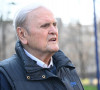
Retired diplomat and former Serbian ambassador to the UN Branko Brankovic told Kosovo Online that the Secretary-General is traditionally selected through a system in which the five world regions nominate candidates in rotation, and that this year it is Latin America’s turn.
According to him, there have rarely been difficulties in selecting the person for this role, except when Kurt Waldheim once sought to renew his mandate.
Regional representation, he notes, is highly respected, and if the countries of Latin America agree on a candidate from that region, the election should proceed smoothly according to established practice.
The proposal is submitted by the Security Council, while the vote takes place in the UN General Assembly with a two-thirds majority of those present and voting.
“Rarely has anyone asked the question: ‘Why this candidate and not that one?’ because no region would like to create problems for another, knowing that tomorrow the same countries could create problems for it in matters of personnel policy. Which country will provide the Secretary-General remains a big question. Toward the end of last year, discussions seriously raised the issue that it is high time for a woman to finally become Secretary-General, since no woman has held that position since the war, and Latin America itself has such ideas. I believe other regions will respect whatever Latin America decides as a group, and I do not expect major disputes,” Brankovic said.
Eastern Europe bypassed
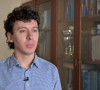
According to Goran Sandic, a researcher at the Faculty of Political Sciences in Belgrade, one of the most popular candidates at the moment is Michelle Bachelet Jeria, the former president of Chile and former UN High Commissioner for Human Rights.
“From that position she criticized certain human rights practices originating from Beijing, as well as those coming from Moscow and Washington, and in that sense she probably carries a certain political ‘baggage’. Other candidates, some already formally nominated and others not yet nominated, also have their own advantages and disadvantages. The choice will certainly fall on the person who is least unacceptable to the five permanent members of the Security Council,” Sandic told Kosovo Online.
He added that speculation has also emerged about a renewed candidacy from Eastern Europe, since that region is considered to have been bypassed in the previous two rounds of selecting the Secretary-General.
“For now these are only speculations. Serbia has not yet officially supported any candidate, and in that regard it is probably waiting for the list of candidates to be finalized by April,” Sandic said.
When the current Secretary-General Antonio Guterres was elected in 2016 for his first mandate, Sandic recalls, according to the regional rotation principle the position should have gone to Eastern Europe. However, the Security Council failed to reach an agreement on a candidate from that region, and the position ultimately went to Guterres, representing the Western Europe and Others Group.
Asked whether it is unusual that Burundi nominated a candidate even though the rotation principle suggests that the position should go to Latin America, Sandic notes that the selection of the Secretary-General is only minimally regulated.
“The UN Charter, as the main document of the United Nations, devotes only one article to this election and states that the Secretary-General is appointed by the General Assembly on the recommendation of the Security Council. Everything else is regulated through resolutions and largely through practices developed over the past eighty years. According to the customary rotation principle, it is expected that this position this year should go to Latin America and the Caribbean, but that is not a legal obligation of the UN, which is why we also see a candidate from Africa,” he explained.
He believes the final decision will primarily depend on the acceptability of the candidate to the five permanent members of the Security Council, who hold veto power and can decide that any candidate should not become the Council’s official nominee.
Resolution 1244 and the principle of territorial integrity
For Serbia, Brankovic notes, it will be important whether the country from which the new Secretary-General comes has recognized Kosovo. However, he stresses that it has not been shown so far that Secretaries-General of the world organization have been biased or non-objective, because their duty is to advocate equally for all UN member states.
One of the serious questions, and the most important one for Serbia according to him, is whether the new Secretary-General will be more active than the current one regarding the implementation of UN Security Council Resolution 1244, which could be reflected in activating the Security Council to determine what from this document has been implemented and what has not.
“It has never been shown that anyone has been biased in one way or another, because the Secretary-General cannot be so, given that the General Assembly and the Security Council serve as corrective bodies. Whatever he might do, there is always the possibility that he could be dismissed, which would be discussed by the Security Council and the General Assembly,” Brankovic pointed out.
Regarding whether the Security Council will consider how strongly a candidate is committed to the principle of protecting the territorial integrity of UN member states, Sandic says candidates will probably avoid emphasizing territorial integrity directly and instead refer to respect for the UN Charter, which of course also includes that principle.
“The formal role of the Secretary-General is to reflect the position of the United Nations and not the position of the country from which he or she comes, or the countries that nominated him or her. In that sense, formally we can expect that the UN’s stance toward Serbia and its territorial integrity will not change. What must not be forgotten is that states constitute the United Nations and that they actually direct its work. The Secretary-General has certain powers in appointing individuals and managing certain multinational military forces, but states ultimately have the final say,” Sandic emphasized.
A demanding role – who has held it?
Before Antonio Guterres, who is completing his second term, the UN Secretaries-General were Ban Ki-moon of the Republic of Korea from 2007 to 2016, Kofi Annan of Ghana from 1997 to 2006, Boutros Boutros-Ghali of Egypt from 1992 to 1996, Javier Pérez de Cuéllar of Peru from 1982 to 1991, Kurt Waldheim of Austria from 1972 to 1981, U Thant of Myanmar from 1961 to 1971, Dag Hammarskjöld of Sweden from 1953 to 1961 and Trygve Lie of Norway from 1946 to 1952.
According to Brankovic, the position of UN Secretary-General has always been, and remains, a highly demanding one.
“Not for any private arrangements, but in relation to the very essence of the United Nations and the purpose for which the UN was created, which is the preservation of peace and international security. The Secretary-General has a very important role and it matters greatly how he approaches it,” he said.
Sandic adds that the Secretary-General is not only the administrative head of the UN but has over time become the epicenter of multilateral diplomacy, even though that may not have been the original intention.
“The role of the Secretary-General has grown over time. It has always been challenging, but it is particularly so now in this constellation of power because the multilateral world as we know it today, the world order established after the Second World War and embodied by the UN, is being challenged from different directions. Whether through new international organizations, such as the so-called Peace Committee, or through refusal to finance the UN, which is an obligation of all member states,” he said.
The new Secretary-General, he added, will face many challenges both internally within the organization in terms of salaries and funding from member states. Serbia itself, he noted, was late this year with its payment, while the United States, which contributes the largest share of the UN budget, is also often late.
“That is the internal complexity of the job, but there is also the external dimension, where the Secretary-General, or perhaps a female Secretary-General, should represent the epicenter of world diplomacy and bring parties, whether they are in conflict or not, to the same table and offer them the good offices of the UN,” Sandic concluded.
0 comments