
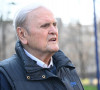
Sandic: Among the most popular candidates for UN Secretary-General is the former President of Chile

Researcher at the Faculty of Political Sciences in Belgrade Goran Sandic told Kosovo Online that the position of United Nations Secretary-General, which is to be filled this year, should according to the customary rotation belong to Latin America and the Caribbean, and that one of the most popular candidates is the former President of Chile, Michelle Bachelet Jeria, who also served as the UN High Commissioner for Human Rights.
“From that position she criticized certain human rights practices, both those originating from Beijing, as well as those coming from Moscow and Washington. In that regard, she probably carries a certain political ‘baggage’ with her. Other candidates, some of whom have already been formally nominated and some who have not yet been nominated, also have their own advantages and disadvantages. The choice will certainly fall on the one who is the least unacceptable to the five permanent members of the Security Council,” Sandic points out.
He adds that there have been speculations about a renewed candidacy from Eastern Europe, since it is believed that this region was bypassed in the previous two rounds of selecting the Secretary-General.
“For now, these are still only speculations. Serbia has not yet officially supported any candidate, and in that regard it is probably waiting for the list of candidates to be finalized by April,” Sandic says.
When the current Secretary-General Antonio Guterres was elected in 2016 for his first term, Sandic recalls that according to the regional rotation principle the position should have gone to Eastern Europe. However, the Security Council failed to reach an agreement on a candidate from that region, so the choice ultimately fell on Guterres, from the Western Europe and Others Group.
Asked whether it is unusual that Burundi, an African country, nominated a candidate even though the rotation principle suggests that the position should go to Latin America, Sandic says that the election of the Secretary-General is very loosely regulated.
“The UN Charter, as the main document of the United Nations, devotes only one article to this election and states that the Secretary-General is appointed by the General Assembly upon the recommendation of the Security Council. Everything else is regulated through resolutions and largely through practices that have developed over the past 80 years. According to the rotation custom, it is expected that this position this year should belong to Latin America and the Caribbean, but this is not a legal obligation of the UN, and therefore we also see candidates from Africa,” he explains.
As he notes, the general sentiment among member states, or at least among the most influential ones, appears to be that it is time for a candidate from Latin America and for the first woman Secretary-General of the United Nations.
“I am convinced, however, that the choice will primarily be based on the acceptability of that particular person to the five permanent members of the Security Council, who hold veto power and can decide that any candidate should not proceed further, meaning that they will not become the Security Council’s nominee. Most likely, the one who is least unacceptable to all permanent members will be elected,” our interlocutor states.
Regarding whether the Security Council will consider how strongly a candidate is committed to the principle of protecting the territorial integrity of UN member states, Sandic says that none of the candidates will likely emphasize territorial integrity specifically as a right of states, but will rather speak about respect for the United Nations Charter, which of course also includes the principle of territorial integrity.
“The formal role of the Secretary-General is to reflect the position of the United Nations, not the position of the country from which he or she comes, or of the countries that nominated him or her. In that sense, formally we can expect that the UN’s stance toward Serbia and its territorial integrity will not change. What we must not lose sight of is that states make up the United Nations, and it is the states that actually guide the work of the organization. The Secretary-General has certain powers in appointing individuals and managing certain multinational military forces, but it is ultimately the states that have the final say,” Sandic emphasizes.
According to him, the UN Secretary-General is not only the first person in the UN in administrative terms, but over time the role has evolved into one in which the Secretary-General stands at the epicenter of multilateral diplomacy, even though that may not have been the original intention.
“The role of the Secretary-General has grown over time. It has always been challenging, but especially now in the current balance of power, because the multilateral world as we know it today—the global order established after the Second World War, which is also the order embodied by the United Nations—is being challenged from different sides. Whether through new international organizations, such as the so-called Peace Committee, or simply through the refusal to finance the UN, which is an obligation of all member states,” he says.
The new Secretary-General, he adds, will face numerous challenges, both internally—such as reducing staff salaries and ensuring funding from member states. Serbia itself, he notes, was late this year with its payment, while the United States, which contributes the largest share of the UN budget, is also often late.
“That is the internal complexity of the job, and there is also the external dimension, where the Secretary-General—or perhaps a female Secretary-General—should represent the epicenter of world diplomacy and bring parties, whether they are in conflict or not, to the same table and offer them the good offices of the UN,” Sandic concludes.
Sandic also notes that global civil society launched the campaign “1 for 7 Billion” in 2016, which later evolved into “1 for 8 Billion.” The campaign calls for a much more transparent process in the selection of the UN Secretary-General. Its name reflects the idea that the voices of all people—citizens of all 193 UN member states—should be heard, rather than only the diplomats of the five permanent members of the Security Council.
According to him, the campaign achieved at least a small step toward greater transparency, because since 2016 candidates have been required to present themselves publicly and participate in interviews at the UN General Assembly. Another demand is that the Security Council provide at least two recommendations, since the previous practice was that the Council would submit only one recommendation, which the General Assembly would then ceremonially approve.

comments