
Brankovic: For Serbia, the most important question is whether the new UN Secretary-General will be more active regarding the implementation of Resolution 1244
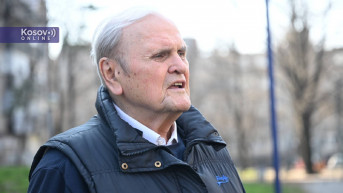
Retired diplomat and former ambassador to the United Nations Branko Brankovic told Kosovo Online that, for Serbia, it is important whether the specific country from Latin America—the region from which the next United Nations Secretary-General is to be elected this year—has recognized Kosovo or not. At the same time, he stresses that it has never been shown so far that the Secretary-General of the world organization has been one-sided or biased, because his duty is to advocate equally for all UN member states.
According to him, one of the serious issues—and the most important one for Serbia—is whether the new Secretary-General will be more active than the current one regarding the implementation of UN Security Council Resolution 1244, which could be reflected in activating the Security Council to determine what from this document has been implemented and what has not.
“Until now, it has never been shown that anyone was biased in one way or another, because the Secretary-General cannot be so, given that the General Assembly and the Security Council serve as corrective bodies. Whatever he might eventually do, there is always the possibility that he could be dismissed, which is discussed by the Security Council and the General Assembly,” Brankovic points out.
According to him, the position of UN Secretary-General has always been—and remains—a challenging one.
“Not for any private arrangements, but in relation to the very essence of the United Nations and the purpose for which the UN was created—namely the preservation of peace and international security. The Secretary-General has a very important role, and it is extremely important how he positions himself in all of this,” our interlocutor emphasizes.
He recalls that the Secretary-General is elected through a rotation system in which the five world regions nominate their candidates in turn, and that this year it is Latin America’s turn.
Regarding the selection of the person who will perform this function, he says that there have never been problems so far, except when Kurt Waldheim once sought to renew his mandate.
Regional representation, he notes, is highly respected, and if the countries of Latin America agree on who will be the candidate from their region, according to established practice the election should proceed smoothly. The proposal is submitted by the Security Council, and the vote is held in the UN General Assembly by a two-thirds majority of those present and voting.
“Rarely has anyone asked the question: ‘Why this candidate and not that one?’ because each region would not like to create problems for another, since tomorrow those same countries could create problems for it in matters of personnel policy. Which country will provide the Secretary-General remains a big question. Toward the end of last year, discussions seriously raised the issue that it is high time for the Secretary-General to finally be a woman, because since the war there has never been a woman in that position, and Latin America has such ideas. I believe that other regions will respect whatever Latin America, as a group, decides, and I do not expect any major disputes,” our interlocutor concludes.


0 comments