
Reform of EU diplomatic service: What would it mean for the Western Balkans and the dialogue?
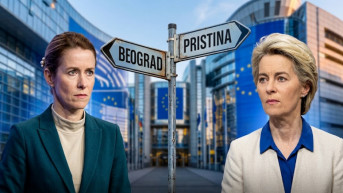
The European Commission is considering reducing the powers of the European External Action Service (EEAS) and transferring some of its functions to the EU executive, while Kosovo Online’s interlocutors differ in their assessments of the potential consequences of such changes for the region and, above all, for the Belgrade-Pristina dialogue. Mijat Kostic of the New Third Way organization believes that the reform could lead to significant changes in the way the EU conducts the dialogue, while Petar Curcic, a researcher at the Institute of European Studies, assesses that regardless of any structural changes, the EU’s fundamental role in the dialogue would remain the same.
Written by: Jelena Novakov
The European Commission is working on a plan to reorganize the EU’s diplomatic service, which is expected to be completed by the end of the year in response to requests from France and Germany. The plan envisages transferring some of the functions of the European External Action Service (EEAS), headed by Kaja Kallas, to existing European Commission departments.
The plans, which involve officials from the Commission’s Secretariat-General as well as its legal and budget departments, are intended to reduce overlapping responsibilities and better align the EU’s diplomatic work with the Commission’s powers in areas such as trade, aid, digital regulation and technology.
The initiative, however, does not envisage transforming the EEAS entirely into a large European Commission directorate for foreign policy. Instead, existing EEAS functions would be distributed among different departments in an effort to improve efficiency.
Supporters of the reform argue that it would make EU foreign policy more coherent and reduce costs, particularly amid pressure to cut the Union’s next common budget.
Changes for the region
Mijat Kostic of the New Third Way organization explained that the proposal envisaged bringing the European External Action Service to some extent under the authority of the European Commission, with the Commission, headed by Ursula von der Leyen, assuming a larger share of its responsibilities.
“The Franco-German proposal is to centralize the EU in a way, as a single bureaucratic system, and to subordinate the European External Action Service to the European Commission, in the sense that the EC and its current President, Ursula von der Leyen, would have authority over the External Action Service. It has not yet been fully defined what this would look like, but the proposal is for the EC to take over a larger share of the Service’s responsibilities, with the head of the Service, Kaja Kallas, then directly subordinate to the EC and operating within the Commission,” Kostic told Kosovo Online.
Speaking about what such a reform would mean for the Belgrade-Pristina dialogue, Kostic assessed that the European Commission would assume a much greater role in the process itself.
“That would mean much greater institutional pressure from the EU and that the European Commission would be much more directly and thoroughly involved in what is happening between Belgrade and Pristina,” Kostic said.
In his assessment, the dialogue would then no longer be an issue handled by a separate European External Action Service independently of the European Commission, but would instead be more closely integrated into the central structure of the EU executive.
“It would then no longer be a separate body—that is, the External Action Service—dealing with this issue separately from the Commission. Instead, the Commission would become the ‘EU government,’ with foreign affairs also falling within its remit. The process itself would therefore become more bureaucratized but, in hierarchical terms, more centralized, because the final decision would come from the very top—the President of the European Commission,” Kostic concluded.
Reforms within the EU
On the other hand, Petar Curcic, a researcher at the Institute of European Studies, said that possible reforms of the European External Action Service primarily represented administrative measures and would not have a significant impact on issues concerning the region and regional integration.
According to him, administrative changes within European Union mechanisms should not in themselves lead to changes in the political system or in the way the EU approaches the region.
Curcic also pointed to the lengthy process that would precede any potential implementation of the reform, since a document would first have to be prepared and then discussed by EU member states.
“First it has to be proposed, then the document has to be drafted, then all the countries have to discuss it, and in the meantime there are the French elections, the Swedish elections, the Italian elections, the Polish elections—there is a great deal that will happen before any possible reform,” Curcic told Kosovo Online.
He assessed that potential changes of government in EU member states would make reaching agreement on the reform even more difficult.
Speaking about the Belgrade-Pristina dialogue, Curcic said that regardless of any changes to the structure of the European External Action Service, the EU’s fundamental role would remain the same.
“I think this is merely an administrative matter, a question of form—the EU remains the moderator between Belgrade and Pristina, and the format in which this is done is ultimately irrelevant. Perhaps somewhat greater significance is being attached to it, but it is only a formal matter,” Curcic concluded.


0 comments