
Reintroduction of mandatory military service in Serbia: Who hears the sound of war drums?
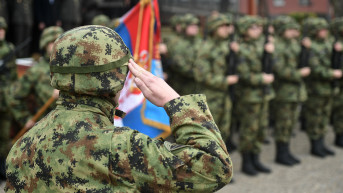
The proposal from the General Staff of the Serbian Armed Forces to reintroduce mandatory military service after 14 years has attracted significant attention, especially in the region. Experts from Pristina and Belgrade have different views on this initiative.
After the controversy sparked by the decision of the military leadership in Serbia to reinstate mandatory military service, which was abolished by the parliament in December 2010, Defense Minister Milos Vucevic stated that the Ministry of Defense and the General Staff of the Serbian Armed Forces would not abandon this initiative.
"We have submitted an official initiative to the military cabinet of the president, and we will hear their opinions, followed by a public debate", Vucevic said, explaining that the final decision would be made by the members of the Serbian Parliament.
According to him, the only remaining question is whether, if reintroduced, the military service will last for 100 or 120 days.
In the initial reactions, the State Department stated that they "carefully monitor this initiative", while the NATO Office in Belgrade was much more "relaxed", stating that it was an "internal matter" of Serbia and that they fully respected Serbia's military neutrality.
"NATO will continue to support Serbia's efforts to modernize its armed forces within the framework of developed and mutually beneficial partnership cooperation", the written response from NATO for Radio Free Europe states.
Political analyst and professor Nexhmedin Spahiu assesses for Kosovo Online that the announcement of reinstating mandatory military service in Serbia is evidence that Serbia is moving in the opposite direction of what the West expects from it, however, that such a move does not pose a danger to the region.
"The West expects the Serbian Army to align with NATO and to eventually become a member of this organization, and the reintroduction of military service indicates the opposite direction. Does it pose a danger to the region? I don't think so because Serbia is surrounded by the NATO pact from all sides. It is still a major power compared to the strength of Serbia. The only thing Serbia can do is disturb relations due to its influence on weaker countries like Kosovo, Bosnia and Herzegovina, Montenegro, North Macedonia, or Albania", Spahiu says and adds that it is difficult to expect Serbia to assume the role of a military leader in the region, but it can have an important political and economic role.
"I don't know if the reintroduction of compulsory military service is economically justified, but those who decided on it know. If the tendency is to have a professional army, then that is something that should have been done", Spahiu emphasizes.
According to him, the announcement of the reintroduction of mandatory military service in Serbia has not sparked specific reactions in Kosovo.
"People here are dormant. They are confident that NATO is here and that nothing can happen to them. Even when I talk about the danger of conflicts erupting in the region, they think I am exaggerating and that such a thing is not realistic", Spahiu says.
On the other hand, Milomir Miladinovic, the President of the Assembly of the Club of Generals and Admirals of Serbia, is determined that the reintroduction of mandatory military service does not mean that this country is preparing for war. He explains that the number of members of the Serbian Armed Forces is lower than the one agreed upon by the Vienna Agreement in 1996.
"Serbia is preparing for peace. The military is not a guarantee and a factor for war but rather a factor for peace. We need the military to prevent war and, at the same time, to be a guarantee of Serbia's capability as a deterrent factor. That is the essence of the military", Miladinovic emphasizes.
He adds that peace is necessary not only for Serbia but for the entire world.
"Unfortunately, there are still those who invest enormous resources in the needs of the military, but these investments in the military of other countries are for conquest, i.e., warfare. We invest in the military to successfully deter the enemy and, if necessary, to defend ourselves", Miladinovic states explicitly.
According to his words, the General Staff of the Serbian Army had previously proposed the reintroduction of mandatory military service for what he describes as highly practical reasons - the lack of training in younger generations.
"For the 12 years during which mandatory military service was suspended, we practically lost 12 generations of young soldiers who could have been militarily trained. At the beginning of 1999, we had over two million people militarily fit in the military registry. Unfortunately, 12 years have passed, so many untrained young people, and at the same time, 12 generations have aged out of mandatory military service in the reserve. Today, we practically do not have soldiers, young ones under 30, who have completed military service", Miladinovic explains.
He says that Serbia is currently facing the fact that, on one hand, it possesses modern technology comparable to that in surrounding countries, but on the other hand, there will be a problem due to the lack of trained personnel to operate it.
"When we talk about the factors of war, there are human factors, technology, space, and time. We have these three factors, but not the first, the main one, which is the human factor. We need people to fill the units in peacetime and, at the same time, to have them for the war formation, i.e., for reserve service and the needs of mobilization", Miladinovic specifies.
He says that, according to the Vienna Convention signed by Serbia over two decades ago, it was assessed that its armed forces should not exceed one percent of the total population.
"Why shouldn't we have as many soldiers as we deem necessary to be security-safe", this retired general emphasizes.
He recalls that the number of soldiers and the amount of weaponry in the Balkan countries were defined by the Agreement on Subregional Arms Control signed in 1996 in Vienna.
Commenting on the announcement from the State Department that they are "closely monitoring" the events related to the Serbian Army, followed by NATO's assessment that the issue of reintroducing mandatory military service is an "internal matter of Serbia", General Miladinovic says that such comments are funny and represent a provocation and a form of pressure to abandon the proposal. However, he is confident that they will not influence the final decision of the state leadership to reintroduce mandatory military service.
He says that it is unserious for the State Department to issue a statement that they are "monitoring events in Serbia" while simultaneously taking no action regarding the respect for UN Security Council Resolution 1244.
"People should laugh at such statements. Many things have happened since 1999 and Resolution 1244 when Kosovo first did not have the right to independence, then they recognized that independence, then it did not have the right to long-gun weapons, and now they want to form armed forces. They did not monitor those developments, and now they want to monitor a regular state, Serbia, for which the military is one of the pillars, like in any other state. Why shouldn't Serbia have a military according to its own standards?" President of the Assembly of the Club of Generals and Admirals of Serbia emphasizes.
He states that all countries in the world, including NATO members, operate according to the same principles and standards.
Miladinovic specifies that besides the fact that NATO Alliance members equip themselves with uniform equipment, each country has the right, depending on its budget, to equip its own army.
"When I once talked to the Chief of the General Staff of the Armed Forces of Romania, he told me that they are obliged to NATO to have a certain number of forces and resources. If we have the capability, we can also have a million-strong army tailored to our needs. Just like the Americans have regular armed forces and 'territorial defense', meaning the armed forces of their states. I remember that the Netherlands once bought vehicles from China, and when asked why they had done that, they said they would invest significantly less money and have vehicles of the same or even better quality. Therefore, each European country, a NATO member, has the right to arm itself for its needs. However, the main line remains: they must listen to the boss, and that is America", Miladinovic concludes.
In Europe and around the world, mandatory military service is regulated in various ways.
Among the former republics of the former Yugoslavia, no state has mandatory military service anymore. According to the Demostat data, of the 40 European countries with armed forces, 15 have some form of mandatory military service.
In NATO member states, six countries still have mandatory military service, while 23 have resolved it through professionalization.
Since 2016, in Norway, the country of NATO Secretary General Jens Stoltenberg, all men and women over 18 years old must undergo conscription, but out of 60,000 candidates, only 9,000 are called to serve in the military, and the service lasts for 19 months.
Military service obligation was abolished in Germany in 2011.
However, a public opinion survey by the "Insa" institute published in early January showed that the majority of Germans are in favor of reintroducing military service. Specifically, 52% believe that military service should be reinstated in Germany due to the country's security challenges.
After the events in Crimea in 2014, Ukraine and Lithuania reintroduced mandatory military service. In Ukraine, a law has been in effect since February 2022, allowing all men aged 18 to 60 to be called into the army.
Estonia and the new NATO member, Finland, never abolished military conscription.
Sweden abolished mandatory military service in 2010 but reinstated it after eight years due to a lack of volunteers.
At the same time, Switzerland and Austria, through referendums, expressed their refusal to abolish military service.
The Dutch armed forces lack about 9,000 recruits, leading them to consider expanding the military through mandatory service, similar to what Sweden did in 2018 due to a shortage of volunteers in the army.
This problem of insufficient interest among young people in Serbia for military service is also pointed out by analysts.
Predrag Petrovic from the Belgrade Center for Security Policy (BCSP) says for Kosovo Online that the actualization of the introduction of mandatory military service in Serbia is necessary due to the increasing outflow of personnel, as well as that the majority of citizens support the idea, but he warns that the youth, who are also the target group, are divided on this issue and that the majority does not show much interest.
Petrovic emphasized that bringing up the topic of reinstating mandatory military service pointed to the situation in the Serbian Army. The problem lies, as he explained, in the increasing and alarming outflow of personnel.
"Over the past five or more years, we regularly hear announcements that military service will be reintroduced, but it is, in fact, an attempt to address a truly alarming situation in the army. It is about the outflow of personnel, which is increasing", Petrovic said.
He added that by raising this topic, Serbia wanted to gauge the reactions of both domestic and international public opinion.
"I would interpret this as a trial balloon and testing the views of the domestic and international public on the reintroduction of military service in Serbia. It will be very difficult, as the majority of Serbian citizens are for the reintroduction of military service, but the young population, who are the target group for military service, has the most say", Petrovic pointed out.
He explained that young people in Serbia were divided on the issue of introducing military service, with a higher percentage opposing such a decision.
"They are divided on this issue. A slightly larger percentage of young people are against the reintroduction of military service, and we don't know how this situation will unfold in the future if a significant number of young people decide to express conscientious objection and refuse to serve military service under arms. We don't have answers to questions about how the entire structure will be financially resolved, considering that it costs millions and millions of euros", Petrovic said.
Military analyst Vlade Radulovic believes the same.
Radulovic recalls that there has been a Working Group in the Ministry of Defense for years dealing with the issue of reintroducing mandatory military service. However, it remains to be seen whether the implementation will indeed take place.
"It's not just a matter of whether the National Assembly will declare something; it is also a matter of finances, logistics, accommodation, complete uniforms, and everything else. Add to that the finances as a key component. Additionally, there is the officer and non-commissioned officer staff, if we are heading toward such a type of conscription without the existence of voluntary military service options", Radulovic said for Kosovo Online.
He believes that there are much more realistic formats, variations, and mechanisms to popularize military service without resorting to the proposed variant.
According to him, it is clear that the Serbian Army has an issue with the number of personnel.
"It is clear that there is a problem with filling positions; it is necessary for the sustainability of the military system to have soldiers and an army. And add to all that the global situation as it is," Radulovic said.
However, he emphasizes that geopolitical conditions should not be linked to the strengthening of the Serbian Army, given that Serbia is surrounded by NATO members.
"Although I wouldn't connect it too much to our conditions here because we are surrounded by NATO. I hope no one plans to wage war with NATO, we saw what that looked like in 1999. What will happen remains to be seen. I see all of this now as another initiative that has revived, and whether it will be implemented remains to be seen", Radulovic concluded.



comments