
Serbia once again in the Executive Board of UNESCO - a stronger bulwark for Serbian cultural heritage in Kosovo
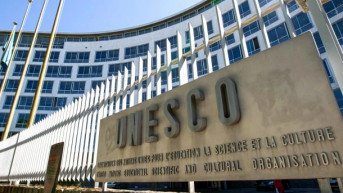
The re-election of Serbia to the Executive Board of UNESCO, besides being a confirmation of Serbia's standing in the organization, will be additional support for Belgrade in its ongoing efforts against Kosovo's attempts to become a member of this specialized agency of the United Nations for Education, Science, and Culture. Also, the presence in this UNESCO body is significant due to Pristina's overt intentions to translate Serbian cultural heritage in Kosovo into "Kosovar".
In the Executive Board vote held on November 15, Albania was also elected, and upon the announcement of the results, the Albanian Ambassador to UNESCO, Besiana Kadare, stated that "Kosovo is a project that will be worked on", that it "has its place" in UNESCO, and its membership in the organization would happen sooner or later.
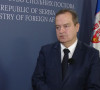
However, Serbia's Minister of Foreign Affairs, Ivica Dacic, has a different perspective. He told Kosovo Online that although many countries worldwide would continue to push for Kosovo's admission to UNESCO, the votes Serbia had received were a clear indication that it would "never happen".
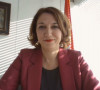
Additionally, Serbia's Ambassador to UNESCO, Tamara Rastovac Siamashvili, explicitly stated that Kosovo lacked support for membership within UNESCO.
During the election of Executive Board members, Serbia was in the Eastern European group of countries and received the highest number of votes - 137. Albania was also elected with 134 votes, along with Slovakia (117) and the Czech Republic with 99 votes.
"For us, it is a great recognition that we received the highest number of votes within our group. In the conditions of multiple candidates, we got 137 votes. This is a significant acknowledgment for Serbia", Dacic believes.
The head of Serbian diplomacy also stated for our portal that Serbia's election to the Executive Board, for the third consecutive time, was a major diplomatic success and recognition of the foreign policy it pursued, aiming for a balanced approach to global issues.
"It is a significant recognition of Serbia's past work in UNESCO, as Serbia chaired the Executive Board in the previous term. Our mission chief, Tamara Rastovac Siamashvili, chaired, and her work was evaluated by the Director-General and all member states as extremely successful", Dacic says.
As he points out, membership in the Executive Board also means greater assurance that Serbia will succeed in protecting its priorities concerning state and national matters.
"For us, our cultural heritage in Kosovo and Metohija is crucial, around which the battle has been waged all these years because the Albanian side is trying to relocate it, to no longer be Serbian heritage, but to be labeled as 'Kosovar'. On the other hand, we will be able to successfully fight against any attempt by Kosovo to gain membership in UNESCO. I think that is absolutely unrealistic at this moment. We won the vote in 2015, there was another attempt in 2017, and after that, they gave up because they knew in advance what the result would be. This is a guarantee that when it comes to Kosovo and Metohija, UNESCO's approach will be in line with our state and national interests. I especially emphasize this because our cultural heritage in Kosovo and Metohija, our monuments protected by UNESCO, especially Serbian monasteries and churches from the 12th, 13th, and 14th centuries, are defined as cultural treasures in danger. In danger from whom? From Albanian separatists and terrorists who are destroying Serbian churches and monuments in Kosovo and Metohija. There are four cultural monuments – Gracanica, Patriarchate of Peja, Decani, and the Church of the Virgin of Ljevic," Dacic said.
Regarding Serbia's re-election to the Executive Board of UNESCO, Serbia's Ambassador to UNESCO, Tamara Rastovac Siamashvili, stated for Kosovo Online that it signaled the prestige, weight, and influence that Serbia possessed. She emphasized that Serbia would use this influence in efforts to protect its cultural and historical heritage in Kosovo.
"Our membership in the Executive Board, which we will use to further promote the visibility of Serbia, will inevitably help in ongoing activities to protect our cultural and religious heritage. I would like to remind that the recent World Heritage Committee unquestionably decided to keep our cultural and religious heritage in Kosovo and Metohija on the danger list, where we received enormous support from the Committee members. This is another confirmation of the reputation that the Republic of Serbia enjoys in UNESCO", the Ambassador stated.
Addressing the statement of the Albanian Ambassador to UNESCO, Besiana Kadare, regarding Kosovo, Rastovac Siamashvili emphasized that UNESCO did not concern itself with the status of territories and strongly insisted on depoliticization.
"If the territorial integrity and sovereignty of some states are emphasized and underscored, it is impossible to overlook and not emphasize the need to protect the integrity and sovereignty of the Republic of Serbia. Regarding any future request from Pristina, I can say with absolute certainty that at this moment, they do not have the support of UNESCO membership, and they are aware of that", Rastovac Siamashvili concluded.
And the President of the National Committee of Serbia for Cooperation with UNESCO, Professor Goran Milasinovic, points out that Serbia's re-election to the UNESCO Executive Board is significant for the preservation of Serbian cultural heritage in Kosovo.
"The result is very convincing, and when you consider that out of more than 190 countries, 137 voted for Serbia, it truly means an elevation of reputation. Our interests will be better secured", Milasinovic said for Kosovo Online.
He added that he hoped the situation would not arise where there was a vote on Kosovo's membership in UNESCO.
"We hope that such a scenario will not occur, but we all remember the year 2015 when there was voting, and with a very 'tight' result, we managed to maintain our position", Milasinovic said, emphasizing that this organization should be apolitical.
"In practice, it certainly is not, and we see that every day, we saw it at the last General Conference. We are fighting against it, but a large number of countries, each having one vote, want to maintain their significance by influencing world politics and world justice with their vote, as well as UNESCO activities related to these segments of culture, science, and education. A balanced and neutral stance within UNESCO is always appreciated. I believe that with such an approach, not only now but in the last 10 to 15 years, we have gained a reputation that ensures that all well-intentioned states are informed, if nothing else, about the problems we have regarding Kosovo and Metohija, the protection of our monasteries that are on the list of endangered properties, and we all know why", Milasinovic stated.
He adds that the issue is not just about raising the reputation "for everyone to know".
"But, by doing so, we have created some guarantee that at least this generation will not allow our cultural heritage, probably the most significant, to pass into someone else's hands and be redefined, to be classified as someone else's culture. We can hardly imagine that scenario", Milasinovic emphasized.
0 comments