
Dacic: Serbia's re-election to the Executive Board of UNESCO means greater security in protecting our heritage in Kosovo and Metohija
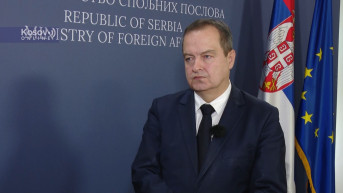
Serbia's election to the UNESCO Executive Board for the third consecutive time, according to the assessment of the Minister of Foreign Affairs of Serbia, Ivica Dacic, is a significant diplomatic success for Serbia, recognition of its previous work in this organization, and acknowledgment of the foreign policy it pursues. As Dacic states in an interview for Kosovo Online, this election also means greater security that Belgrade will succeed in protecting its priorities regarding state and national issues, especially in conditions where there are attempts to reclassify Serbian heritage in Kosovo and Metohija as 'Kosovar'.
Although, he says, many countries in the world will continue to push for Kosovo's admission to UNESCO, the votes that Serbia received yesterday are a clear indication that it will never happen. Regarding the possibility of Kosovo becoming a member of the Council of Europe, Dacic points out that the situation is different there, but the admission of Kosovo to that organization would be a drastic violation of the Council of Europe Statute and all international legal norms.
What does it mean for Serbia on the international stage that it has been elected for the third time to the Executive Board of the United Nations Educational, Scientific and Cultural Organization (UNESCO)?
This is a significant diplomatic success for Serbia, considering that this is the third consecutive time we have been chosen as a member of the Executive Board at this broad assembly of all UNESCO member states. It is a great recognition of Serbia's past work, as Serbia held the chairmanship of the Executive Board in the previous term. Our mission chief, Tamara Rastovac Siamashvili, chaired the board, and her work was evaluated by the Director-General and all member states as extremely successful. It is also a recognition of the foreign policy pursued by the state of Serbia, all state structures led by President Aleksandar Vucic, which strives to have a balanced approach to the numerous problems unfortunately present worldwide. We expected this result, but we are extremely satisfied because it is another confirmation of our good work and an indicator of how highly UNESCO member states value us.
Serbia received the highest number of votes within its Eastern European group. What does that indicate?
For us, it is a great recognition that we received the most votes within our group. In conditions where there were multiple candidates, we received 137 votes. This is a significant recognition for Serbia.
How important is membership in the UNESCO Executive Board in terms of protecting Serbia's national interests, especially when there are attempts to present Serbian cultural heritage in Kosovo as 'Kosovar'?
This membership primarily signifies greater assurance that we will be able to protect our priorities regarding state and national issues, as this organization deals with cultural heritage. Our cultural heritage in Kosovo and Metohija is of great importance, around which a battle has been waged for all these years, as the Albanian side attempts to relocate it, no longer recognizing it as Serbian heritage and instead labeling it as 'Kosovar'. On the other hand, we will be able to successfully oppose any attempts for Kosovo to gain membership in UNESCO. I believe that this is absolutely not realistic at the moment. We won the vote in 2015, there was another attempt in 2017, and after that, they even gave up; they didn't even apply because they knew in advance what the result would be. This is a guarantee that, when it comes to Kosovo and Metohija, UNESCO membership will align with our state and national interests. I emphasize this, particularly because our cultural heritage in Kosovo and Metohija, our monuments protected by UNESCO, primarily Serbian monasteries and churches from the 12th, 13th, and 14th centuries, are defined as cultural treasures in danger. In danger from whom? From Albanian separatists and terrorists who destroy Serbian churches and monuments in Kosovo and Metohija. There are four cultural monuments in question: Gracanica, the Patriarchate of Peja, Decani, and Our Lady of Ljevis. This is crucial for us, considering that many countries in the world will undoubtedly continue to push for Kosovo's admission to UNESCO, and this is a clear indication that it will never happen.
Have you contacted France or Germany regarding the relocation of the memorial plaque to the fallen Serbian soldiers in World War I at the cemetery in Pristina, which occurred at the initiative of the ambassadors of these two countries in Pristina?
We consider this to be a scandalous move, especially coming from countries that should be well aware of Serbia's significant contribution to victory in World War I and present themselves as our friends. Considering this, I have instructed my assistant for bilateral cooperation to invite the French and German ambassadors for a discussion and to point out the unacceptability of such actions. We have received assurances from the French Embassy in Belgrade that they were not aware of what had happened and that they would advocate for everything to be returned to its previous state.
Do you believe that Kosovo will never cross the UNESCO threshold, and what is the situation in the
Council of Europe, where Kosovo's membership request has entered the procedure?
The situation in the Council of Europe is significantly different because our position in Europe, concerning countries that recognize or do not recognize Kosovo, is the most challenging. Given the pressure from Western countries, mostly from Europe, excluding the US, a significant number of countries have recognized Kosovo. The procedure has started in the Council of Europe, but I think we are far from its completion. We believe that there are no international legal conditions for it, that it is not in line with the Statute of the Council of Europe, and that it would be the first territory to become a member of the Council of Europe without being recognized by the UN as a state. Not to mention a whole series of other shortcomings if we were to agree that we could even discuss it – such as the situation in Kosovo and Metohija, the state of human rights, and attacks on the Serbs living there, for now, it is difficult to predict how quickly all of this will progress. We hope that everyone will respect international law, but the situation in this international organization is the most challenging because decisions are made by a certain majority that currently exists, meaning there is a sufficient number of countries in favor of it. Whereas in organizations at the global level, there is no such majority. They (Kosovo) have no chance of becoming members of the United Nations, UNESCO, or Interpol; they cannot become EU members because a number of countries do not recognize Kosovo and Metohija, nor members of the OSCE because consensus is required there. The only place where they could become members is the Council of Europe if the question of whether it is a state or not is ignored. In our opinion, their admission would be a drastic violation of the Council of Europe Statute and all international legal norms.
0 comments