
Sexual harassment of women in Northern Kosovo: Monetary fines for perpetrators, lifelong trauma for victims
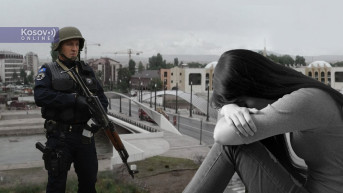
A cocktail of negative emotions. That’s how women in North Mitrovica who have been victims of sexual harassment by unknown men on the streets of the city describe their feelings. Fear, judgment, distrust, and misunderstanding are just some of the reasons they remain silent about this increasingly frequent issue. Those who do muster the courage to seek help from the authorities are often met with the response that their report is false. For the victims, this trauma lasts a lifetime, while perpetrators in North Mitrovica have so far received only two fines of 300 euros each.
Written by: Milena Miladinovic
“The most painful sound isn’t always a scream – it’s silence. This topic is more than a headline. It is a call to break the cycle of violence,” said Kosovo President Vjosa Osmani at the International Forum on Women, Peace, and Stability, which she has organized in Pristina for the third consecutive year, speaking about sexual violence against women.
The cries of women in northern Kosovo who have become victims of sexual harassment are loud, but due to distrust in institutions—especially the police—lack of punishment for offenders, and societal condemnation, they often fade into the most painful silence.
One victim from North Mitrovica, the city where she was born, described the unpleasant situation she experienced to Kosovo Online.
Powerless to defend herself, she said she felt immense fear.
“One evening when I was returning from a friend’s house, around 9 or 9:30 PM, near the Technical School on the way toward the United Nations building, a car with Albanian license plates followed me. They catcalled me from the car, saying things like ‘You’re beautiful, get in.’ I was alone in that part of town, so I picked up my phone and pretended to talk to someone. But I was terrified. I didn’t know how to defend myself or what to say to them. I thought if I responded, they would only provoke me more. There wasn’t a single police officer nearby,” she recounted.
As if her fear weren’t enough, a few days later her daughter experienced a similar situation—this time during daylight hours, on the crowded streets of North Mitrovica.
Because of the ongoing harassment, this woman is considering seeking professional help to better cope, as she is convinced such incidents will continue.
“At 5 PM, they catcalled my daughter from a car, trying to lure the kids. She turned her head and ran toward us. Provocations from Albanians who dare to come into our part of town are becoming more frequent. They threaten and harass us to make us feel unsafe. To this day, I still feel extremely disturbed after the incident. I’m seriously considering visiting a health center to speak to a psychiatrist or a qualified person to help me get through these incidents as painlessly as possible, because I’m certain they’ll continue,” she said.
Feeling helpless, she added that women in North Mitrovica, including herself, walk the streets in fear.
“The saddest part is that I have no one to turn to for help. When my friends reported incidents to the police, the only thing that happened was that the event got logged—what time it occurred, what was said—and that was it. Women still walk in fear. Even I, in broad daylight, walk along the buildings to avoid another unpleasant situation. I tell my kids to stay home or with their parents as soon as it gets dark,” she added.
She emphasized that these problems didn’t happen before but are now increasingly frequent. She sees the sexual harassment of women as another attempt by Albanians to intimidate Serbs into leaving Kosovo.
“None of us used to have these issues. Cars would drive through the city center, but there weren’t any major problems. Now it’s a daily occurrence. They don’t care about the time or place, whether there are kids, whether women are old or young, or even if they’re little girls. They don’t pick their victims—their only goal is to scare the Serbian people so we leave this area. I hope the relevant authorities will find a way to put a stop to this,” the victim said.
Numerous NGOs in the north confirm that cases of sexual harassment of women in North Mitrovica have increased in recent months. However, official reports from victims are lacking, and when harassment is reported, there is little appropriate institutional response.
Kosovo’s acting Minister of Justice, Albulena Haxhiu, discussed this issue with police, prosecutors, and court officials during a visit to North Mitrovica.
“Every report of sexual harassment or violence, regardless of the victim’s ethnicity or location, will be handled professionally. I call on everyone who experiences or witnesses such incidents to report them immediately to the competent institutions,” Haxhiu stated.
At the end of May, a safety discussion was held in North Kosovo with civil society organizations, EULEX representatives, the mayor of North Mitrovica Erden Atiq, and deputy regional police commander Veton Elshani, with sexual harassment as one of the main topics.
Elshani told Kosovo Online that the meeting was productive and suggested regular bi-weekly or monthly meetings to improve citizens’ quality of life. He added that police had increased patrols in North Mitrovica.
To date, only two cases of sexual harassment in North Mitrovica have resulted in punishment: fines of 300 euros.
Deputy Ombudsman Srdjan Sentic also addressed this issue in an interview, stating that the Ombudsman’s Office treats the issue with high priority and that urgent action is needed.
“The Ombudsman regularly meets with civil society groups and women’s associations whose members have experienced direct or indirect sexual harassment. We are handling this with utmost attention and demanding the same from responsible institutions. The fact that the Ministry of Justice and the police have implemented an operational plan shows that the problem has been recognized and must be addressed adequately,” said Sentic.
But how can the issue be addressed when victims fear the outcome of reporting, fear societal judgment, and lack trust in institutions?
According to sources from Kosovo Online, victims are expected to do too much. The frequent lack of evidence and witnesses—because no victim is ever truly prepared to react in such a situation—leads authorities to dismiss reports as false.
This discourages victims from pursuing justice and sets a painful precedent for others to remain silent.
The environment also plays a significant role, often failing to support victims whose trauma lasts a lifetime.
Adeljina Berisha, program manager for combating violence at the Kosovo Women’s Network, emphasized that sexual harassment is a criminal offense punishable by prison and that women in the north should exercise their right to seek justice.
“Sexual harassment is one of the most widespread forms of gender-based violence in Kosovo and worldwide. We’re saddened to hear these incidents are increasingly common in North Mitrovica. Women have every right to report this crime. According to Kosovo’s Criminal Code, sexual harassment is a crime punishable by imprisonment. Women must use all legal tools available to seek justice,” said Berisha.
She noted that collecting evidence for sexual harassment is difficult, making reporting even harder for victims.
“It’s hard to preserve evidence of sexual harassment, so women undergo strict procedures. They are expected to find proof, even though the burden of proof should fall on the perpetrator. Facing such treatment from institutions can discourage women from reporting,” she added.
Berisha stressed that if institutions fail victims, women must escalate the matter and report institutional misconduct.
“All women—regardless of ethnicity or religion—have the right to report sexual harassment. It can be verbal, physical, or a gesture. When you feel intimidated or harassed, you have every right to report it. And if the institutions fail you, escalate it. Unfortunately, many cases in Pristina were dismissed due to a lack of evidence, which leaves perpetrators free and normalizes harassment. But harassment is a crime, and must be treated as such,” she said.
She added that the Kosovo Women’s Network cooperates with NGOs in North Kosovo to support victims and that trust between citizens and institutions must be rebuilt.
“We know the north has its specific circumstances. Trust must be built between citizens and institutions—that should be our focus,” said Berisha.
On behalf of the Kosovo Women’s Network, she offered legal support to women in the north.
“We stand in solidarity with all women in Kosovo, especially those in the north. We understand their pain and want them to know we’re here to help. We have legal staff who represent victims of gender-based violence, including sexual harassment. If women need legal support, they can contact us, and we will assist them in pressing charges against perpetrators and holding negligent institutions accountable,” Berisha concluded.
She also emphasized the importance of educating youth about this issue from an early age—teaching both boys and girls that sexual harassment is a criminal offense.
Tanja Ignjatovic of the Autonomous Women’s Center believes women often do not report harassment due to distrust in male-dominated institutions.
“Women don’t report sexual harassment because they feel institutions dominated by men won’t take them seriously. These crimes often occur without witnesses, and victims rarely have enough evidence to be believed. Institutions may minimize or normalize their experience, which deters reporting. If nothing happens after reporting, women are left with only unpleasant consequences—including humiliating interrogations and even being accused of lying,” Ignjatovic told Kosovo Online.
She added that the Ombudsman should investigate why cases go unreported.
“When comparing sexual offense reports in Serbia and Sweden, Sweden has ten times more, despite having only slightly more residents. This doesn’t mean Swedish men are more violent—it means Swedish women are more aware and trust institutions. Ombudspersons must work to understand why violence isn’t reported at all and help institutions develop better procedures. It’s especially harmful to dismiss reports as false—just because it wasn’t reported doesn’t mean it didn’t happen. We know from experience that women endure a lot before they finally speak out,” Ignjatovic concluded.



0 comments