
Solidarity during the holidays: Alarming data on poverty in the region
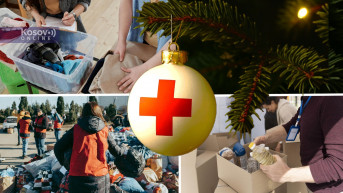
While the Christmas holidays bring messages of hope and solidarity, warnings from experts across the region, speaking to Kosovo Online, remind us that for hundreds of thousands of people the daily struggle with poverty does not stop—from families without a secure daily meal to children growing up without basic living conditions. They point out that those whom society “does not see” survive thanks to those who refuse to look away, which is why every appeal for empathy and shared responsibility carries particular weight today.
Written by: Petar Rosic
Rising living costs and economic uncertainty have further worsened the position of socially vulnerable citizens throughout the region. According to experts, assistance is needed by a growing number of people, and their needs are more diverse than ever before.
In Serbia, according to official data, the poverty rate stands at around seven percent of the population, or approximately 500,000 people.
Albania is facing one of the highest levels of poverty in the region and in Europe, with more than half of its citizens subjectively feeling poor.
In North Macedonia, the poverty rate, according to Prime Minister Hristijan Mickoski, declined in 2024 to 21.9 percent.
“As far as the poverty rate is concerned, I would like to say that in 2024 it is lower than in 2023 and the best since 2020,” Mickoski stated.
The situation is also worrying in Kosovo. Last year, the Deputy Director of the World Bank for Kosovo, Jane Sprouster, pointed out that Kosovo has the highest poverty and unemployment rates in Europe. She emphasized that, according to World Bank data, the poverty rate stands at 19.2 percent and that Kosovo must achieve sustainable progress in reducing poverty, particularly among the young population.
More than 90,000 vulnerable families in Kosovo
That the situation is not improving but rather deteriorating was warned last week by Agron Demi, founder of the Atlas Institute. He disputed government claims that Kosovo is recording economic growth and increased well-being for its citizens.
Commenting on the latest data published by caretaker Finance Minister Hekuran Murati, Demi stressed that poverty in Kosovo is on the rise.
In a post on Facebook, he stated that the last official poverty measurement was conducted in 2017 and stood at 17 percent, whereas today 25.5 percent of the population is in a financial situation that requires subsidization of utility bills.
“There are more than 90,000 vulnerable families that received energy bill subsidies, as stated by the finance minister. A vulnerable family means a poor family or a family on the verge of poverty. According to the latest population census, 353,000 families were registered, which means that 25.5 percent of citizens are in a financial situation that requires subsidization of bills. The last poverty measurement in Kosovo was carried out in 2017 and stood at 17 percent. Since then, we have gone through a pandemic and a price crisis, but we have not had updated poverty data. What the Ministry of Finance is now showing is an indicator that poverty is increasing, which is a trend observed in many other countries after the pandemic,” Demi wrote.
Analyst Shenol Muharemi also warns that a quarter of Kosovo’s population “feel or are financially vulnerable.”
He pointed out that these people live on an income of just five euros per day, or 150 euros per month.
“I tell you, I am still shocked and cannot forget for a moment how we ended 2025 with as many as 90,000 vulnerable families! That means five euros per person to eat, to heat their homes in winter, for education, healthcare and medicines… for transport, and to pay high taxes… and everything else needed for life. This group—around 389,262 citizens of Kosovo—has enough income to buy three bread rolls a day and a small bottle of water, nothing more!” he wrote on Facebook.
High perception of poverty in Albania
In Albania, the situation is even worse, warns Eduard Gjokutaj, an expert in economics and employment and president and fiscal analyst at the company Altaks, speaking to Kosovo Online.
According to him, Albania records alarmingly high poverty indicators compared to other European countries.
“According to the latest data measuring the poverty threshold, Albania has between 41 and 46 percent of its population in this situation, which is among the highest levels in the region and in Europe. Of course, this level is much higher than what is considered ‘absolute poverty,’ which affects about 20 percent of the population,” he says.
He highlights that a particular problem is the high level of perceived poverty among citizens.
“What distinguishes Albania is that the level of the population who consider themselves poor is higher and reaches up to 55 percent. This means that around one million people in our country feel deprived of the seven basic services or products they should have,” our interlocutor explains.
Speaking about the causes of this situation, Gjokutaj emphasizes the structure of the country’s economy and labor market, noting that differences between urban and rural areas further deepen poverty.
“Rural populations are more affected due to limited access to products and services, and because of the way our economy is structured, being more concentrated around the capital and other large cities. This negatively affects income distribution among different segments of the population. Another factor is the labor market itself, which does not stimulate the entire workforce. The portion of the workforce that remains here does not have the opportunity to be employed in sectors that provide sufficient income for a dignified life. A large share of household expenditure in Albania goes to food and basic products or services needed for living,” he says.
Finally, he assesses that government measures to date have not been aimed at long-term solutions.
“State policies so far have mostly been aimed at easing immediate social tensions—reactive or short-term policies—but not sustainable policies that could give such momentum to the economy as to produce not only short-term improvements but long-term ones. Such policies would affect household incomes overall, and individuals in particular, by reducing the tendency of young people to leave the country as the only possible solution,” Gjokutaj concludes.
Homelessness rising rapidly in North Macedonia
Homelessness is also taking on alarming proportions in North Macedonia and increased the most during the COVID-19 pandemic, Dragana Lazarovska, coordinator of the Day Care Center in Momino Potok, told Kosovo Online. She adds that around 80 percent of the Center’s users are men.
The Day Care Center of the Red Cross in Momino Potok in Skopje, opened in 2008, has been providing support for those left without a home and basic living resources for 18 years. Poverty in North Macedonia, as well as in the wider region, particularly affects the most vulnerable categories of citizens—the homeless.
“The goal is to address all the problems that arise throughout their lives. Over the past 18 years, the structure shows that the number increases year by year. Chronologically, I can say that in 2008, when it opened, it was a shelter for the homeless. A year ago, after being licensed with the support of the Ministry of Social Policy, Demography and Youth, the name was changed to a Day Care Center,” Lazarovska explains.
At the Day Care Center, homeless people receive a wide range of services, from food and clothing to medical and psychological assistance.
“This means that the Center offers a range of services: clean clothes; dirty clothes are left to be washed; access to bathing facilities; treatment for scabies and lice. There is professional staff—a doctor, social worker and psychologist—who provide the necessary help and support to address all their health, social, legal and psychological problems,” she says.
The number of users in North Macedonia continues to rise.
“In 2008, when the shelter opened, there were about ten people. By 2012, the number had risen to 50, in 2017 to around 100, and since the onset of COVID-19 in 2019 to today, an additional 50 homeless people have arrived. We currently count 160 users,” Lazarovska warns.
The pandemic further worsened the situation, as many citizens lost their jobs and fell into homelessness.
“Those 50 new homeless people were like any other citizens—employed, productive, taking care of their lives, earning incomes, paying rent and maintaining households. However, with job losses and closures during three years of COVID-19, this directly affected certain categories who then slipped into homelessness. From a normal, happy life with family and established relationships, they lost their jobs and things spiraled downward, leading them to seek help at the Center. Homelessness as a sociopathological phenomenon has been growing rapidly and increased the most during COVID-19,” she says.
Most users are men aged 50 to 55.
“Globally, homelessness is primarily a male issue, and that is the case here as well. About 80 percent are men (120–130 people), while 30 to 40 are women. These are people who have lost all ties with their closest relatives. Even if families exist, relationships are strained, cold, or nonexistent. Many have addictions—common triggers are gambling, alcohol and drugs. Among women, prostitution is also present to some extent. There are also people with mental illnesses who were often hospitalized but later discharged and have nowhere to go, so they seek help from the Red Cross. It saddens me that the number increases every year, but the Red Cross has a professional team and resources to help these people, whom we have been serving for 18 years,” Lazarovska explains.
One of the biggest challenges in assisting the homeless, she says, is the lack of systemic resources.
“Homelessness exists in every society. There are 100 million homeless people worldwide, which would make them the tenth largest country by population. North Macedonia is not immune, and the number is rising due to the lack of accessible social and structural resources. Still, in recent years more actions have begun for this group,” she notes.
However, state policies are still insufficiently developed due to the lack of effective national social housing policies and resources for free healthcare services. Lazarovska adds that beyond basic needs, the homeless require stability, education and social inclusion.
“What they lack most is a roof over their heads—even a 15-square-meter room where they would be safe. Then employment as a springboard, and adult education. They need food, footwear, clothing, medicines and hygiene. Free medical examinations and prophylaxis should be introduced; early detection of diseases is crucial. The homeless should also be included in working groups that make decisions about them. Their top three needs are: a warm home, employment and inclusion in social decision-making,” she says, appealing to citizens and companies to donate, especially medicines, due to high costs and the poor health of this population.
Similar challenges in Serbia
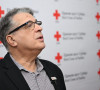
When it comes to the most vulnerable population groups and basic humanitarian needs, the situation in Serbia is similar, while trends of social vulnerability have remained relatively stable for years, Ljubomir Miladinovic, Secretary General of the Red Cross of Serbia, told Kosovo Online.
“Today, as in previous years, the trends remain largely the same. The numbers of socially vulnerable people are relatively stable. According to data from the Statistical Office of the Republic of Serbia for 2022, the absolute poverty rate stands at around seven percent of the population, or about 500,000 people, which is a very serious number,” he notes.
Women more vulnerable than men in Serbia
Speaking about the role of the Red Cross, Miladinovic emphasizes that the organization focuses on the most vulnerable in local communities across Serbia.
“We play a supportive role to public authorities and, through our nationwide network, remain in contact with people, collecting information that we can share with potential donors,” he explains.
He notes several particularly vulnerable population groups.
“These include children, single-parent families, and people dependent on various forms of social assistance. From a gender perspective, women are more vulnerable than men. In the public kitchens program in Serbia, which covers 77 communities, around one-third of the 33,000 beneficiaries are children under 18, which is an important indicator and a key focus of Red Cross activities,” Miladinovic says.
Food remains the greatest humanitarian need on the ground.
“Definitely the biggest challenge is food security, which is why this extensive program has existed since 1992. Over the past decades, the Red Cross of Serbia has prepared and distributed more than 170 million cooked meals to vulnerable populations. In addition to food, there is also a need for clothing and footwear. Through cooperation with companies in the corporate sector engaged in production and trade, we receive invaluable support and are grateful for it,” he says, calling on all those who can to join these efforts.
Miladinovic stresses the importance of solidarity, empathy and a culture of giving.
“We need to further awaken these feelings that exist among our people. We must develop a culture of giving so that we understand why it is important to contribute to our communities throughout the year, whether through social actions or voluntary blood donation, which is also a form of giving that helps our communities,” he concludes.
Miladinović naglašava važnost razvijene solidarnosti, empatije i kulture doniranja.
„Nama je potrebno da ta osećanja koja postoje u našem narodu dodatno budimo. Mi treba da razvijemo kulturu doniranja da bismo razumeli zašto je potrebno da tokom godine doprinosimo svojim zajednicama, bilo kroz akcije socijalnog karaktera ili dobrovoljno davanje krvi, jer i to je način doniranja kojim pomažemo svojim zajednicama“, navodi on.


comments