
Miladinovic: Half a million people in Serbia at risk of poverty, donation culture needs to be developed
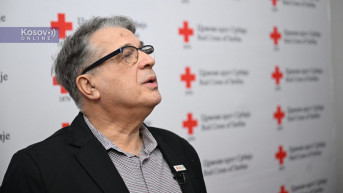
The most vulnerable categories of the population in Serbia remain children, single-parent families, and beneficiaries of social assistance, while food is the basic and greatest humanitarian need, Ljubomir Miladinovic, Secretary General of the Red Cross of Serbia, told Kosovo Online.
According to Miladinovic, trends of social vulnerability in Serbia have remained relatively stable for years.
“Today, as in a certain period that we have been monitoring for many years, the existing trend is being maintained. These are mostly approximately similar numbers of people who are socially vulnerable in our communities. According to data from the Statistical Office of the Republic of Serbia from 2022, in relation to the absolute poverty rate, it amounts to literally around seven percent of the population, which is about 500,000 people, and that is truly a serious number,” our interlocutor points out.
Speaking about the role of the Red Cross, Miladinovic emphasizes that the organization’s focus is on the most vulnerable in local communities across Serbia.
“We have an auxiliary role to public authorities and, so to speak, through our field network, covering the entire Republic of Serbia, being in touch with people and in contact with people, we collect information and are able to share that information with potential donors,” he says.
Miladinovic explains that there are several particularly vulnerable categories of the population.
“There are several categories of particularly vulnerable segments of the population, first and foremost children, single-parent families, then parts of the population that depend on various types of social benefits and social assistance. When we look at it by gender, women are more vulnerable than men. When we talk about the public kitchen program in the Republic of Serbia, which covers 77 communities, about one third of the 33,000 beneficiaries are actually children up to the age of 18, and that is certainly an important piece of data and an important direction that the Red Cross is developing,” he states.
He stresses that food remains the greatest humanitarian need they face in the field.
“Definitely the biggest challenge is people’s need for food, and that is why such a well-developed program exists, which has, since 1992, included a large number of people. In the past decades, the Red Cross of Serbia has prepared and distributed more than 170 million cooked meals to vulnerable populations. In addition to food, there is also a need for clothing and footwear. Through communication with companies from the corporate sector engaged in production and trade, we receive valuable support and we are grateful for it,” this humanitarian worker says, calling on everyone who is able to join them in these actions.
Miladinovic emphasizes for our portal the importance of developed solidarity, empathy, and a culture of donating.
“We need to further awaken those feelings that exist among our people. We need to develop a culture of donating in order to understand why it is necessary to contribute to our communities throughout the year, whether through social initiatives or voluntary blood donation, because that too is a form of donating through which we help our communities,” he says.
Finally, he highlights the importance of cooperation with institutions and partners.
“Thanks to cooperation with the Ministry of Labour, Employment, Veteran and Social Affairs, as well as with the support of citizens and the corporate sector, we manage to ensure the functioning of public kitchens, with the distribution of more than 53,000 portions of family food and hygiene packages and flour in quantities of 10 kilograms, and with all these practical activities we truly reach a large number, several hundred thousand people who need assistance, because the Red Cross is a bridge between those who need help and those who can help through donations and their empathy,” Miladinovic says.


0 comments