
Is there a law that determines the currency of Kosovo, and on what basis is the euro used?
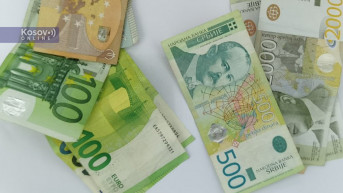
Contrary to the saying "Look before you leap," the authorities in Kosovo seem to have embarked on a "hunt" for the dinar without first legally regulating what currency is valid in Kosovo. Namely, the euro entered circulation in Kosovo in 2002, inheriting the German mark, which was adopted as the de facto currency without negotiations with the German Bundesbank, However, Kosovo Online interlocutors point out that the single European currency has not been officially declared as Kosovo's official currency by any law to this day.
The Constitution of Kosovo specifies that there will be only one currency, but it does not specify which one, while the Law on the Central Bank states that the "currency of Kosovo will be determined by law," but such a law does not exist.
In these circumstances, on February 1, the Regulation on Cash Transactions of the Central Bank of Kosovo entered into force, stating in Article 35 that the only currency allowed for cash transactions and in Kosovo's payment system is the euro, effectively giving the green light to "deal" with the dinar and citizens in Kosovo who receive income from the budget of Serbia.
A political scientist Ognjen Gogic tells Kosovo Online that Kosovo and Montenegro are the only two areas where the euro is used as a de facto currency, outside of agreements with the European Central Bank.
"In Kosovo, two currencies are de facto used in parallel - the dinar and the euro - and there is no clear legal basis for either of them in terms of laws regulating this. The Constitution of Kosovo states that there will be one currency in Kosovo, but it does not specify which one, and the law regarding the Central Bank of Kosovo states that the currency will be determined by law, but that law has never been enacted," Gogic says.
He also says that the situation regarding the use of currencies in Kosovo was most succinctly explained by the head of UNMIK, Caroline Ziadeh, during her address to the UN Security Council, stating that there were two de facto currencies and that this situation had persisted for the past 25 years.
Gogic points out that Kosovo is in a specific situation regarding the use of the euro because only EU members can use the euro after meeting convergence criteria and becoming a part of the eurozone.
"Even not all EU members can use the euro if they do not meet all the criteria. They are obliged to switch to the euro once they meet them. The best example is Croatia, which entered the eurozone nine years after becoming an EU member. In some earlier situations, countries on the path to the EU - Croatia, Bulgaria, or Bosnia and Herzegovina, also considered unilaterally adopting the euro as their currency, but the EU threatened them with sanctions or hinted at suspending the European integration process if they introduced the euro before being ready to do so. This did not happen in the case of Kosovo and Montenegro, which unilaterally use the euro, and the EU tolerates the use of the euro here. It is not about a large amount of money that could disrupt monetary stability in the eurozone, but it is primarily about political reasons related to the dissolution process of the state union of Serbia and Montenegro and later with the unilateral declaration of independence of Kosovo," Gogic explains.
However, he says that in relations between the EU and Kosovo, sooner or later, the issue of the euro will become a problem if Kosovo continues to move towards EU membership because it will find itself in a situation where it began using the euro before it was ready for it.
"That is indeed a question that everyone avoids and turns a blind eye to, but the problem arises because the euro, unilaterally introduced in Kosovo, is now being used as a means to oppress a minority and exert pressure on a non-majority community in Kosovo that uses dinars. This has now become a question for the European Central Bank and the EU - how is it even possible for their currency to be used for such purposes? Also, if there was no reason before to question whether Kosovo could use the euro, now is the time, because it is being used as a means to violate human rights. So, the question now is actually about dialogue in Brussels not between Belgrade and Pristina on how to technically resolve the issue of payment transactions, but between Brussels and Pristina on whether the euro can be used as a means to pressure an ethnic community," Gogic says.
He says that the CBK Regulation abolishing the use of dinar is not based on law because the CBK cannot determine by its regulation which currency is used in Kosovo; only the parliament can do so through legislation, as both Serbian and Albanian legal experts in Kosovo have already pointed out.
"Kosovo has opted for this 'trick' where the supposedly independent CBK makes such a decision, and it is said that the authorities are not responsible for it because they cannot influence the work of an independent institution. This was a shortcut because if Kosovo wanted to establish a single currency, namely the euro, the right way would be through legislation, but that would take much longer and raise many other questions. So, here we see hypocrisy because it appeals to the rule of law and says that the executive branch cannot influence the work of the CBK, but on the other hand, we have the CBK making decisions outside the law, and even the police taking measures based on a CBK decision that is not legal. This is selective invocation of the rule of law," Gogic says.
The use of the euro in Kosovo was established during the UNMIK administration, lawyer Ardian Bajraktari says for Kosovo Online, but at the same time, he states that the question of currency should be determined by a separate law.
"According to Article 11 of the Constitution, it is stipulated that only one currency will be used in Kosovo, and Article 16 of the Law on the Central Bank states that a law will determine which currency will be in use. I am not aware of any specific legal provision that determines which is the sole currency in Kosovo. The only authority to establish rules is the Central Bank, but the currency issue should be determined by a separate law," Bajraktari said.
As he adds, it must be taken into account that before the declaration of Kosovo's independence, UNMIK had jurisdiction, and there is a relevant UNMIK regulation establishing the euro as the sole currency in Kosovo.
"So, the euro was established in Kosovo during the UNMIK era. With the declaration of Kosovo's independence, our country assumed certain obligations, some of which were approved by the UN Special Representative," Bajraktari says.
Regarding whether there is an official agreement with the EU for the currency in Kosovo to be the euro, he believes that there are no objections regarding the use of the euro as the sole currency.
Lawyer Vasilije Arsic, who, along with colleagues, filed a request last week to the Constitutional Court of Kosovo for the assessment of the constitutionality of Article 35 of the Regulation of the Central Bank of Kosovo, which removes the dinar from circulation, says that the Constitution of Kosovo envisages that the Assembly adopts a law on currency, but that such a law has not been adopted. He emphasizes that the Regulation issued by UNMIK previously defined the use of the dinar in the payment system of Kosovo and that this act is still in force.
"The Regulation of the Central Bank of Kosovo is unlawful because the CBK does not have the authority to enact regulations governing payment transactions in Kosovo. According to the Constitution of Kosovo, the Assembly is supposed to adopt a currency law. However, such a law has not yet been adopted, and the CBK has granted itself the mandate to enact regulations that are illegal and unconstitutional because it violates the Constitution, which clearly defines that the Assembly will regulate the currency in Kosovo through legislation," Arsic says for Kosovo Online.
He expects that the Constitutional Court will legally assess the request submitted by him on behalf of the legal team and reminds that he also submitted the request in his personal capacity.
"I filed the request both as a member of the legal team and as Vasilije Arsic because I am affected and endangered by the CBK regulation, as a member of the Serbian community who receives income in dinars. This regulation deprives me of the right to receive my pension, as well as other rights - such as property and dignity. The regulation also violates the right to life because many people find their lives more difficult since they cannot meet their daily needs, buy food, and medicine, or fulfill their existential needs. The regulation of the Central Bank of Kosovo undermines the livelihoods of 100,000 Serbs living in Kosovo who receive income from central Serbia, while the UNMIK regulation that defined the use of the dinar in the payment system of Kosovo is still in force. The dinar as a currency is not illegal in Kosovo," Arsic says.


comments