
They help Kosovo, but not "Greater Albania"; where do the interests of the USA and Albin Kurti not coincide?
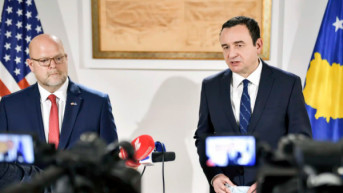
The recent statement by US Ambassador Jeffrey Hovenier that Washington does not support either "Greater Serbia" or "Greater Albania" or the redrawing of national borders in the Balkans has opened up the topic of whether the Western powers really think that the project of Kosovo statehood, for which they wholeheartedly advocate, doesn’t lead precisely in the implementation of the Great Albanian plan, as well as the question of where their interest does not coincide with the desire of Albin Kurti and his followers for the ethnic unification of the territories where the Albanians live in the region.
Although there are interpretations that Hovenier's message to Kurti's kindling of a new nationalist fire among extreme Albanians, after his recent stay in North Macedonia, if it was sincere, should be much harsher, the performance of the US Ambassador should be carefully observed in the context of the US interests in the region and complex of geopolitical relations on the world stage, according to experts on this topic. The argument that the USA is not suitable for the project of large national states in the region, not even the one created by the Albanians, is increasingly heard, but that it is better for their interests that the Balkans be broken into several equally "strong" entities, which are held in mutual counterweight.
Former diplomat, Vladislav Jovanovic, points to the domino effect of the potential creation of a "Greater Albania", i.e. the reactions that would follow, primarily from Serbia, but also from Bulgaria, which could emerge with similar aspirations to gather their peoples, which, according to him, doesn’t suit the US
"The USA does not suit a 'Greater Albania' because it would have the engagement of Serbia as a counter-action, and they do not want that. They have other priorities and want their hands free to confront other great powers. The creation of a 'Greater Albania' would automatically mean the creation of ' Greater Serbia’. But, not only that, a 'Greater Albania' would threaten other countries as well, Greece, for example, which is a member of NATO, with which the USA has excellent relations. And Bulgaria, whose appetites towards Macedonia, which for the time being are turning into legal form. But, if the Albanians managed to tear off almost half of Macedonia, Sofia would appear to take the rest for herself. In the end, Serbia would not be able to sit idly by, especially since the rights of the Serbs in Kosovo and Metohija are constantly threatened," Jovanovic points out.
He adds that it is a dangerous game that Americans cannot afford to play. He states that "Albanians are the biggest favorites of the USA, but not so much that they would allow them to create a 'Greater Albania'."
"They love the Albanians the most, but not more than themselves. The Albanians sometimes forget that and play along, like Kurti in Tetovo. Anyone who would try to muddy the waters in the Balkans, either in their own, or someone else's interest, would not be approved by the US. It wants the status quo, with pressure on Serbia to be maintained in the expectation that, in the end, through that evolution of pressure, it will be forced to recognize Kosovo's independence. Kurti overplayed his game with his performance in Macedonia, possibly because he was encouraged by some other power centers, in Germany, who traditionally want a counterbalance to the Serbs, who are always inconvenient and dangerous for them. This traditionally sits in the drawers of the German political factor. At the moment, it is dormant, but I do not rule out that some moves are being prepared for a potential situation where the US begins to withdraw from the Balkans," our interlocutor believes.
Commenting on why Hovenier's reaction to Kurti's approach in North Macedonia was not sharper, Jovanovic says that the US diplomat did not want to qualify the Kosovo Prime Minister's trip to Tetovo as a manifesto of creating a "Greater Albania" and endangering the sovereignty of neighboring countries, because it would harm their child, for which they want to be recognized by Serbia in the end.
"That's why he equated Greater Albanian nationalism with modern Serbian nationalism, which does not exist. In this whole process of destroying Yugoslavia, Serbia was only a victim of the desire of others to achieve independence at the expense of the position of the Serbs. Hovenier wanted to send a message that 'Greater Albania' is not in the interest of the USA, but he 'packaged' it in such a way that the unacceptable behavior of the Albanians seemed less unacceptable by equating it with potential such behavior on the part of Serbia. It is really equating with possible, but not certain. This is the constant support to the Albanians by avoiding attacking them to the end. Secondly, because of the general interests on the world political scene, especially with China and Russia, it is not appropriate for the USA to get involved in some smaller, peripheral issues because it does not know what time will bring and it must be ready for much more responsible situations with other great powers. That's why it doesn't allow the little ones to play around and endanger US interests by diverting its attention," Jovanovic points out.
He notes that it is in the interest of the USA that no one "jumps out" in the region, but that it be fragmented, and the parts be of equal strength, in order to keep it under control more easily.
“The destruction of the SFRY was done with that goal in mind. To break it up to make it easier to control its parts and to weaken Serbia's influence on its republics," Jovanovic says.
An analyst from Albania, Frrok Cupi, tells Kosovo Online that "Kurti's non-political visit to Macedonia may have a high political price", and that it has re-launched the diplomacy of the West, which has reacted particularly around the idea of a "Greater Albania".
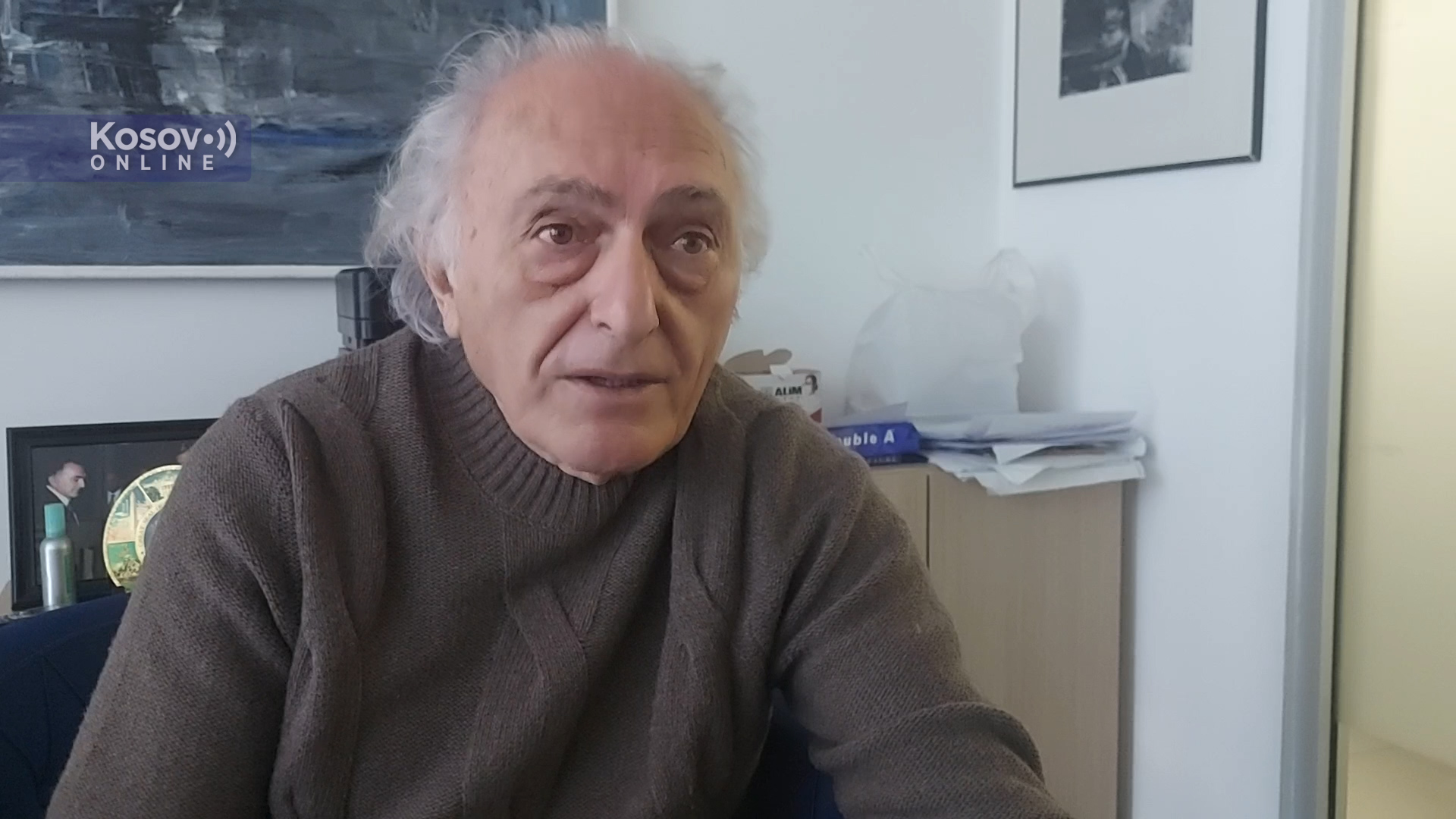
"The US Ambassador in Pristina reacted decisively, saying that the US did not support either the idea of a 'Greater Albania' or the idea of a 'Greater Serbia'. His statement was specific because it was pointed out that it was the 'position of the US', which blocked the possibility of Kurti playing with words and saying that 'the Ambassador said that, not the US,'" Cupi says.
He continues that Kurti's visit shook the politics of three neighboring Balkan states: Serbia, Macedonia, and Albania.
"In Serbia, they believe that Kurti is making a 'Greater Albania'. In Skopje, he left the shadow of a challenge against the Macedonian state by not recognizing the Government in the country. In Albania, it was seen as a challenge against the 'mother country', as he calls it, he mentioned many connections between cities and settlements in Kosovo and Tetovo, but he ignored Albania," Cupi states.
Kurti made the visit in this format, adds our interlocutor, precisely with the aim to "muddy the waters" with the neighbors and attract the attention of the USA and the EU.
"Kurti feels isolated by the West. This allows him to do damage around Kosovo or in Kosovo, enough to force the great powers to look at Kurti. His adventure to 'sound the alarm' in the Balkans appeared a few years ago. In the 2021 elections, he established a branch of his Self-Determination Movement in Albania, and went to the polls, trying to cause unrest in the country. Even that movement aimed to make Greater Albania under Kurti's leadership. Kurti's megalomaniacal idea of ruling the Balkans, especially with his acting in Albania, was also connected with the anti-American and pro-Islamist movement that was being created in the country," Cupi states.
He especially points to the moment when Kurti awakens the idea of a "Great Albania" in Tetovo.
"He is doing this while the country he governs, Kosovo, is losing its economic, political, and diplomatic capabilities. Kurti-style leaders, who belong to a bygone era, usually visit and give speeches in other countries when their own country does not receive them with the enthusiasm of nationalist crowds abroad," Cupi concludes.
Professor Stanko Crnobrnja says for Kosovo Online that the Americans in the Balkans have adopted the ancient maxim "divide and conquer". He points out that the USA, on the one hand, says that they do not support "Greater Albania" and that it does not suit them, and on the other hand, they are creating it.
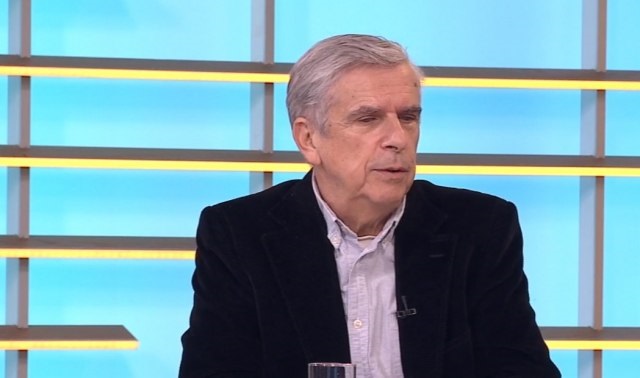
"It's nice that Hovenier said that they didn't support it, but it does suit them. Well, the incidents in Tetovo happened in front of their guard post, as it were because the USA itself recognizes that it has a guard role in the Balkans. So, If you don't support it, then don't let it happen, and don't react retroactively to the provocations during Kurti's visit," Crnobrnja believes.
According to him, the Western Balkans have been left as a "hole" in Europe that can always, if necessary, rise to the level of conflict.
"And Kurti is a special case because he is something new in Albanian politics, he behaves differently, he behaves openly as a favorite of the West, he even knows how to pinch his sponsors a little. He is not condescending towards the West like his predecessors were. I think The USA had to be much stricter if they wanted to show that they do not support a 'Greater Albania'. And, not to immediately mention 'Greater Serbia', while in Tetovo we had a demonstrative exercise of the realization of the project of a 'Greater Albania', i.e. expansion to another country, where Kurti renames a street in another country. Hovenier's approach had to be sharper. The US administration, I'm convinced, knew what was going to happen during Kurti's visit and they had to prevent it from happening in the first place. Just as they had to prevent the ban on the import of goods from Serbia, and not to call for it to be lifted now," Crnobrnja says.


0 comments