
Transport of goods between countries of the Open Balkan is more efficient than with the EU members

The transport of goods from Serbia through North Macedonia takes place significantly more efficiently than it is the case when it comes to EU countries, especially Croatia and Hungary, say the interlocutors of Kosovo Online, emphasizing that this is solely thanks to the Open Balkan initiative, which despite numerous criticisms and disputes continues to bring numerous benefits to the participating countries of Serbia, Albania and North Macedonia.
Some claim that the Open Balkan has completed its work, and accomplished its task, but at the same time, the Initiative continues to integrate borders, and toll collection, making transport more efficient, but also connects citizens and businessmen, who are increasingly interested in the daily benefits of this initiative, and less and less in political rhetoric.
Experts say that the key to economic development is good transport, and since its establishment in 2019, the Initiative has launched the most infrastructure projects that contribute to a faster flow of people, goods, and services, thus strengthening economic cooperation and business ties of the participating countries.
The director of "Srbijatransport" Goran Aleksic told Kosovo Online that the transporter's impression was that checks at the border crossings with Hungary and Croatia were slow due to double controls, complicated administration, and slow procedures, while there were no such problems at the border with North Macedonia.
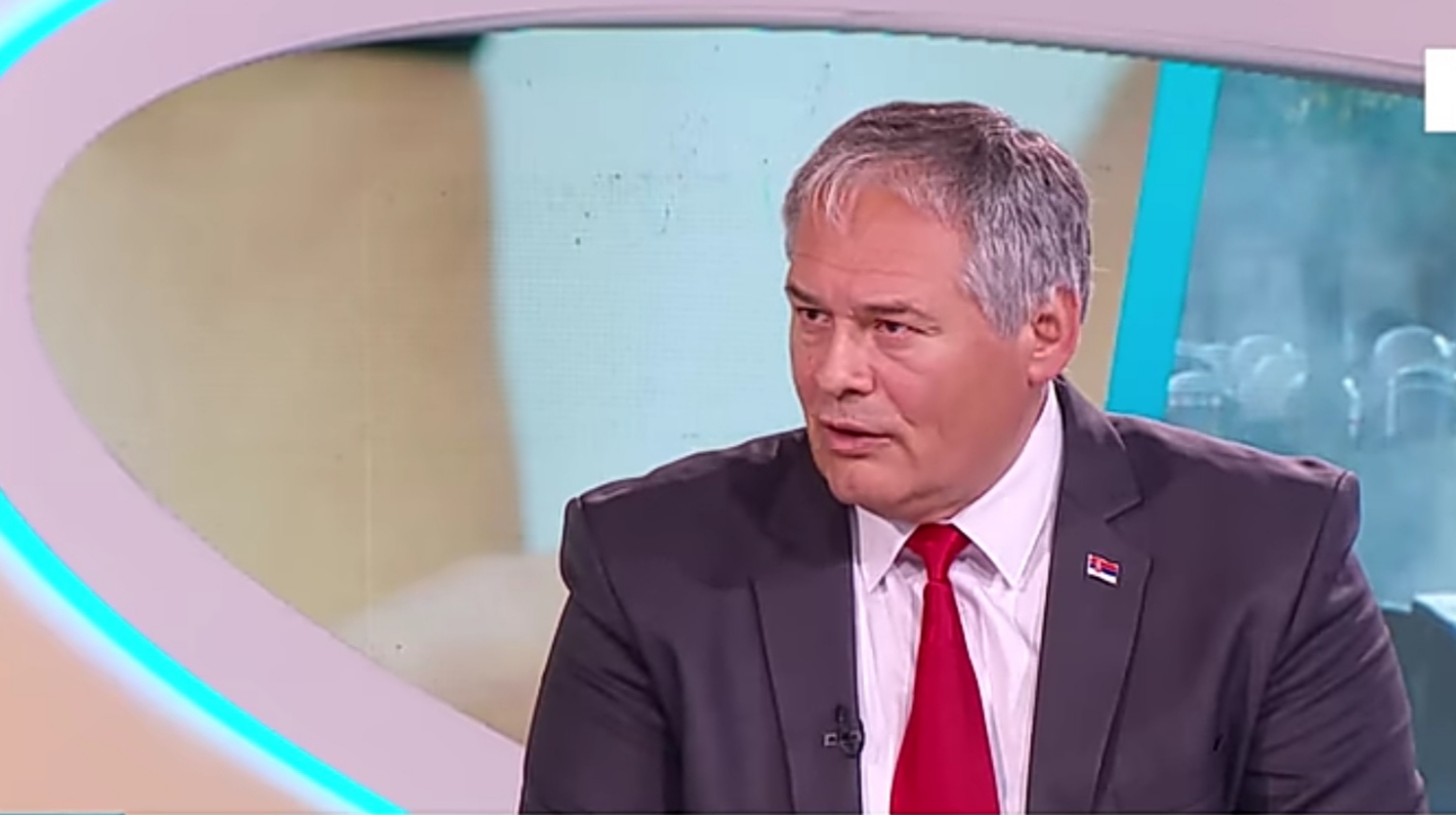
Projects such as green corridors, expansion of access roads, and integration of border crossings between Serbia and North Macedonia, he points out, have greatly reduced waiting times and enabled a faster flow of goods, and new projects are planned that will further improve flows.
According to him, Serbia has good cooperation when it comes to transport with all the countries of the region, but it is the best and most efficient with North Macedonia.
"The main impression of the carriers is that there is a significant improvement in procedures, an improvement in the use of resources, significantly less detention of vehicles at border crossings, and thus a better use of means of transport and the work of employees and drivers. This is a significant move and is extremely useful not only for carriers but also for the owners of goods who can now cooperate with their partners from the neighboring country in much better quality," Aleksic says.
Green corridors, lanes intended only for transport trucks from the countries of the Open Balkan, as he says, made it possible to reduce the detention of trucks from Serbia at the North Macedonian border to a minimum.
"Delays are only for the implementation of procedures, so delays are minimal. It happens that there are a few vehicles, but everything is done with quality and in a timely manner; the passages are excellent, so the flow of goods and vehicles between Serbia and North Macedonia is at an extremely high level and that is a great boost to the economy of both countries," Aleksic pointed out.
He announced that soon toll tags will be available to truck drivers through North Macedonia, which have been available to drivers of passenger vehicles for a month, since the beginning of the summer season.
"According to our information, cargo vehicles or legal entities will be able to use tags very soon. At the moment, tags are attached to the bank card of an individual, and in that sense, tags are beneficial to citizens, i.e. individuals traveling through North Macedonia and Serbia. We expect very soon that legal entities will be able to use tags in a similar or the same way, which will be of great use. We think that the new model could be applied soon, and it is also being prepared for Croatia, which is extremely important for us carriers," Aleksic says.
Complete liberalization of transport, increasing the competitiveness of regional transport companies, more efficient transit, and improvement of transport activities, he says, are some of the ideas pursued through further plans and projects of the Open Balkan, for which, he adds, there is full support from carriers.
When asked how transport worked at the border crossings of Serbia and other countries, Aleksic said that Serbia was trying to improve the flow of goods and vehicles with all its neighbors, although drivers were currently most satisfied with the speed of inspections at the Presevo-Tabanovci crossing.
"We have a very good passage of goods with Montenegro, but for now the best is at the border crossing with North Macedonia, and carriers have the biggest problems at the border with EU countries, above all with Croatia and Hungary, where the waiting times are extremely long and where really keeping vehicles and goods for an extremely long time. All measures are being taken to solve these problems and we think it is very good to form special border crossings for freight transport from neighboring countries, there is, a special border crossing between Croatia and Serbia in Sid, where only freight vehicles from Serbia and Croatia and also, next to Horgos in Kelebija, where border crossings would be formed for freight vehicles of only Hungarian and Serbian carriers," Aleksic said.
He explains that the inspection of transport trucks depends on the type of goods, but that at the borders of Serbia and the EU countries, trucks are delayed for too long due to double controls, administration, and slow processes, which, he adds, are integrated, digitized and simplified within the framework of the Open Balkan.
"The inspection depends on the type of goods, it is not always the same detention, but with regard to, for example, EU borders, the time for inspection and processing of documentation is significantly longer and is carried out twice, while in North Macedonia it is one control which is significantly shorter so that the flow of vehicles is quite high-quality," Aleksic said.
Transport is the foundation of economic development and all the facilities that transport has and will use will benefit businessmen and companies, Aleksic concluded, and his thesis is confirmed by the owner of the "Ampa Prom Bogdanci" car service from North Macedonia, Pavel Ampov, who is located nearby Greek-North Macedonian border.
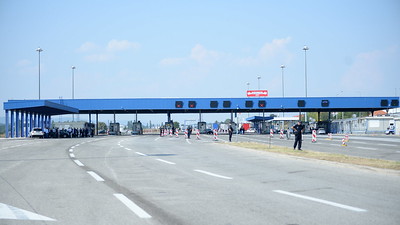
Considering that he offers his services 24 hours a day, he had the opportunity to "find himself in trouble" with numerous Serbian tourists and truck drivers, with whom he shared his impressions of the trip through North Macedonia. According to him, tourists are satisfied with services such as electronic toll collection and services provided by local vulcanization companies.
"In recent years, there are more and more vehicles in transit through Macedonia, so there is more work for us as well. They are mostly tourists going to the seaside in Greece. The crowds at the borders are big because of the summer season and the rush of tourists, but people see that is being done, they see more lanes at crossings, and they don't wait at toll stations. They come back every year, which means they are satisfied. Trucks are now inspected between 15 minutes and half an hour and can continue their transport. This means a lot to people," Ampov said.
He points out that he is trying to use the benefits of the "long-standing strong friendship between Serbia and Macedonia and the Open Balkan Initiative", and that he is trying to expand his business by connecting with colleagues from Serbia and the transport companies he serves.
"When it comes to my services, every Serb arrives at his destination in Greece, exactly at the time he originally planned. Our countries cooperate well and that's why we are always here for guests from Serbia and we are open to business and partnerships with our friends," Ampov said.


0 comments