
Trial of former KLA leaders: Will new evidence delay the verdict or is the court’s decision imminent?
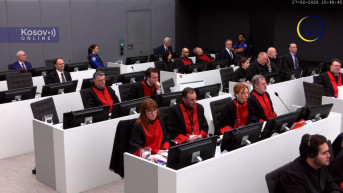
The Kosovo Specialist Chambers in The Hague will deliver a first-instance judgment in the case against Hashim Thaçi and others within the prescribed timeframe, and newly emerged evidence following the close of proceedings will not lead to a postponement, interlocutors of Kosovo Online agree.
Written by: Veljko Nestorovic
Following the closing arguments in The Hague, the 90-day period for rendering a first-instance judgment began on 18 February, with the possibility of an additional extension of up to 60 days.
Attorney and former military prosecutor Dragan Pasic believes that the trial panel in The Hague, in the proceedings against the four KLA leaders, will incorporate the new evidentiary material into the overall body of evidence, which consists of several thousand pages of written documents and several hundred witness testimonies, and that this will influence the formation of its opinion regarding the guilt of Hashim Thaçi and the other accused.
Pasic told Kosovo Online that this concerns new evidentiary material that emerged after the closing arguments and final submissions in February of this year.
“The Kosovo Specialist Prosecutor’s Office has come not only into information but also into evidence, still at the stage of reasonable suspicion, that the accused Hashim Thaçi, as well as other individuals with the status of co-accused, influenced witnesses through intermediaries, that is, through persons who visited them in detention. This includes audio recordings, official notes, and digital records found on mobile phones,” Pasic stated.
Pasic notes that the court has a deadline for its decision by mid-May this year, but in light of this new development, the Kosovo Specialist Chambers have until mid-July. Reactions from Pristina have been quite sharp, but regarding the extent to which audio recordings and correspondence may influence the judges, Pasic explains that the proposed sentence for all four accused is 45 years of imprisonment, as a single unified sentence covering all counts of the indictment.
“The Kosovo Specialist Chambers in The Hague impose a single sentence. There is no system of accumulation, so even if Hashim Thaçi and the other individuals were found guilty, that sentence would not be further increased. However, this will significantly affect the formation of the judges’ conviction and opinion when deciding on the imposition of a criminal sanction. On the other hand, if the trial panel accepts this new evidentiary material as uncontested, it will also affect the later status of the convicted persons, should they be found guilty, and they may lose certain privileges they would otherwise have, such as early release,” he added.
Pasic expects the defense to oppose the proposals of the Kosovo Specialist Prosecutor’s Office.
“However, a kind of legal alarm has already been triggered by the mere fact that part of the evidentiary material has been submitted to another panel, which goes beyond the expected reaction. It is evident that this material indeed creates reasonable suspicion that Hashim Thaçi and others influenced witnesses in terms of expected testimony. This goes beyond the usual response of the defense. At the same time, the trial panel adjudicating Hashim Thaçi’s case will, in my view, include this material in the overall body of evidence—comprising several thousand pages of written documents and several hundred witness testimonies—and it will influence the formation of its opinion regarding their guilt,” Pasic concluded.
Legal expert Amer Alija from the Humanitarian Law Center believes that there will be no postponement of the judgment in the case against Thaçi and others, and that the Kosovo Specialist Chambers will adhere to the prescribed deadline for the first-instance ruling.
“If we are speaking about the case against Thaçi and others charged with war crimes, as we know, the main trial has already been concluded and there is no new evidence. However, we saw that last month the defense complained that the court had disclosed certain new evidence,” Alija told Kosovo Online.
He explains that this evidence is already “in the system.”
“However, these are not new pieces of evidence, but rather evidence that is already part of the system. As we know, the court issued a ruling on this matter and clarified that these are not new materials, and that the court is already in the process of analyzing the evidence and drafting the first-instance judgment,” Alija added.
He believes that the judgment will not be postponed.
“This cannot delay the judgment because these are not new pieces of evidence. The deadline for rendering a first-instance judgment is set by the court’s rules of procedure. Within 90 days, the court should deliver the judgment, but it may request an additional 60 days if it considers the case complex and requires more time to analyze all the evidence. In that case, the deadline may be extended to a total of 150 days, within which the first-instance judgment should be issued,” he concluded.


0 comments