
Triumph of Self-Determination in the elections – who deserves the credit, and what should Serbs expect?
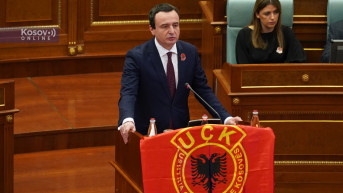
Albin Kurti has described his party’s victory in yesterday’s snap parliamentary elections as historic. According to still-preliminary results, Self-Determination jumped from 42.3 percent won in the regular elections in February to 49.3 percent. Kosovo Online interlocutors believe this surge was driven by several factors: the opposition’s inability to decode Kurti’s populism, a tailwind from Brussels following the announcement of the full lifting of sanctions, and the timing of the elections at a moment when the diaspora was present in Kosovo. They warn that the triumph of Self-Determination is not good news for the Serbian community.
Written by Dusica Radeka Djordjevic
Following voters’ decision in the second parliamentary elections in just ten months, the path has opened for the “Kurti 3” government.
According to current estimates, Self-Determination will have 56 seats—eight more than in the previous Assembly—and, with the votes of non-Serb minority MPs, will reach the required 61 votes to form a government.
How the ten guaranteed seats in parliament for the Serbian community will be distributed is still not entirely clear. Serbian List president Zlatan Elek announced last night that, based on votes from Serb-majority areas, his party had won 90 percent of the votes and all ten parliamentary seats. However, today Nenad Rasic’s party For Freedom, Justice and Survival stated that it, too, has once again become a parliamentary party.
According to preliminary results, the Democratic Party of Kosovo has won 21 percent of the vote, almost the same as in February, when it secured 20.95 percent. Party leader Bedri Hamza said they had managed to preserve their result but had expected more.
The Democratic League of Kosovo recorded a sharp decline, with only 13.57 percent compared to 18.27 percent in February. The party of Ramush Haradinaj also crossed the threshold (5.68 percent); it ran independently yesterday, unlike in the previous regular elections.
Overall, analysts agree that the victory of Self-Determination was expected, though not to such an emphatic extent.
Dusan Radakovic of the NGO Democracy in Action believes the new prime minister-designate will likely be Albin Kurti, as he will have a sufficient majority of 67 or 68 MPs together with non-Serb minorities.
“It is estimated that Kurti will have between 56 and 57 MPs, depending on the final allocation of seats. At this moment, the Serbian List has nine seats, while Nenad Rasic’s party has one. When it comes to the Serbian List, the scenario from February worries me. Whether that was in line with the law or not should be determined by the judicial institutions, but if the February plan is replicated, the deputy speaker of parliament will come from Nenad Rasic’s party, and that party will be given the Ministry for Returns in the future government,” Radakovic told Kosovo Online.
Political analyst Artan Muhaxhiri interprets the resulting “table” as a major gift from the opposition to Self-Determination leader Albin Kurti. He believes that even Kurti himself did not expect such a large victory.
“Regardless, over the past five years there has been no significant economic or political development, nor progress in relations with the West. Logically, this result should not have happened, because Kosovo has lost touch with the lower strata of citizens and with people’s needs. They ran a poor campaign, but the result is what it is,” Muhaxhiri told Kosovo Online, adding that the opposition essentially surrendered. In his view, the opposition lacks the key to “decoding Kurti’s populism.”
“With his rhetorical skills, Kurti inserted himself into all topics and thus achieved this result,” Muhaxhiri concluded.
Senior research fellow at the Belgrade-based Institute of International Politics and Economics Aleksandar Mitic also notes that for many in Kosovo, such a strong result for Kurti’s party came as a surprise, and he lists several contributing factors.
“Voters probably grew tired of several election cycles and realized that there is no alternative that could enable a different coalition of opposition parties. In a way, this is also a form of punishment for those opposition parties that either did not want to enter a coalition with Kurti or were unable to create an alternative themselves. We all know how divided they are and what their relations were like in the past. This is therefore a kind of punishment, primarily for the Democratic League of Kosovo, which posted an extremely poor result, losing around five seats. That is an unexpected outcome,” Mitic told Kosovo Online.
On the other hand, he adds, the election date was likely chosen deliberately, at a time when the Albanian diaspora comes home for the New Year holidays.
“That simply contributed to higher turnout and more radical votes, which produced this result. We should also not forget that many were clearly encouraged by the boost Kurti received from Ursula von der Leyen’s announcement, just ten days before the elections, about lifting the so-called restrictive measures. That had a direct impact on the campaign, even though those measures did not particularly harm Kurti but stood as a form of political pressure. He thus received support from Brussels and managed to capitalize on it. Of course, we should not forget his anti-Serb rhetoric, which clearly continues to enjoy massive support among the Albanian population, which is truly devastating,” Mitic assessed.
What now for the Serbs?
As for what Serbs in Kosovo can expect from Kurti as prime minister in a new term, Mitic says this remains to be seen, as Kurti slightly lowered tensions after achieving his political goals through the implementation of ethnic cleansing.
“We will see how he behaves now in this new context, when there is no clear pressure coming from Brussels and Washington, and when, on the other hand, he has a clean slate regarding the formation of power,” he said.
Political scientist Ognjen Gogic has no doubt that the convincing victory of Self-Determination is bad news for the Serbian community.
“Serbs have not had a good experience with Albin Kurti as prime minister, especially not with such a strong prime minister. Therefore, Serbs can view these results with concern, because he has not indicated that he would change his attitude toward the Serbian community. That is, he intends to act unilaterally and to make decisions and adopt measures that do not take into account the interests and needs of the Serbian community,” Gogic told Kosovo Online.
He notes that it was clear Self-Determination was the favorite to win and would likely improve its result compared to February, but that no one expected it to reach almost 50 percent—a level last seen in 2021.
As he assesses, this is now a new factor influencing political life in Kosovo and future processes.
“It is nevertheless an overwhelming majority that allows Albin Kurti to form a government with the support of representatives of non-majority communities in parliament, who had already been inclined toward him. He was missing only a few seats this year to form a government; however, this time he does not need to rely on MPs from the Albanian community who do not want to cooperate with him. MPs from minority communities will suffice,” he notes.
A new crisis on the horizon?
Gogic points out, however, that although Albin Kurti can definitely form a stable parliamentary majority, that is, a government, the question remains whether he can secure the election of the president of Kosovo.
“This complicates decision-making in the future, because by March 5 Kosovo must elect a president in parliament, as Vjosa Osmani’s mandate expires. If a president is not elected by that deadline, the Assembly is dissolved and new parliamentary elections are called, regardless of how much support Kurti has to form a government. We now have a race against time: whether all processes and actions can be completed within that timeframe—first the confirmation of election results, then the constitution of parliament, and then an agreement on electing the president. It is uncertain whether this can be completed within the remaining time,” Gogic warned.
Radakovic also believes that a new institutional crisis is very likely, because 67–68 MPs are not enough to elect the president of Kosovo, as a two-thirds majority in parliament is required.
“We have a situation where an additional 14 or 15 MPs will be needed. The Democratic League of Kosovo, the Democratic Party of Kosovo, or the Serbian List would have to support the election of the president of Kosovo, which is very difficult. Because of this, there is a strong possibility that in April we could have new, third parliamentary elections within a period of less than a year and a half,” Radakovic concluded.
Three rounds of hope
However, it should not be forgotten what options the Constitution of Kosovo provides for electing the president.
If in the first two rounds no candidate receives a two-thirds majority of votes, a third round is held with the two candidates who received the highest number of votes in the second round.
The candidate who receives a majority of votes of all MPs present is elected president. After all, Vjosa Osmani herself was elected president in the third round in 2021.
Only if the third round also fails is the Assembly dissolved and new elections called.



comments