
Extraordinary Parliamentary elections in Kosovo tomorrow – What is different compared to February?
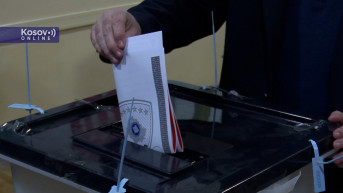
After ten months, citizens of Kosovo will once again elect members of parliament tomorrow. In the extraordinary parliamentary elections, 24 political entities will compete for 120 seats in the Assembly—18 political parties, three coalitions, two civic initiatives, and one independent candidate.
Among parties representing the Serb community, the contenders are the Serbian List, For Freedom, Justice and Survival, and the Kosovo Alliance.
Of the 120 seats in the Assembly, Albanian parties compete for 100 mandates, while ten seats are reserved for the Serb community and ten for representatives of other minority communities (Roma, Ashkali, Egyptians, Bosniaks, Turks, and Gorani).
Fewer participants
Compared to the February elections, four fewer political entities are participating in tomorrow’s vote. The Social Democratic Initiative (Nisma) and AAK are running separately rather than in coalition, while among Serb parties there are three contestants, compared to six in the previous elections.
The order of parties on the ballot was determined by a draw conducted by the Central Election Commission.
The New Democratic Party will appear under number 111, the Kosovo Turkish Democratic Party under 112, the Albanian Democratic National Front under 113, Fjala under 114, the Roma Progress Movement of Kosovo under 115, the coalition led by Self-Determination under 116, the Civic Initiative for Kosovo under 117, the United Gorani Party under 118, independent candidate Nexhmidin Sejdilar under 119, the Egyptian Liberal Party under 120, the Kosovo Alliance under 121, the Social Democratic Initiative (Nisma) under 122, the Democratic League of Kosovo under 123, the New Roma Party in Kosovo under 124, the PAI–PDAK–LPB coalition under 125, the Social Democratic Union under 126, the Serbian List under 127, the New Democratic Initiative of Kosovo under 128, the Alliance for the Future of Kosovo under 129, the Democratic Party of Kosovo under 130, PSA under 131, the Vakat Coalition under 132, the United Roma Party of Kosovo under 133, and For Freedom, Justice and Survival under 134.
422 more voters than in February
A total of 2,076,290 citizens are eligible to vote in these elections, which is 422 more voters than in February. Of these, 1,999,205 are registered to vote within Kosovo, while 77,085 are registered to vote from abroad. Voting will take place at 948 polling centers, with a total of 2,614 polling stations.
In the elections held on February 9, Self-Determination won 396,787 votes (42.3 percent), securing 48 seats; the Democratic Party of Kosovo won 196,474 votes (20.95 percent) and 24 seats; the Democratic League of Kosovo won 171,357 votes (18.27 percent) and 20 seats; and the AAK–Nisma coalition won 66,256 votes (7.06 percent) and eight seats. The Serbian List won 39,915 votes, or 4.26 percent, securing nine guaranteed seats in the Assembly for the Serb community. The party For Freedom, Justice and Survival received 4,139 votes, or 0.44 percent, and won one of the ten guaranteed parliamentary seats for the Serb community.
These extraordinary elections were called because no government was formed following the February 9 elections. Self-Determination, led by Albin Kurti, was given two opportunities—first with Kurti as prime minister-designate and then with Glauk Konjufca—but in both attempts failed to secure the minimum of 61 votes in parliament.
Deadlines
It is difficult to say when Kosovo might obtain a new government, as the laws do not prescribe a deadline for the publication of final election results, from which the timelines for forming institutions begin to run.
In general, according to a ruling of the Constitutional Court, the constitutive session of the Assembly—at which the Speaker and five Deputy Speakers are elected—must be held within 30 days of the official publication of election results. Thereafter, the party that won the most votes proposes a candidate for prime minister. The President of Kosovo formally appoints the prime minister-designate, who has 15 days to form a government. If unsuccessful, within 10 days the president appoints a new candidate, who also has 15 days to present a government to the Assembly.
If a government is not elected on the second attempt, the President of Kosovo calls new elections—an outcome that occurred after February 9 and led to voters being called to the polls again tomorrow, starting at 7 a.m.



0 comments