
From Ukraine to Kosovo: What is the future of dialogue without Russia?
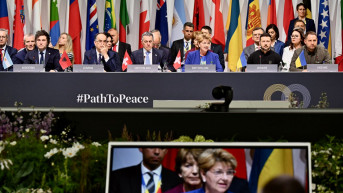
From the recent Ukraine Summit, appeals were sent to respect the UN Charter and international law, but it's a shame that Russia, to whom these messages were addressed, was not even invited to participate in the talks. Instead, Kyiv and its allies discussed within their own "bubble," which, as we know from social media experiences, is very comfortable but creates a distorted view of the world.
The BRICS members refused to sign the final Declaration, which did not prevent Western officials from boasting about the Summit's results and the demonstrated support for Ukraine, stating that it does not matter what global powers like Russia, China, or India think about a globally important issue.
We witness a similar approach when it comes to our region. The EU has been "reminding" Serbia these days that lobbying against Kosovo's membership in international organizations is a violation of the Brussels Agreement, forgetting that there was Brussels before Brussels, specifically in 2013, and that Pristina has done nothing to implement the agreed formation of the Community of Serb Municipalities (CSM).
Much is said about how Serbs live in Kosovo from Brussels to Brussels, but there is little genuine dialogue. Perhaps because, besides the EU and the USA - which are formally not part of the dialogue - there is no room for some others. Like in Switzerland recently.
Experts warn that the dialogue between Belgrade and Pristina will soon need adaptation if this (non)progress continues.
Stefan Vladisavljev, Program Coordinator of the BFPE Foundation for a Responsible Society, points out that the division between countries is evident after the Ukraine Summit. Some are explicit that Russia is the aggressor that must emerge from this war as the losing side, while others believe that for a long-term and sustainable solution, it is necessary to include Russia in the process.
"Whether it is Russia with the current government led by Vladimir Putin or Russia in another form, to prevent these conflicts from escalating or being prolonged indefinitely... It will not be possible to ensure such a position without including those actors who were not at the table, primarily Moscow and the Russian Federation," emphasizes Vladisavljev.
When asked whether Russia or another country could be included in the Kosovo-Serbia dialogue and under what conditions the EU and the US would allow it, Vladisavljev recalls that the EU is currently the only mediator.
However, considering the recent failures in the dialogue process, evident in the fact that there has been no movement in the status quo and things are becoming somewhat worse than they were a year or a year and a half ago when the Ohrid Agreement and its implementation annex were reached, the question arises about the sustainability of the dialogue as the only legitimate solution and achieving a certain agreement between Belgrade and Pristina, Vladisavljev notes.
"Whether this means holding a major peace conference or a large international conference on the dialogue itself, or including a third or fourth actor, at this moment it does not seem like a realistic option. However, if the dialogue continues to fail in providing an adequate solution, some kind of adaptation would be necessary, primarily because it seems that things are not going in the right direction, and we are witnessing increasing tensions and even certain conflicts, rather than the normalization process that the dialogue was supposed to achieve," he says.
He adds that in the context of geopolitical processes, international law, and the position that Serbia occupies in the field of international relations, signing the final Declaration at the Ukraine Summit was entirely in line with Serbia's geopolitical and foreign policy priorities.
The inclusion of Russia in the negotiations on Ukraine is necessary, but also in resolving the status of Kosovo, says Srđan Graovac from the Center for Social Stability for Kosovo Online, adding that any solution without Russia and China "will not be a long-term solution."
"It seems to me that those who insisted on this Summit in Switzerland primarily aimed to mobilize as broad a circle of countries as possible at the international level, to strengthen support for Ukraine, and to isolate Russia as much as possible—that was the key goal, and this Summit has shown that it essentially did not succeed," Graovac believes.
Moreover, he adds that it is fundamentally necessary to include Russia or China in resolving the status of Kosovo.
"Any solution without Russia and China will not be a long-term solution, even if the Western countries impose a solution that suits them. Such a solution will simply never gain international support or verification, because we know that only verification by the UN Security Council provides some kind of permanence and foundation for making a certain decision," our interlocutor assesses.
He reminds us that resolving the issue of Kosovo essentially depends on the will of the great powers.
"If the USA and the Western world were to reach an agreement with Russia and China—however they agree—then that issue would ultimately be resolved because it would be an agreement of the international community and its countries. If they cannot achieve this consensus, the issue will essentially remain a frozen conflict until such a consensus among the great powers is reached," Graovac emphasizes.
In his opinion, this can only be "packaged" within the principle of establishing a new world order, as it is clear that the current world order is collapsing.
The declaration from the latest Ukraine Summit shows that everyone is once again referring to the UN Charter and international law, which is positive, notes Branko Brankovic, a diplomat and former ambassador to the UN, for Kosovo Online. However, he emphasizes that there are significant deviations, especially regarding Kosovo.
"But the fact that this is re-emerging is significant because many have criticized the UN, the Charter, and its inefficiency in recent years, and now everyone is referring to it again. The only criticism is—where were all those rules, international law, and charters when they bombed us? Where were all those rules then, and where are they today when it comes to what is being done in Kosovo and Metohija? That is where the whole system has completely failed," Brankovic concludes.
He emphasizes that much is said about what Kurti does, but he believes that "Kurti is not his own and he decides nothing."
"We know who is behind this. Now, if those behind Kurti were very active at this meeting, speaking and signing everything related to international law, we have the right to call them out, 'Gentlemen, apply this to everything, not just selectively to what suits you,'" our interlocutor says.
When asked whether the inclusion of other actors, such as Russia or China, in the dialogue between Belgrade and Pristina is important, Brankovic responds that Serbia has Resolution 1244, "which is the alpha and omega of everything that needs to happen in Kosovo and Metohija," so everything related to Kosovo must be guided by that document.

0 comments