
Vladisavljev: Signing of the Declaration from the Ukraine Summit is in line with Serbia's foreign policy priorities
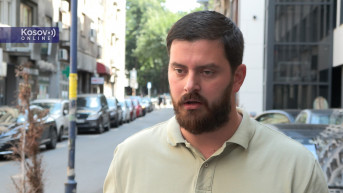
If sustainable peace is desired, it must include Russia to prevent these conflicts from escalating or dragging on indefinitely in the long term, Stefan Vladisavljev, program coordinator of the BFPE Foundation for a Responsible Society, says for Kosovo Online, summarizing the results of the recent Ukraine Summit. He adds that the dialogue between Belgrade and Pristina will also require "some form of adaptation" if it continues to fail to provide adequate solutions.
In his assessment, the Ukraine Summit further strengthened the existing positions that the relevant participating states had taken even before the summit, and it cannot be said that new conclusions and proposals were reached that would lead to a sustainable solution.
He notes that there is a clear division between states that insist Russia is the aggressor that must emerge from this war as the losing side and those that believe a long-term and sustainable solution must include Russia in the process.
"Of course, from Russia's position as someone perceived as the aggressor, it is very difficult to imagine how such a state could be included in the process of further negotiations, but if we want to achieve some form of sustainable peace, that sustainable peace must include Russia. Whether Russia with this government under Vladimir Putin as leader or Russia in some other form, to prevent these conflicts from escalating or dragging on indefinitely in the long term. It will not be possible to ensure such a position without including those actors who were not at the table, primarily Moscow and the Russian Federation," Vladisavljev emphasizes.
He says that the positions are still very clear, and there is a division between the states of Western liberal democracies and the Eastern states that are either gathered in BRICS or perceived as close Russian partners.
When asked whether Russia or another country could be included in the dialogue between Kosovo and Serbia, and under what conditions the EU and the US would allow it, Vladisavljev recalls that the EU is currently the only mediator.
"Although in certain circles there have been mentions of organizing something like a large international conference where the issue of the dialogue between Belgrade and Pristina would be resolved or at least gain new momentum, the current institutional structure of the dialogue involves Belgrade and Pristina negotiating with the mediation of the European Union. Even the United States is not directly involved in the dialogue process, although they provide strong logistical support to move some things forward," our interlocutor says.
However, given the recent failures in the dialogue process, evident in the very fact that there is no movement from the status quo, and things are even getting worse than they were a year or a year and a half ago when the Ohrid Agreement and the Annex on the Implementation of the Ohrid Agreement were reached, the question arises about the sustainability of the dialogue as the only legitimate solution and achieving a certain agreement between Belgrade and Pristina, Vladisavljev notes.
"Whether that means holding a large peace conference, a large international conference on the dialogue itself, whether it would involve the inclusion of a third or fourth actor, at this moment it does not seem like a realistic option, but if the dialogue continues to fail to provide an adequate solution, some form of adaptation would be necessary, primarily because it seems that things are not going in the right direction, that we are witnessing increasing tensions, even certain conflicts, rather than what the dialogue was supposed to achieve – the process of normalization of the two sides," he believes.
He adds that in the context of geopolitical processes, international law, and Serbia's position in the field of international relations, signing the final Declaration from the Ukraine Summit was entirely in line with Serbia's geopolitical and foreign policy priorities.
"In statements from officials, we have the opportunity to hear that peace and stability are leading principles not only of our state's regional policy but also on a broader international scale, and thus supporting the Declaration that calls for certain steps to achieve peace in Ukraine is consistent with the continuity of Serbian foreign policy," Vladisavljev concludes.

0 comments