
UN and Cyprus talks: Affirmation of international law or new dilemmas?
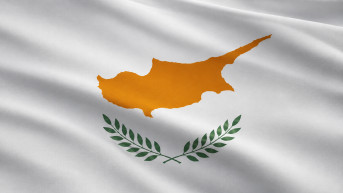
United Nations Secretary-General Antonio Guterres has announced plans to convene a new "five-plus-one" meeting on resolving the Cyprus issue, once again opening a broader debate on respect for international law and the sovereignty and territorial integrity of UN member states. Kosovo Online's interlocutors agree that renewed efforts to address the issue represent a positive signal. However, while some argue that Serbia should insist on the same treatment afforded to Cyprus, invoking international law as an inviolable principle of international relations, others maintain that the cases of Cyprus and Kosovo are not comparable and that international law has been applied differently in the two cases, including with regard to Cyprus's full membership in the European Union.
Written by: Jelena Novakov
UN-sponsored negotiations on the reunification of Cyprus were suspended almost ten years ago, and Guterres has announced new talks so that the parties can determine the next steps toward resolving the frozen conflict, which dates back to the Turkish invasion of 1974. In addition to the two Cypriot sides, Greece, the United Kingdom, and Türkiye will participate in the meeting as guarantor powers of Cyprus's independence.
"I have decided to convene another meeting in the 'five-plus-one' format, following appropriate preparations regarding confidence-building, methodology, and the substance of the negotiations," Guterres said.
European Commission President Ursula von der Leyen said in July that the EU would appoint a Special Representative for Cyprus and that the Commission stood ready to support the negotiation process with all necessary assistance and instruments at its disposal.
According to the EU, the recent meeting in Ankara between European Council President Antonio Costa, von der Leyen, and Turkish President Recep Tayyip Erdogan, as well as diplomatic contacts with Türkiye, could contribute to renewed efforts to resolve the Cyprus issue.
Application of international law
Former diplomat Zoran Milivojevic assessed that renewed attention to the Cyprus issue represents an opportunity to reaffirm the principles of international law, which, according to him, should also apply in the case of Serbia and Kosovo.
He said that "nothing new has happened regarding Cyprus for decades," but that the current initiative represents an attempt to reinvigorate the United Nations' role in resolving the issue.
"There has been nothing new concerning the Cyprus issue for decades. This is an attempt to activate the United Nations and make it clear that this is a frozen conflict that remains very much alive, and that the role of the United Nations in resolving it is indispensable. UN peacekeeping forces are deployed there to maintain separation, and that is their permanent obligation. I believe it is in Guterres's interest to raise the level of UN engagement, which suits all of us because the United Nations remains an indispensable factor globally and a guarantor of the existing international order and international law," Milivojevic told Kosovo Online.
He pointed out that Nicosia's position of not recognizing Kosovo's unilaterally declared independence is an important element of their shared insistence on international law, but added that the same principle should also be applied to Serbia in the European integration process.
"As far as we are concerned, this is extremely important. Cyprus does not recognize Kosovo's self-proclaimed independence and insists on international law, so in that respect our interests fully coincide. What constitutes a precedent that should also be applied to Serbia is the European Union's position. The European Union admitted Cyprus as an integral state and as a member that functions as a single state with an unresolved issue concerning part of its territory, but with internationally recognized borders. That is the model that should also be applied to Serbia and in negotiations with Serbia," he said.
According to Milivojevic, the EU's negotiations with Moldova and Ukraine lend additional significance to the issue because, in his view, they demonstrate how Brussels treats countries with unresolved territorial issues.
He stressed that these examples give Serbia additional arguments for insisting on the consistent application of international law with regard to its territorial integrity.
"In the overall discussion about European Union enlargement and the revitalization of the Cyprus issue, it is very important for us to reaffirm the principles of international law concerning sovereignty and territorial integrity, bearing in mind that UN Security Council Resolution 1244 remains in force, is binding, and is respected by two-thirds of humanity. In that sense, reopening the Cyprus issue, as well as the European Union's negotiations with Moldova and Ukraine, requires Serbia's territorial integrity to be treated in the same way and the principles applied in those cases to be respected, just as they are in the case of Cyprus, which is a full member of the European Union with its territorial integrity respected despite not controlling part of its territory," he said.
Commenting on a possible connection between the Cyprus issue and Kosovo, Milivojevic noted that Serbia has for years used the example of Cyprus as one of its key arguments in defending its position on respect for international law, assessing that a possible resumption of the Cyprus dialogue would further strengthen that argument.
"Reopening the Cyprus issue is always important for countries' positions toward Kosovo's self-proclaimed independence. This is one of the arguments on which Serbia takes a principled stand. Invoking Cyprus, above all as a full member of the European Union and an integral state, is an indisputable argument that forms part of Serbia's position and will certainly be used in this case as well. If the dialogue on Cyprus is reopened and if the European Union begins negotiations with Moldova and Ukraine, that will provide Serbia with an additional argument in its efforts to secure withdrawals of recognition, or rather to ensure respect for the principles of international law in Serbia's case as well, because all these arguments directly support such a position," Milivojevic said, adding that the same applies to Serbia's accession negotiations with the European Union.
Incomparable cases
Diplomat Albert Prenkaj, on the other hand, assessed that Cyprus and Kosovo are not comparable because, as he said, international law and United Nations decisions have been applied differently in the two cases.
He described the resumption of negotiations on Cyprus as positive news and pointed out that the island state remains a full member of the European Union despite the division of the island.
"Cyprus is literally part of the European Union and, despite the northern part being under the administration of the Turkish Republic of Northern Cyprus (TRNC), which is recognized only by Türkiye and largely dependent on its military control, it remains a full member of the Union. The Green Line was established in 1964 under the supervision of United Nations troops, pursuant to Security Council Resolution 186, and negotiations are expected to resume in 2027," Prenkaj told Kosovo Online.
According to him, announcements by the United Nations and the European Union regarding diplomatic initiatives represent a positive signal. He added that possible settlement models are being discussed in diplomatic circles.
"Possible outcomes being discussed include a solution based on two states within a deliberately loose federal arrangement, with a single international legal personality and narrowly defined common competences. By all indications, the aim is to preserve an internationally unified state structure with a single seat at the United Nations," he said.
Prenkaj assessed that comparisons between Cyprus and Kosovo are inappropriate and recalled that there had been attempts to equate the two cases.
"As for Kosovo, at the very beginning of the administration there were statements by UNMIK personnel who attempted to compare Cyprus with Kosovo—that is, the remainder of Yugoslavia with Kosovo under United Nations administration and with NATO troops acting as guarantors of peace," Prenkaj said.
Speaking about Kosovo's status under international law, he recalled the advisory opinion of the International Court of Justice and the subsequent United Nations General Assembly resolution.
"Let us recall that on July 22, 2010, the International Court of Justice issued an advisory opinion that Kosovo's declaration of independence did not violate general international law. Subsequently, on September 9, 2010, United Nations General Assembly Resolution 64/298 was adopted, welcoming the advisory opinion of the International Court of Justice and supporting the European Union-facilitated dialogue between Belgrade and Pristina," he said.
He believes that the absence of political will in Belgrade and Pristina further complicates the normalization of relations.
"The avoidance of negotiations by acting Kosovo Prime Minister Albin Kurti, as well as Serbian President Aleksandar Vucic, aimed at achieving comprehensive normalization of relations, ensuring regional stability, and unlocking the European Union integration process, complicates the situation between the two sides and in the region in every respect. In my view, the nationalist discourse on both sides seeks to maintain high ethno-national tensions among the public on both sides for electoral purposes and in an effort to remain in power," Prenkaj said.
Speaking about the possible role of the United States, Prenkaj assessed that President Donald Trump's administration could accelerate the resolution of the issue of the Serbian community in Kosovo.
"Possible renewed engagement by the Donald Trump administration could accelerate the resolution of the issue of the Serbian community in Kosovo, namely the decentralized, or even centralized, autonomy envisaged by the 2007 Ahtisaari Plan and by the 2023 Brussels and Ohrid agreements, which is being contested both by official Belgrade and by the authorities in Pristina," Prenkaj said.
CSM and Serbia's sovereignty
Renewed United Nations engagement in resolving the Cyprus issue could also affect the Belgrade-Pristina Dialogue, particularly with regard to the establishment of the Community of Serb Municipalities and the issue of Serbia's sovereignty over Kosovo, Mijat Kostic of the New Third Way organization told Kosovo Online.
He said that greater international interest in resolving frozen conflicts could create room for a new phase in addressing the Kosovo issue. He stressed that the most important factor is that, after a long period of relative calm, the Eastern Mediterranean is once again entering a period of potential tensions.
"What matters is that, after a long period of peace, we are once again entering a period of potential tensions. The main reason they want to resolve this diplomatically as soon as possible, in order to avoid prolonging a frozen conflict that could escalate, is that tensions exist between Israel and Türkiye," Kostic said.
According to him, such a development could constitute a precedent for Serbia, particularly regarding membership in the European Union.
"For Kosovo, this could mean that certain issues that may have appeared resolved or temporarily resolved can now be reopened and that certain positions may change. The parallel lies in the fact that Cyprus became a member of the European Union even though the issue concerning part of its territory had not been fully resolved and there is a part of the island recognized only by Türkiye. This also constitutes a precedent for Serbia—that it is possible, without a final resolution of the Kosovo issue, to join the European Union through certain political compromises, with the Kosovo issue being resolved subsequently," he said.
Speaking about the possibility of individual countries withdrawing their recognition of Kosovo, Kostic said that this possibility always exists, but that much would depend on how the Cyprus issue is resolved.
"That is always a possibility. In the case of Cyprus, the key issue is how the conflict is resolved. There is an internationally recognized government of Cyprus, which believes that some form of federation should be established—that is, a single state with federal units. On the other hand, we have heard Erdogan say that he will under no circumstances agree to the Turkish Republic of Northern Cyprus relinquishing its sovereignty and becoming part of a federal unit. Instead, he advocates a two-state model in Cyprus, which would mean the existence of one Turkish and one Greek entity," he said.
He added that this situation once again raises the Kosovo issue, primarily because the Community of Serb Municipalities has not been established.
"In this situation, the fact that the CSM, which was supposed to be established in accordance with international law, has still not been formed comes to the forefront. We can see that tensions in Cyprus could also be reflected in Kosovo because the internal arrangement and status of individual entities have not yet been resolved. If that issue is now being addressed elsewhere, Kosovo may also come onto the agenda. The fact that the United Nations has now shown an interest in bringing this issue to a conclusion could encourage the resolution of issues such as the Kurti government's reluctance to establish the CSM and, of course, the issue of Serbia's sovereignty over Kosovo, just as the issue of the sovereignty of the Turkish Republic of Northern Cyprus is being raised in connection with Cyprus," Kostic said.
He added that, despite the differences between the two cases, there are elements that connect them.
"We can see that, although these are different examples, with different causes and different approaches to resolving the conflicts, they have certain characteristics in common. Perhaps the moment has now arrived when these conflicts could either be resolved more rapidly or when the manner in which they will be resolved could be defined," Kostic concluded.


0 comments