
The U.S. Withdrawal from the Western Balkans: Is America Leaving the Region to Germany and the EU?
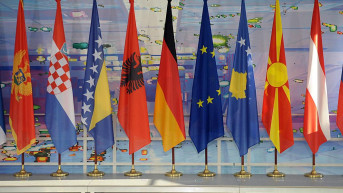
The Role of the U.S. in the Western Balkans Will Decrease Regardless of the Outcome of the Upcoming Presidential Elections, say Researchers from the German Council on Foreign Relations (DGAP). In that case, according to the researchers, a region with unresolved conflicts and stalled integration processes will require a more serious strategic commitment from the European Union and Germany. Kosovo Online sources believe that a “withdrawal” of the U.S. from the Western Balkans is unlikely if Republican Donald Trump comes to power. On the other hand, they believe that if the Democrats win, Kamala Harris would cede the leading role in the region.
Author: Milena Miladinovic
“In the event of Trump’s victory, former U.S. President, some Balkan leaders, particularly Serbian President Aleksandar Vucic and Albanian Prime Minister Edi Rama, would have more access and high-level contacts in Washington than in previous years,” stated researchers from the German Council on Foreign Relations.
On the other hand, if Kamala Harris wins, U.S. policy toward the Western Balkans will remain as it is.
“In the event of a victory by Democratic candidate Kamala Harris, Washington will stay on the same general course but will engage in the Western Balkans with less attention and high-level involvement than under President Joseph Biden, whose four-year term ends on January 20,” it states.
According to Kosovo Online sources, the U.S. will not relinquish the leading role in the Western Balkans, as recent history has shown that the European Union cannot manage the crisis effectively.
Regarding the Kosovo-Serbia dialogue, our sources expect more active U.S. involvement if Trump takes office. However, should the German administration take the lead in the Western Balkans, experts say this will mean continued support for Kosovo’s Prime Minister Albin Kurti and his actions.
Trump’s Unilateral Actions
Aleksandar Sljuka, an associate at the NGO "New Social Initiative," emphasizes that the U.S. role in the Western Balkans has been decisive in recent years.
“It’s unrealistic for the U.S. to relinquish its leading role in the Western Balkans. We know that over the past 20 to 30 years, it has played a critical role in the region, and essentially no one can replace a hegemon like the U.S. However, if we look at the upcoming elections, a shift toward greater unilateralism is more likely if Donald Trump comes to power. If Trump wins, we can expect him, as during his first term, to act unilaterally, coordinating his actions less with European partners, even in the context of the Belgrade-Pristina dialogue. The dialogue is currently facing even greater challenges, and Trump will likely try to leverage this to impose his own solutions,” says Sljuka.
On the other hand, if Kamala Harris wins the election, the dialogue will remain under the leadership of the European Union, Sljuka believes.
“If Harris is elected, I think we will see the EU taking the primary role in the dialogue and the situation in the Western Balkans, but, of course, with U.S. support, without which no significant steps can be made,” he added.
The positions of Pristina and Belgrade are clear, Sljuka emphasizes. Belgrade would prefer Donald Trump as U.S. president, while Pristina does not hide its preference for the Democrats.
“It’s no secret that Belgrade is more eagerly awaiting Donald Trump. However, it's noteworthy that Belgrade is no longer 'betting' on a single candidate, unlike in the past. Nevertheless, Trump suits Belgrade better as it would help quickly resolve the crisis that the dialogue has fallen into. Pristina does not hide that Trump’s return to power is undesirable for them—they lean heavily towards the Democrats and have had turbulent relations with Republicans, like the tension between Kurti and Grenell, where we see friction,” Sljuka points out.
However, regarding the dialogue, he adds, one should not expect a breakthrough with either Trump or Harris's election.
“If the situation remains the same, meaning Harris wins in the U.S. and Kurti stays in power in Kosovo, we won’t see rapid improvement on the ground, at least not until October, around Kosovo's general elections. If Trump wins, however, and Kurti remains in power, there will be a more decisive American approach—not overwhelmingly so, given global crises, but in a way that could revive the Washington Agreement or implement similar alternative solutions to make progress if they see it as feasible,” Sljuka concluded.
Implications for Europe and the Western Balkans
Political analyst Afrim Kasoli noted that a potential U.S. withdrawal would have implications for Europe and the Western Balkans, as recent years have shown that the European Union has struggled to manage crises effectively.
“Geopolitical crises are erupting in many countries worldwide, including the Middle East, and tensions are rising in the Far East over Taiwan, which has raised concerns that, regardless of whether Harris or Trump wins the presidential election, the U.S. will refocus on the Far East to balance and contain China. Recently, U.S. national strategic documentation emphasized that China remains one of the main geopolitical rivals of the U.S., and efforts should be made to limit its power where it could impact America’s dominant role globally,” Kasoli said.
According to him, U.S. withdrawal would have consequences in Europe and the Western Balkans. Kasoli emphasizes that experience shows the EU cannot manage crises effectively without U.S. support. Regarding the Kosovo-Serbia dialogue, Kasoli notes that the U.S. supports the EU-led process, which would face a challenging situation in the event of a U.S. withdrawal.
“This could have implications for Europe and the Western Balkans. I am skeptical that the EU will manage to compensate for the U.S.’s decisive role, as experience has shown since the early ’90s, during the breakup of former Yugoslavia, that the EU has struggled to manage crises. In some cases, like ending the war in Bosnia or Kosovo, the American factor was decisive. The U.S. has so far supported the EU-led dialogue, but if it withdraws, I foresee a challenging situation for both the region and the EU,” Kasoli stated.
However, Kasoli does not believe that the U.S. will withdraw overnight, even if Donald Trump wins the upcoming presidential election. He points out that a resolution to the crisis in Ukraine must come first.
“I’m skeptical that this will happen without ending the war in Ukraine. I don’t believe the U.S. will pull out of Ukraine, as it did with Afghanistan, without support, because they know Ukraine would not withstand Russian aggression without it. So, I don’t think the U.S. will withdraw even if Trump wins, despite campaign claims that he could solve the crisis in a day; I don’t believe there will be a sudden withdrawal without a conclusion to the war in Ukraine. Once the Ukraine crisis is resolved, a new reality could emerge. If the war in Ukraine ends with territorial exchanges or greater autonomy for Russian-speaking entities, it will significantly impact political developments in other parts of Europe,” Kasoli stated.
Kasoli believes that “the fight against China” will remain a key geopolitical orientation for the U.S.
“I don’t believe the U.S. will withdraw overnight, even though its long-term strategic goal is to limit China. Let’s not forget that China poses a threat to European security with its dual approach toward international media. On the one hand, its economic power has begun to significantly weaken European economic strength, and on the other, its support for Russia in the war in Ukraine impacts security and peace in Europe. Therefore, managing this dual threat will remain the main geopolitical focus of the U.S. in the coming decade,” Kasoli concluded.
Germany Lacks Political Will
If Republican candidate Donald Trump wins the U.S. presidential election, America will strive to maintain stability in the Western Balkans. However, if Democratic candidate Kamala Harris wins, she is expected to delegate regional matters to the German administration, which lacks the political will to pressure Pristina, says Marko Miskeljin from the Center for Social Stability.
Miskeljin recalls that Trump, during his previous term, brought America back to the forefront of events and discussions in the Balkans.
“First, he appointed Richard Grenell, then the U.S. Ambassador to Germany, as his representative in these talks. I think this could happen again if Donald Trump gains the public’s trust. In that case, I believe the U.S. will continue its interest in regional stability. The previous period has shown us that only the U.S. can effectively pressure the Pristina administration and deliver concrete results in economic cooperation and growth,” Miskeljin said.
On the other hand, he points out that if Harris wins, especially given her limited knowledge of foreign policy and events from the 1990s, the Democrats would likely hand over the Balkans to Germany and its foreign policy.
Miskeljin argues that Germany no longer has the capacity to influence developments in the Balkans as it once did, nor does Berlin have the political will to pressure the Pristina side if necessary.
"While on the surface it might suit the Pristina administration for Germany to take a more prominent role, if we consider the interests of both sides in normalizing relations and ensuring a decent life for all citizens of Kosovo and Metohija, we’ve seen that Germany no longer has the capacity to influence matters as it once did. We’ve also observed that there is generally no willingness to reprimand the Pristina side when necessary,” notes Miskeljin.
He points out that this was not the case with the U.S. during Trump’s term, recalling that Grenell dismantled the first government of Kosovo's Prime Minister Albin Kurti.
U.S. Withdrawal – Continued Support for Kurti
Aleksandar Mitic, a research associate at the Institute for International Politics and Economics, believes that Donald Trump’s return to the U.S. presidency could shift U.S. policy toward Kosovo in favor of Serbian interests. In contrast, the potential increase in German and EU influence in the Western Balkans, following the U.S. election, would likely mean continued support for Kosovo’s Prime Minister Albin Kurti, who, Mitic emphasizes, exerts constant pressure on the Serbian community.
Mitic points to a German Council on Foreign Relations analysis, which states that the U.S. role in the Western Balkans will diminish regardless of the election outcome. This, he says, reflects the U.S.'s intent to withdraw from the region while positioning Germany as a stabilizing factor.
“I agree with the analysis that, after the election, we won’t have a Biden administration tied to this region, unfortunately, in a negative way. The fact is, during his administration, Kosovo and Metohija experienced serious destabilization at the expense of Serbian interests, a responsibility not only of Biden but primarily of the German administration,” Mitic told Kosovo Online.
He notes that Germany has, over the past years, contributed to regional destabilization and the situation in Kosovo to the detriment of Serbs and in favor of Albanians through its support for former Kosovo Prime Minister Ramush Haradinaj and the current Prime Minister Albin Kurti.
Mitic also highlights Germany's role in Bosnia and Herzegovina concerning Rrepublic of Srpska, including pressures applied through High Representative Christian Schmidt and other measures.
Mitic argues that a Trump victory in the upcoming U.S. presidential election would be unfavorable for Germany.
“It’s clear from the analysis that the potential return of Trump’s administration wouldn’t sit well with Germany, given the historical tensions between Trump’s administration and Germany, especially with figures like Richard Grenell. Many conflicts between Germany and the U.S. over Balkan policy during Trump’s term played out through disagreements between Germany and Grenell as the former U.S. ambassador in Berlin,” Mitic explains.
Grenell, as a representative of Trump’s administration, Mitic notes, was not ideal but did recognize some Serbian interests and contributed to a degree of stabilization and normalization, at least economically.
“This is something we haven’t seen since the current administration took office. Under Biden’s administration, we’re witnessing a unilateral undermining of Serbian interests, marked by strong support for Kurti, which he enjoys and uses to his advantage, acting as he pleases,” Mitic highlights.
Germany, he adds, plays the role of a complete supporter of Kurti, while the U.S. tries to balance its position to avoid entirely losing its connection with Belgrade.
However, considering the recommendations from the German Council’s report, Mitic expresses doubt about any particular reasons for optimism.
“They advocate a range of mechanisms aimed at increasing pressure on Belgrade. This includes leveraging figures like Kaja Kallas, as Borrell’s deputy, for a more aggressive policy toward Belgrade, using the Growth Plan for the Western Balkans as a pressure tool, utilizing the Berlin Process similarly, and appointing a special envoy or Zaracna’s successor to push Belgrade into further concessions,” Mitic explained.
The only positive development for the Serbian side in the triangle of U.S. administrations and Germany, as he assesses, would be a Trump victory, which could bring a different dynamic to U.S. policy in the region.
“With a continuation of the Biden administration under Harris, we won’t see significant shifts, even though Harris lacks experience and interest in the region. The State Department and the broader U.S. administration will not give up on the Balkans and pressuring Serbia, even if interest in the region wanes in the White House,” Mitic said.
He observes that U.S. and EU policies as a whole have been negative toward Belgrade.
“It’s a choice between two evils, in a sense, as we look at the situation in Kosovo and Metohija, the lack of interest in improving conditions for the Serbs, and the tacit or open support for Albin Kurti’s actions. The brutal pressure and ultimatum placed on Belgrade regarding Ohrid by the Quint make it difficult to say what would be preferable,” Mitic emphasized.
He adds that it would be extremely unfavorable for Belgrade if Germany were to lead EU policy. On the other hand, he observes that current U.S. policy has played a “good cop, bad cop” role at times.
“A shift with the arrival of Trump’s administration could change that dynamic, and from that perspective, the U.S. role could be crucial in terms of applying pressure on Kurti, because who else will pressure him? The last to do so was Grenell and Trump’s administration. Since then, he’s been allowed to act as he pleases, and from that perspective, a stronger American role to pressure Kurti could indeed be beneficial,” Mitic believes.
However, the election results remain uncertain.
According to Mitic, it’s clear that the U.S. can afford to step back from the Balkans and reduce its focus on Kosovo, decreasing its level of involvement.
“The EU cannot do this, and Germany does not want to; it seeks to play the key role and has certain mechanisms. However, if Germany doesn’t change its approach and continues with the policy we’ve seen under the Scholz-Baerbock duo, this would be extremely detrimental to Serbian national interests. We should certainly strive to prevent such continuity and push for a policy change as much as possible,” Mitic concluded.



0 comments