
Should the issue of property be put on the Brussels dialogue agenda?
The recent decisions by Kosovo's central authorities regarding municipal property in Gracanica and Strpce, as well as the repurposing of buildings in northern municipalities, have once again brought the issue of property in Kosovo to the forefront. Should this topic be placed on the Brussels negotiation table? Could we reach a point where, with just one signature, a building housing a school or healthcare facility in Serbian areas is repurposed or offered for lease?
Written by Dusica Radeka Djordjevic
Resolving the issue of state and socially-owned property belonging to Serbia in Kosovo, as well as private property and property belonging to the Serbian Orthodox Church, has been emphasized by Belgrade as a fundamental matter during earlier phases of the dialogue with Pristina. However, the response from the other side has been that property cannot be discussed because "what is located on Kosovo's territory belongs to Kosovo." One of our interlocutors notes that the property issue has, in a way, been left "in limbo."
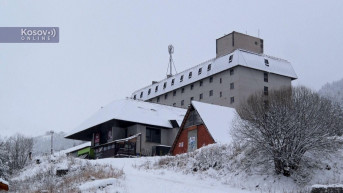
In this limbo, Kosovo's authorities are not sitting idly by. In the past week, the Kosovo government, without prior consultations or municipal consent, decided to appropriate 13 hectares and 33 ares of land in the Gracanica municipality for the construction of the "Kosovo Residential Center for Autism, Down Syndrome, and Disabilities for Children and the Elderly." Meanwhile, the Kosovo Privatization Agency issued a public call to lease several public buildings in Strpce, including the "City Cafe," the "Breza" hotel, the "Partizanka" building in the ski resort, and the express restaurant in the "Molika" hotel.
Similar examples can be found in the north, where two weeks ago, the municipal assembly of North Mitrovica allocated parcels and buildings from the Mitrovica district, the Office for Kosovo and Metohija, the Pension and Disability Insurance Fund, and the fire station to the Ministry of Internal Affairs for a period of 99 years.
Due to these developments, the mayors of Gracanica and Strpce have stated to Kosovo Online that they believe property issues should be part of the dialogue between Belgrade and Pristina.
"The seizure of municipal property in Gracanica is an unprecedented action that has further unsettled and worried our citizens. I sincerely hope and believe that common sense will prevail and that, with the pressure of the international community, this issue will be brought to the dialogue, because without the guarantee of a new agreement, we can expect more actions from Pristina," Ljiljana Subaric, the mayor of Gracanica, stated for Kosovo Online.
Subaric also expressed her sincere belief that the series of unilateral actions by the central authorities in Pristina, targeting the Serbian population, Serbian institutions, and municipal property, will be stopped.
"Healthcare, education, and culture are part of our identity and survival, and without these institutions, we have no future here," Subaric noted.
Although in the meantime the "City Cafe" has been removed from the list of public properties offered for lease by the Kosovo Privatization Agency, the mayor of Strpce, Dalibor Jevtic, announced today that the fight on this issue continues and that they are still insisting the same be done for other properties.
At the same time, he believes that the property issue must be placed on the Brussels dialogue table due to the "simple fact that these issues have not been resolved through the mechanisms currently available within the institutions."
"I can speak of examples ranging from the Brezovica Ski Center to others. When we find ourselves in a situation where something cannot be resolved through legal procedures and the decisions of legally and legitimately elected representatives of the people, and when that approach doesn't yield results, of course those issues must then be brought to the dialogue table," Jevtic told Kosovo Online.
He believes that the current Pristina government's intent in the future is is to close and seize everything that is Serbian.
"What Pristina is currently doing through the Privatization Agency is illegal according to current regulations, for several reasons. It is clear that the intentions of the current government and Albin Kurti's regime are to close everything that is Serbian and seize all Serbian property. I have no doubt about that. I know and I am almost certain that Albin Kurti will not give up on his goals wherever Serbs today have any property or institution. For Albin Kurti, these are political targets in achieving his political and nationalist goals," Jevtic said.
He adds that, besides public property, the current regime in Pristina is also indirectly seizing private property, not directly but through inaction.
"These are cases in Metohija in returnee communities where people are falsely accused of war crimes when they refuse to sell their property or when they demand the return of their seized property. Albin Kurti's goals are clear, and he will continue with these actions, but we will also continue to fight against all these decisions in any way we can, primarily through democratic means and the institutional mechanisms we have. Ultimately, besides destabilization, which is one of the goals of such decisions by Albin Kurti, the property-related decisions also aim to make life economically harder for the Serbs," Jevtic pointed out.
Dusko Celic, an assistant professor at the Faculty of Law at the University of North Mitrovica, does not believe that the issue of property in Kosovo can be brought to the agenda of the Belgrade-Pristina dialogue, as he views the Brussels negotiating framework as designed to suit Pristina, and as a result, no issue favorable to Belgrade can be put forward for dialogue.
"The nomination of issues to be discussed can only be done with the mutual consent of both parties. Therefore, I don't believe that, within such a negotiating framework, any issue favorable to Belgrade or to Serbs in Kosovo and Metohija can be put forward, including the issue of property in Kosovo and Metohija," Celic stated for Kosovo Online.
He reminds that in 2008, through the Ahtisaari Plan, Pristina committed to passing a law on restitution, specifically the return of confiscated property after 1945, but has ignored this obligation as if it doesn't exist.
"In the meantime, Pristina has developed a series of quasi-institutional and quasi-systemic measures through which it seizes both private Serbian property and what is known as social property and state property of the former Federal Republic of Yugoslavia. I fear that Pristina's administration, along with Albin Kurti, has a lot of leeway to act, and that the West tolerates such behavior for various reasons. I am also concerned about the potential abuse and the fabrication of 'reasons' to seize buildings that are state property of the Republic of Serbia, the former FRY, or socially owned, and that these properties will be artificially repurposed," Celic said.
Political scientist Ognjen Gogic points out that the issue of property in the Belgrade-Pristina dialogue could take on a dimension that would not actually suit Belgrade.
"There is no way to properly frame the topic because of the risk that, once discussions start, it could sound like some form of 'dissolution' – what is Kosovo's and what is Serbia's property, including the property of the Serbian state. This could imply some kind of interstate agreement between Serbia and Kosovo, which Serbia has sought to avoid," Gogic told Kosovo Online.
He further explains that Serbia wishes to avoid a situation where it would request Kosovo to recognize certain property as belonging to the Serbian state, as this would mean that Serbian property would need to be registered under Kosovo's legal system, which is an unacceptable move for Serbia, as it touches on status-related issues. For this reason, Gogic says, the property issue has been left unresolved, or "hanging."
The property issue, according to Gogic, has been a problem since the time of UNMIK, when the mission took control of all social and state property and began the privatization process. Today, property that was not privatized is considered "public property of Kosovo."
"After Kosovo unilaterally declared independence, it continued to privatize enterprises where it could, leaving unresolved only the issue of immovable property in Serb-majority municipalities. These include enterprises whose status remains unresolved, such as Trepca, Gazivode, or Brezovica, as well as other immovable properties used by either temporary administrative bodies or other Serbian institutions, such as schools and hospitals. This issue has remained undefined. One way to address it was for Serb-majority municipalities to become the founders and owners of these immovable properties and institutions, thereby protecting them, ensuring they remain at least in the hands of Kosovo Serbs if not in the hands of the Serbian state. This has been implemented to some extent, particularly in areas south of the Ibar River," Gogic says.
He explains that Pristina's general practice has been to convert all social and state property that once belonged to Serbia and Yugoslavia into public property of Kosovo, to privatize it, or to place it under the control of its own institutions.
Regarding the recent developments in the majority-Serb municipalities of Strpce, Gracanica, and North Mitrovica, where municipal property has been targeted, Gogic says that this issue relates to general legal security. The solution, he believes, lies in ensuring that Kosovo's judicial institutions protect property rights, whether for individuals or institutions.
"This is a fight that needs to be carried out through Kosovo's institutions, no matter how bleak the prospects might currently seem for Serbs in Kosovo. One possible way is to address the issue of legal security and the rule of law through dialogue, possibly as a condition set by the European Union for Kosovo's progress in the Growth Plan or its accession to the Council of Europe, which could then serve as a response to these situations expected in the future," Gogic believes.


0 comments