
Is the Venice Commission the address for resolving the issue of the Community of Serb Municipalities?
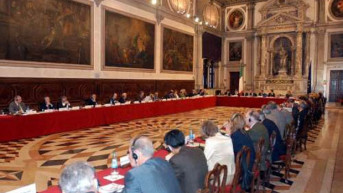
Kosovo Prime Minister Albin Kurti recently suggested that the EU Special Representative for the Kosovo-Serbia dialogue, Miroslav Lajcak, send the European draft of the Community of Serb Municipalities (CSM) to the Venice Commission for review. This proposal has raised the question of whether this advisory body of the Council of Europe is the appropriate place for deciding on the formation of the CSM.
Respondents from Kosovo Online believe that Kurti's proposal to send the draft statute of the CSM to the Venice Commission is aimed at buying time, given that the Commission does not have executive power. However, they also acknowledge that the Commission could provide constructive suggestions on the issue.
Kurti's proposal has been deemed senseless by the opposition in Kosovo, while it has received support from the Speaker of the Kosovo Assembly, Glauk Konjufca, and the Foreign Minister, Donika Gërvalla.
Kosovo President Vjosa Osmani stated that defining foreign policy objectives is the president's job and that such an idea must first be examined before deciding how to proceed.
The European Union also responded to Kurti's proposal. EU spokesperson Peter Stano stated that involving the Venice Commission is not foreseen in the 2013 and 2015 agreements on establishing the CSM, and that Pristina should stop delaying its obligations regarding its formation.
Respondents from Kosovo Online believe that Kurti is using "political gymnastics" to buy time before forming the CSM. They argue that the various proposals he has been making since the beginning of the year are for internal use, to portray himself as a "constructive leader." They also believe the proposal is unnecessary because the Venice Commission provides advisory opinions that are not legally binding.
However, the opinion of the Venice Commission, as a body concerned with the protection of minority and human rights, is welcome because it can guarantee the protection of the rights of Serbs in Kosovo.
Lawyer Milan Antonijevic believes that the Venice Commission can offer constructive comments on the CSM draft and that Serbia, by receiving an assessment from this Commission, would get a guarantee that the minority and human rights of Serbs in Kosovo would be protected by the Council of Europe.
Antonijevic explained that only member states of the Council of Europe, and the EU, can refer the CSM draft to this Commission.
"For starters, I pose a legal and formal question: Who can submit this document to the Venice Commission? These are the member states of the Council of Europe, then the EU. Therefore, if European negotiators assess that it is necessary for the Venice Commission to give an opinion on this document, they can do so. I presume that Serbia can also do this, and in this way, we can start this procedure," Antonijevic told Kosovo Online.
Antonijevic assessed that the Venice Commission can be a good body for consultation on the CSM issue, providing everyone with a neutral arbiter.
"Due to the accumulated knowledge within the Council of Europe on minority rights, autonomies, and all the issues that concern us, the Venice Commission is a suitable body that can be consulted. This was the case when we amended our Constitution a few years ago, following their recommendations and receiving constructive feedback on what we, as a country, had submitted. A similar situation could occur with the CSM Statute, where we would receive constructive comments and have a neutral arbiter. It is very difficult to sit in Belgrade and write a Statute, or anywhere in the region, without having the objective oversight that the Venice Commission provides," Antonijevic added.
He emphasizes that Kurti likely made this proposal to align more closely with the institutions of the Council of Europe and to gain domestic attention. However, he notes that internationally, only Serbia or the EU, which have clear relations with the Council of Europe, can count on their assistance.
He believes that the opinion of the Venice Commission on the CSM draft statute can be thorough, and that based on it, a functional statute can be created, modifying provisions that are deemed not to guarantee a sufficient level of autonomy or minority protection.
"We are talking about an institution that deals precisely with the protection of minority and human rights. So, what we can expect from the recommendations of the Venice Commission is not a reduction of minority rights, but rather an increase in the level of autonomy and the protection of minority rights, by providing mechanisms that can be sustainable in the long term," Antonijevic added.
He highlights that due to the position in which the Serbs in Kosovo find themselves, concrete agreements must be reached as soon as possible, and that Pristina must face the fact that it must provide a degree of autonomy to the Serbian community in Kosovo.
"We are talking about a very small part of the territory of Kosovo and a small number of people who, despite all the challenges and incidents, have decided to live in Kosovo, and for whom all this needs to be done. I think the Venice Commission, the Council of Europe, the EU, and our state understand this, and that's precisely why we need to enter into concrete agreements as soon as possible, to have the Statute on the table and for the authorities in Pristina to face the fact that they must give a significant degree of autonomy to the Serbs in Kosovo," concluded Antonijevic.
Milica Andric Rakic, Program Manager at the NGO Social Initiative, emphasized that it is within the competence of the Venice Commission to provide advisory opinions, and that the Constitutional Court of Kosovo would ultimately decide on the CSM draft statute. She noted that since the beginning of this year, Kosovo officials have been changing their proposals regarding the formation of the CSM in an attempt to buy time.
Andric Rakic stated for Kosovo Online that Kosovo leaders are trying to find an alternative to the CSM draft but have been unsuccessful so far, even with negative consequences.
"Since the beginning of the year, when Kosovo leaders sent two different letters to the Council of Europe, it has been clear that they are buying time and trading on the manner in which the CSM could be formed. They have devised various alternatives to what was agreed upon, some of which they tried to legitimize to the public with the help of some European think tanks, but without success. On the contrary, it seems to have had quite a negative effect on Kosovo's aspirations to join the Council of Europe. The proposal involving the Venice Commission continues this logic," Andric Rakic emphasized.
She believes this is a matter of buying time, and that even the Kosovo leaders themselves do not believe that their proposals will pass in international bodies.
"It is definitely about buying time. If any of these proposals are accepted, that would be great for them, but I don't believe they think there is much chance. They simply want to appear ready for dialogue and constructive, which is more or less the message Kurti has been sending since the beginning of the dialogue. But he is not fulfilling what he committed to, because all the subsequent proposals should have been proposed by Kosovo before the EU had to create the CSM Statute itself," Andric Rakic concluded.
Given that Kurti's proposals do not find support with the political West, Andric Rakic believes they are for internal use.
"These actions do not reflect well on how Kosovo will be perceived by foreign actors, especially in the West, where they do not receive a good response. However, I assume that the purpose of these proposals is internal, to signal to the public that Kosovo is trying to do something, but that the international community is the one not listening enough and is not ready for compromise. In this way, he defends Kosovo from the worst-case scenario, which is the implementation of the CSM as agreed," Andric Rakic added.
The EU's response to Kurti's proposal, stating that involving the Venice Commission is not provided for in the 2013 and 2015 agreements on the establishment of the CSM, is seen by Andric Rakic as final.
"The EU has a clear history of negotiations backed by Macron, Scholz, and Meloni. To disregard that would seem unserious, and in the end, why would they do that?" she asked.
She emphasized that the Venice Commission provides advisory opinions, so the final decision on the constitutionality of the CSM draft would still lie with the Constitutional Court of Kosovo.
"The Venice Commission could suggest improvements, but it does not have executive power in that sense, so the issue would still be with the Constitutional Court of Kosovo, making that step pointless," Andric Rakic concluded.
Kosovo expects that the Venice Commission would provide an opinion indicating that certain aspects of the draft are not in line with some principles and the Kosovo Constitution.
"There are far greater autonomies in Europe than what is foreseen with the CSM, so that doesn't hold water. But if they already know or expect that this will be rejected as a proposal, the image they hope to project is that they are proposing something, but the EU does not want to hear their arguments," Andric Rakic highlighted.
Professor of Constitutional Law at the University of Pristina, Mazlum Baraliu, believes there is no need to send the draft statute of the CSM to the Venice Commission, and that the CSM, like the Brussels and Ohrid agreements, will remain "dead letters on paper."
Baraliu told Kosovo Online that both Belgrade and Pristina are buying time by not implementing the agreements.
"It is evident that neither Belgrade nor Pristina wants the Community. Both have a need to buy time, especially after the European elections, where we see that both the right and left have shown growth, indicating they will be influential in the European Parliament as political forces," Baraliu emphasized.
He added that there is no need to send the CSM draft to the Venice Commission for evaluation, but that Kosovo and Serbia need to answer affirmatively or negatively on this issue. However, he stated that Kosovo authorities have not been consistent in their positions regarding the CSM.
"The Venice Commission is prestigious, but I don't think it needs to be sent anything. What is needed is to say yes or no. The Association does not suit Kosovo because it has state-like powers and minimizes the state. The representatives of the Kosovo government are unsustainable in this regard because they have proposed and acted differently. They once said that it should be signed as part of the Brussels and Ohrid agreements, but that did not work. The position of the Kosovo government and Kosovo did not align with the EU and Belgrade, making the issue of the Association and the Brussels and Ohrid agreements dead letters on paper," Baraliu explained.
When asked if Kosovo Prime Minister Albin Kurti's proposal to send the CSM draft to the Venice Commission means he does not trust the Constitutional Court of Kosovo, Baraliu noted that Kurti is not the only one who does not trust this institution, but that the main issue is Kurti's "political gymnastics."
"It's not about whether Kurti trusts the Constitutional Court. That court has shown itself to be fluid, often making different conclusions on the same issues. There are others who do not trust the Constitutional Court enough, but that is not the issue. Kurti is making political maneuvers that lack firm positions. He first says one thing, then another. He even said he could prepare the CSM draft overnight, which cannot be done in one night, especially not by an electrical engineer," Baraliu emphasized.



0 comments