
Andric Rakic: The Venice Commission has no executive power; Kosovo officials are buying time
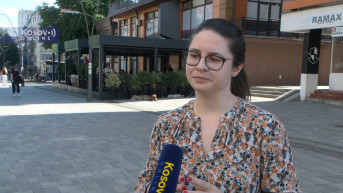
Program Manager of the NGO Social Initiative, Milica Andric Rakic, points out that the Venice Commission has the authority to provide advisory opinions, therefore, the Draft Statute of the CSM would ultimately be decided by the Constitutional Court of Kosovo, and she also notes that Kosovo officials have been changing their proposals on the formation of the CSM since the beginning of this year to buy time.
Regarding the proposal by Kosovo Prime Minister Albin Kurti to send the European draft of the CSM to the Venice Commission for review, Andric Rakic highlighted that Kosovo leaders are trying to find an alternative to the CSM draft, but so far without success, and even with negative consequences.
"Since the beginning of the year, when Kosovo leaders sent two different letters to the Council of Europe, it has been evident that they are buying time and, in some way, bargaining over how the CSM could be formed. They have been devising various alternatives to what was agreed upon, and some of these alternatives have been attempted to be legitimized to the public by some European think tanks. This has not been successful; on the contrary, it seems to have had a quite negative effect on Kosovo's aspirations to join the Council of Europe. The proposal involving the Venice Commission is a continuation of that logic," Andric Rakic emphasizes.
She believes that it is a matter of buying time and that even the Kosovo leaders themselves do not believe that their proposals will pass in international bodies.
"It is definitely about buying time. If any of these proposals pass, it would be great for them, but I don't believe they think there is much room for that. They simply want to appear ready for talks and constructive. This is more or less the message Kurti has been sending since the beginning of the dialogue. However, he is not doing what he committed to, as all the subsequent proposals should have been made by Kosovo before the EU had to draft the CSM Statute itself," Andric Rakic points out.
Given that Kurti's proposals are not accepted by the political West, Andric Rakic believes that they are intended for internal use.
"These actions do not positively affect how Kosovo is represented to foreign actors, especially in the West, where they are not well received. However, I assume the purpose of these proposals is internal, to signal to the public that Kosovo is trying to do something but that the international community is not listening enough and is not ready for compromise. In this way, he is, of course, defending Kosovo from the worst scenarios, which is implementing the CSM as agreed," Andric Rakic adds.
She considers the EU's response to Kurti's proposal that the inclusion of the Venice Commission is not provided for in the 2013 and 2015 agreements on the establishment of the CSM as final.
"The EU has a clear history of negotiations endorsed by Macron, Scholz, and Meloni. It would seem unserious to undermine that, and in the end, why would they do that?" she asked.
She emphasizes that the Venice Commission gives advisory opinions, so the final decision on the constitutionality of the CSM draft would still be with the Constitutional Court of Kosovo.
"The Venice Commission could say what needs to be improved, but it does not have executive power in that sense. So, the issue would still be with the Constitutional Court of Kosovo, making this step pointless," Andric Rakic points out.
She says that Kosovo expects that the Venice Commission would state that some elements of the CSM draft do not align with certain principles and the Kosovo constitution.
"There are much greater autonomies in Europe than what is provided for by the CSM, so that argument does not hold water. But if they already know or expect it to be rejected as a proposal, the image they hope to project is that they are proposing something, but that the EU does not want to hear their arguments," Andric Rakic highlighted.


0 comments