
Walking a Tightrope Between Kazan and Brussels: Why is BRICS a "Thorn in the Side" of the EU?
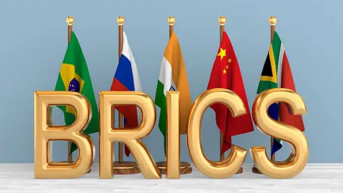
The recent invitation extended by Vladimir Putin to Serbian President Aleksandar Vucic to attend the BRICS Summit in Kazan was met with enthusiasm by the Serbian public, though for different reasons. Some viewed it as an honor, welcoming the strengthening of cooperation with BRICS, while others saw it as a sign that Vucic is now caught in the historical dilemma that eventually faces anyone attempting to balance between East and West. In this light, the motto of the Summit in Kazan might well be: "Whoever attends will regret it, and whoever doesn’t will regret it even more."
Written by: Dragana Savic
Turkey's recent announcement that it will formally seek membership in BRICS shows that Serbia is not the only country walking a tightrope stretched between two opposing poles of the international order.
A witty headline in the Düsseldorf economic weekly Wirtschaftswoche, "Another BRIC in the Wall?", failed to amuse anyone in the European Commission, which immediately expressed concern over Turkey’s candidacy for BRICS membership, reminding it that, as an EU candidate, it must respect the "values and foreign policy positions of the EU."
Serbia, which is not an EU member but considers it one of its priorities, can expect the same treatment. By not imposing sanctions on Russia and pursuing a policy of neutrality, Serbia has already "poked the eye" of its Western partners.
The argument that Western partners first "pushed" Kosovo into secession is valid. Moreover, a significant number of BRICS members have not recognized the self-proclaimed independence of Kosovo, making the political calculus clear.
Clear, but incomplete. As these lines are being written, an announcement has come for a new round of dialogue between Belgrade and Pristina—not in Moscow or Beijing, but in Brussels.
Dimitrije Milic from the organization New Third Way also confirms this, emphasizing that when it comes to Kosovo, the most important thing is to maintain strong relations with the countries that control the situation on the ground and can have the most influence—currently, these are the Western states, both due to historical context and their physical presence in the region.
He assumes that the idea of BRICS would appeal more to the majority of Serbian citizens, given that, as he says, there is a prevalent negative sentiment toward Western countries among a significant portion of the population. However, he stresses the importance of considering economic data as well.
"If we look at Serbia's exports in 2023, Serbia exported goods worth 18 billion euros to the EU. To all BRICS countries combined, it was a little over two billion. This means that the EU is currently nine times a larger economic partner in terms of exports. Additionally, if we look at the structure of our exports to BRICS, an increasingly large portion will involve China over time, in terms of both imports and exports. Just as China is disproportionately larger than the other BRICS economies within the organization, this will soon be reflected in Serbia's economy due to the free trade agreement," Milic explains for Kosovo Online.
Data still shows that BRICS is quite relevant due to the size of individual economies and their importance in the production of fossil fuels and various minerals. It is also significant, Milic adds, in terms of population, as it includes the two most populous countries in the world.
"However, it is important to emphasize that the organization's achievements over the past decade or more have not been significant. This is the biggest issue. What does this organization actually offer, besides being a forum for countries that have certain skepticism towards the Western-led world order? In essence, there are also internal problems within BRICS, such as the relationship between China and India, which is not at a very high level," Milic explains.
Regarding the invitation to the BRICS summit extended to the Serbian president, Milic believes that this is mainly a reflection of Russia's desire to show that it has allies.
On the other hand, most BRICS countries support Serbia on the international stage regarding the Kosovo issue, says journalist Filip Rodic for Kosovo Online. He adds that it is a misconception to think that this matter is decided within the EU, emphasizing that the issue is resolved at the UN, "where BRICS countries do have a significant say."
"It is not wrong to think that the issue of Kosovo and Metohija has united BRICS countries, and they are more or less aligned on that stance. Kosovo and Metohija serve as a kind of litmus test. Those who have a sound understanding of international relations and justice tend to support Serbia on this issue. It's no surprise that the majority of BRICS countries have not recognized Kosovo's secession and support Serbia in the international arena on this matter, even those like Egypt, which recognized it under unfortunate circumstances," says Rodic.
He also reminds that, in theory, the EU should only be a mediator in the negotiations.
"In practice, we see that the EU is not just a mediator, but rather one side in the negotiations—and a completely biased one in favor of Pristina. The issue of Kosovo and Metohija is resolved and will be resolved within the UN, from the Security Council to the General Assembly, where BRICS countries have significant influence," says Filip Rodic. He adds that as far as negotiations under the EU's auspices are concerned, the situation is so dire that it could not be worse, even if Serbia were to join BRICS tomorrow—something that is unlikely to happen.
He agrees that Serbia's alignment with BRICS could be a disruptive factor for other options, but only because those options are exclusive. According to him, "the EU is positioning itself exclusively in opposition to BRICS." Commenting on Turkey's announcement to seek BRICS membership, Rodic notes that Turkey seems to have finally broken away from its decades-long pursuit of EU membership.
"Our path to the EU has been decades long, while Turkey's has been nearly half a century. So, a smart person learns from others' mistakes, while a foolish one learns from their own. I believe Turkey’s example is extremely important and interesting for us, and we should think about why Turkey is shifting its geopolitical course and to what extent it is doing so," Rodic says.
For 17 years, BRICS has not made anything globally significant, according to Srecko Djukic, a member of the Forum for International Relations and a former ambassador. He told Kosovo Online that while he understands the desire for BRICS to address the Kosovo issue, "Kosovo’s issue is not resolved within BRICS."
"The issue of Kosovo is resolved in Europe, within the EU and the UN. That’s simply a fact. These BRICS countries have not recognized Kosovo, but that’s not the solution to the Kosovo issue—that we bury our heads in BRICS and hope no one recognizes Kosovo. BRICS won’t recognize it, but others in the West already have. We don’t live in Asia; we live in the heart of Europe," Djukic states, adding that this approach is akin to "running away from reality, a sort of ostrich policy of burying one’s head in the sand."
Commenting on the invitation for the Serbian president to attend the Kazan summit, Djukic notes that at such large gatherings, "and there’s no doubt that the BRICS summit is a prestigious international event," state leaders are not invited by chance.
"First, a probe is conducted to see if the country is interested in attending the meeting, and only then is an official invitation sent. The invitation to Serbia didn't come out of nowhere. Preliminary discussions took place, and then the invitation followed. This indicates that Serbia has been flirting with Moscow, with Putin, and with BRICS, showing interest in BRICS. Now, it's necessary to assess how compatible this is with Serbia's international position as a European country, which has maintained its foreign policy priorities for not just ten or twenty years, but for a very long time," says former diplomat Srecko Djukic.
According to him, Serbian policy needs to decide whether it will remain on its current European path, pursuing EU membership, or shift toward BRICS, which, as he describes, is "geopolitically thousands of kilometers away."
"Behind such decisions must be thorough studies and strong assessments of what this means for us politically, economically, and financially. If we aim for BRICS, are we losing Europe and the EU in the process?" Djukic warns.


comments