
The West never tougher towards Pristina: Are new sanctions looming over Kosovo?

While officials in Pristina demand the lifting of economic measures imposed by the European Union in mid-last year, Western diplomats in recent weeks have never been more united in expressing concern and dissatisfaction over the current actions of the Kosovo Government.
The abolishment of the dinar as a means of payment and financial transactions with Belgrade, a series of incursions into the institutions of the Provisional Institutions south of the Ibar River, confiscation of around four million dinars for pensions, questioning of healthcare workers in Gracanica... These are just some of the incidents that have marked the past week.
These events have prompted a unified condemnation from EU and US officials.
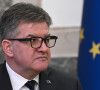
The European Union Special Representative for the Belgrade-Pristina dialogue, Miroslav Lajcak, stated that he was closely monitoring developments regarding the decision of the Central Bank of Kosovo, which, as he noted, particularly affected the Serbs in Kosovo.
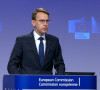
Ambassador Jeffrey Hovenier conveyed the message that the US Government was deeply concerned about recent actions of the Kosovo Government that had a direct and negative impact on members of the ethnic Serbian and other minority communities in Kosovo. In a similar tone, on behalf of the EU, EU spokesperson Peter Stano stated yesterday that during the past week, at least two examples of actions causing concern for the EU had been observed.
"One was the regulation of the CBK, and the other action was taken by the Kosovo Police in some Serbian entities in northern Kosovo. These steps are worrying because they do not contribute to de-escalating the situation, and they are usually unilateral without the necessary level of consultation to prevent a negative impact on people on the ground," Stano noted.
Are these warnings a clear signal that instead of lifting EU measures, Kosovo could face new sanctions?
Branka Latinovic, former Ambassador and representative of Serbia to the OSCE, assesses for Kosovo Online that the European Union, as a mediator in the negotiations between Belgrade and Pristina, did not sufficiently anticipate - the unpredictability of Kurti, and that the result could be new economic measures against Kosovo.
"We should not rule out the imposition of some sanctions, but they will not solve the problem, nor will they contribute to addressing the life problems of the people living there, which is one of the main essences of life. Here, concrete and effective measures are needed primarily to overcome this situation as soon as possible," Latinovic emphasizes.
According to her, the Government of Kosovo has created a complicated situation, and the point lies in the fact that the European Union, as the main negotiator between Belgrade and Pristina, did not grasp the entire situation.
"The situation is indeed very complicated, and it must be acknowledged that the European Union itself, as a mediator in the negotiations, did not adequately anticipate the possibilities, knowing Kurti's unpredictability, the Prime Minister of Kosovo, and protective measures should have been foreseen during the negotiations, given that all of that was supposed to be under the jurisdiction of the Community of Serb-majority Municipalities, which does not exist," Latinovic says.
Commenting on the latest statements by US and EU officials criticizing Kosovo's unilateral moves, Latinovic does not rule out the possibility that these countries could move from declarative to concrete measures.
"US Ambassador Jeffrey Hovenier hinted at one of these measures in a written statement, namely, the absence of further US support regarding the regulation of Kosovo's status in international organizations or affirmation on the international stage. This potential sanctioning of the current government of Kosovo has already been hinted at. The EU could probably do the same," Latinovic says.
She reminds that it is a clear signal that the EU is reserved in its behavior toward Pristina and that the European Commission did not put the abolition of sanctions against Kosovo on the agenda.
"The fact that the European Commission did not put the abolition of sanctions, at least some of the packages of sanctions imposed on Kosovo officials and representatives of the authorities, on the agenda, indicates that they are very suspicious and reserved about how that government behaves, how its representatives behave, and that there is obviously not enough trust that they will overcome it and that it will not be repeated," Latinovic says.
According to her, it is not excluded that the European Commission will use a "new toolkit," or a new approach to disciplining disobedient states.
"Surely, financial sanctions concerning funds that should come to the region, including the region, will be revised, perhaps even suspended. This is a toolkit that the European Commission uses not only toward our region but also toward member states. Let's not forget Hungary, which had 35 billion frozen from the EU budget, 10 billion of which were unfrozen last December, but 21 billion are still pending. If you want to influence someone and if you want them to respect what they have agreed to, there are tools – this is a new approach by which the EU approaches those who do not respect what they have agreed to or accepted. In this regard, new measures against Kosovo should not be ruled out," Latinovic says.
On the other hand, Zoran Jeremic, a long-time Ambassador of Serbia to Germany, assesses for Kosovo Online that the West will not, after all, impose new sanctions on Kosovo and emphasizes that critical views addressed to Pristina should be viewed through the prism of "the usual diplomatic language" used by those states that do not have concrete interests or the ability to clearly and openly push forward their positions.
"Mostly, it all ends with a 'surprise', 'concern'. But, there is no vocabulary we are unfortunately accustomed to. Those are vocabularies of ultimatums and threats. There is some of that in Pristina now, they talk in such a way, but they try not to make it public. Let's not forget that Pristina is their child. They discipline their children, and if they 'beat' it – they beat so that no one sees," Jeremic says.
Explaining why he does not think the West will impose new measures on Kosovo, Jeremic says it can be seen from the statements of officials calling for the suspension of the decision to abolish the dinar as a means of payment.
"It would be normal to demand the withdrawal of the decision. Then, when you do not withdraw the decision, you have a deadline, and suspension means nothing. It can mean quiet regulation and maintenance, but it is a certain pressure. Whether it is directed at the internal field or whether it is directed at the actors who participated in the foreign policy plan, it is difficult to say," the diplomat says.
According to him, more drastic pressure on the Kosovo authorities will depend equally on Pristina and those who support it.
"The question is whether this can be achieved, even with a successful session of the UN Security Council, which should only be a substitute for the unsuccessful EU policy and mediation that fails to do so. Perhaps this will be an opportunity to make it clear to them that the EU, despite all intentions and desires, is unable to implement what we agree upon," Jeremic assesses.
According to him, despite the change in the narrative of the US Ambassador to Pristina, Jorn Rohde, Germany will not change its attitude toward Kosovo.
"I don't see a change in Germany's foreign policy. There is a change in narrative, a change in rivalry with the US. And that's an old problem. They don't allow each other primacy in the field they consider their own. Germany sees the Balkans as its backyard, and this is a good opportunity to at least express rivalry and show who has what capabilities to influence factors in that area," Jeremic concludes.
Milica Andric Rakic, the program manager of the NGO Social Initiative, also does not expect Kosovo to be punished for the recent actions of Pristina but sees it as a significant success that Western diplomats have publicly highlighted the difficult situation of the Serbian community.
Rakic is convinced that the international community is concerned about Pristina's recent actions, reflected in the sharpness of the statements, especially from the State Department.
"I am aware that many analysts do not see it this way, but the only way to help Kosovo Serbs is for when someone finally says that things are not right in Pristina, that they amplify those voices, especially such credible voices in the Western world, like the US administration – repeat what they said at all venues, in all meetings with relevant people to adequately demonstrate how difficult the situation on the ground really is," Rakic emphasizes for Kosovo Online.
According to her, the Serbian community has lost credibility in the Western public sphere, and regardless of claims that such statements serve no purpose and are merely pro forma, they actually give Serbs the opportunity to show that their truth exists.
"That's why we need a statement from the State Department that validates that there are indeed problems in Kosovo so that we can convince someone else of that," Rakic says.
However, she believes it is not realistic to expect the West to impose additional measures or sanctions against Kurti or the Kosovo Government.
Rakic believes the West will wait for the elections and then decide on its next steps.
"I am quite convinced that if Albin Kurti cannot form a government and if he does not have the title of Kosovo Prime Minister to protect him, then he could face very serious sanctions that could potentially seal his political career in Kosovo. But until then, I am not convinced. The West still seeks balance in its response. Between attempting to prevent Kosovo from engaging in escalatory actions and not harming its position in the negotiation process".
Rakic assesses that there are "red lines" in the West's tolerance of Pristina's actions and that they will react at some point.
"Now it's just a matter of when that moment is, how long the Serbian community in Kosovo can endure it, and how quickly the Serbian community needs to convince Western public opinion, which actually makes those key decisions about Kosovo, that it is time to intervene more concretely in what is happening in Pristina," Rakic concludes.


comments