
Western Balkans’ accession to Schengen: What benefits would it bring and on whom does it depend?
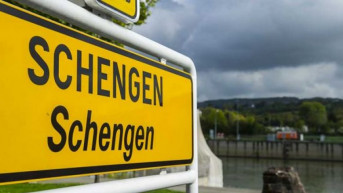
The accession of the Western Balkans to the Schengen Area would bring concrete benefits for citizens and the economies of the region. The movement of people and the flow of goods would become easier, costs would be reduced, and the advantages of European integration would be felt more directly. Kosovo Online interlocutors view Serbia’s initiative to open the Schengen Area to the entire region as soon as possible as a positive step, while also pointing out that accession to Schengen requires significant commitments from those wishing to join.
Written by: Darko Savanovic
At the informal meeting of EU and Western Balkan foreign ministers in Brussels earlier this week, Serbian Foreign Minister Marko Djuric stated that Serbia wishes to see the Schengen Area opened to the entire Western Balkans region as quickly as possible.
He also explained what this would concretely mean for both the region and the continent as a whole.
“It is frustrating that we have hard borders every 150 to 200 kilometers interrupting the bloodstream of people’s lives, families, and economies, and there is no reason why Europe should not already this summer unlock the full potential of integrating our region into Schengen, because this would directly generate €50 billion in new economic activity and would not reduce the security of the EU and the continent. On the contrary, it would reduce tensions in our region and would be highly beneficial,” Djuric stated.
Deputy Speaker of the Serbian Parliament and Chairwoman of the Parliamentary Committee on European Integration Elvira Kovač also believes that Serbia’s and the region’s accession to the Schengen Area would bring tangible benefits for citizens and the economy. According to her, although there have so far been no official reactions from Brussels regarding Belgrade’s initiative, certain member states view it as interesting and worthy of consideration.
Political analyst from Tirana Ben Andoni sees Serbia’s initiative as a positive step because, as he says, it calls for reducing tensions in relations within the region.
“Mr. Djuric correctly addressed the issue of Balkan Schengen by saying that we have blockades every 150 or 200 kilometers along our borders. He is referring to the borders from Bosnia and Herzegovina all the way south. Within the Berlin Process, our countries were asked to abolish the visa system among themselves, but today we are in a situation where Bosnia and Herzegovina has blocked visas with Kosovo, although Kosovo abolished the visa regime with BiH. The initiative within the Berlin Process involving our three countries, namely Open Balkan between Serbia, North Macedonia, and Albania, has stalled, not to mention that it has already become ineffective. Mr. Rama emphasized this in almost fatalistic terms by saying that Open Balkan is ‘dead’,” Andoni told Kosovo Online.
This analyst recalls that all regional processes in the past, starting from the period when Fatos Nano served as Prime Minister of Albania, had the same goal — the implementation in the Balkans of the four fundamental principles of the European Union, including the free movement of people and capital.
Unfortunately, he adds, over time these initiatives, later incorporated into the framework of the Berlin Process, stalled because significant uncertainties continue to exist among the Balkan countries.
“This repeated concern reminds us how unclear the policies and relations between our countries remain. For example, Serbia constantly highlights the threat it perceives from Kosovo, Croatia, and Albania because of the military agreement between them. On the other hand, Kosovo continually points to the danger it perceives from Serbia, while the Federation of Bosnia and Herzegovina continues to struggle with its internal problems. All of this gives meaning to what Mr. Djuric is asking for — namely, at least the abolition of the visa regime, that is, the establishment of free movement in our region, especially the movement of goods, which still has not been achieved despite so much time and so many initiatives. In that sense, I view this as a positive step by Serbia because it calls for reducing tensions among the countries of our region,” Andoni said.
Nevertheless, he points out that it remains up to politicians to decide whether they will follow this path or the path of conflict.
Border Control and Police Cooperation
EU expert from Belgrade Djordje Dimitrov explains that accession to the Schengen Area is a highly complex process requiring extensive commitments from countries wishing to join.
As he notes, this includes reforms relating to border control, police cooperation, and judicial cooperation, areas in which all Western Balkan countries currently have considerable room for improvement.
He adds that alignment with the European Union’s visa and foreign policy would also be required, which in Serbia’s case would mean the immediate introduction of visas for Russia and China.
“It also requires full alignment with negotiating Chapter 24, where Serbia is not performing well. This falls within Cluster 1 concerning the fundamentals on which the European Union insists. It requires much more as well. It requires accession to the Schengen Information System, which the Western Balkan countries have not yet joined,” Dimitrov told Kosovo Online.
“Special Status”
Analyst from Skopje Petar Arsovski points out that entry into Schengen does not depend solely on the countries of the Western Balkans, but also on those already within the Schengen Area.
He does not believe that travel rules for Western Balkan countries entering the EU will change soon, because current Schengen member states, which benefit from integrated border management, would oppose such changes.
“I think the possibility of abolishing Schengen as a system remains small, not only because of the system’s functionality but also because of the glacial speed at which the EU moves in making such decisions. I think it is more likely that we might create some sort of special status, especially because of the new EES and ETIAS systems, but I do not believe that the rules for travel to the EU will change anytime soon. The current Schengen member states, which enjoy the advantages of integrated border management within Schengen, will certainly oppose such a mechanism,” Arsovski told Kosovo Online.
Economics professor Skumbin Misini believes that the countries of the Western Balkans have an opportunity to implement significant reforms and align themselves with European norms, but that their, as he says, authoritarian leadership prevents them from carrying out those reforms.
“It is important to note that Albania and Montenegro are expected to join the European Union in the near future, which depends on future reforms and also on the leadership of those countries. In contrast, other countries are not implementing reforms, which penalizes them during the integration process,” Misini told Kosovo Online.
According to him, it would be beneficial for citizens of these countries to have European standards, applicable European laws, foreign investments, rule of law, independent judicial institutions, and an improved quality of life.
The Schengen Area currently includes 29 countries: 25 EU member states and four non-EU countries — Iceland, Norway, Switzerland, and Liechtenstein. The most recent countries to join Schengen were Bulgaria and Romania on January 1, 2025.
What is certain is that if the entire Western Balkans were to enter the Schengen Area, the benefits would be multi-layered — for citizens, economies, and the functioning of states throughout the region. It would enable the free movement of citizens of Western Balkan countries, easier access to the EU labor market, stronger trade and economic growth, increased tourism, and greater foreign investment.



0 comments