
What are the concrete effects of Lajcak's shuttle diplomacy in Pristina and Belgrade?
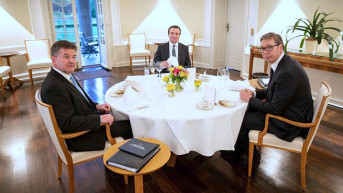
The European Union Special Envoy for dialogue between Belgrade and Pristina, Miroslav Lajcak, has been visiting Pristina and Belgrade in recent weeks, where he talks separately with representatives of the dialogue parties, but the concrete effects of his "shuttle diplomacy" are still modest and unclear. We tried to find out why the results of Lajcak's visits are missing from those familiar with the political situation in Belgrade and Pristina.
A few days before the talks in Ohrid, Lajcak is "on the field" again. On Friday, he was in Pristina, where, after talking with Prime Minister Albin Kurti, he said that the Community of Serb-majority Municipalities had not been on the agenda, so his arrival in Belgrade today, to talk with President Aleksandar Vucic, does not initially inspire too much optimism.
Pristina has an "unsettled debt" from the Brussels Agreement - the formation of the CSM. The President of Serbia, before the meeting with Lajcak, said that someone had to explain the meaning of everything, if Pristina did not want to form the CSM, asking why the emissaries were coming to Belgrade.
The former ambassador of Serbia in Berlin, Milovan Bozinovic, tells Kosovo Online that the fact that the results of Lajcak's action are not great is something we are used to.
"He has been in this process for a long time, but it seems that things have not moved forward in any significant way, except for the agreement on the framework plan for the future solution of the Kosovo issue," Bozinovic noted.

For him, he says, the Franco-German plan is a kind of positive result, because some contours have appeared, but all this "stumbles" on one assumption on which Serbia cannot make a compromise and that is the CSM.
"If Lajcak says that he came on a mission in which the issue of the Community of Serb-majority Municipalities will not be on the agenda, and that is how we understood him the other day, then he has condemned himself to failure," Bozinovic said.
When asked whether the talks in Ohrid could lead to an agreement, Bozinovic replied that they might, because nothing had been "a priori" ruled out, but that for now, it did not appear that things were moving in that direction.
"There is also a lot of subject matter that is hidden from the public eye, and that is not unusual for such difficult negotiations, however, someone must make a statement not only in allusions and abstract promises but concretely, about one thing. The Community of Serb-majority Municipalities is part of the Brussels Agreement, from 10 years ago, and it is “an unpaid debt” from that period. And, one cannot simply go further in negotiations with the current Kosovo government, prone to excessive behavior and an infantile understanding of politics..." Bozinovic says.
Who will now introduce those conversations into "promising streams", can be guessed.
"There is someone who can do it, we hope they will do it. Without it, it won't work," Bozinovic added.
He also notes that Lajcak made an "enigmatic statement” that the CSM will be a community based on the model practiced in Europe, which in itself is fine, but it must be borne in mind that the models are different, that the degree of autonomy is not the same in each.
"It's not the same German minority in Belgium, Tyrol, or the Aland Islands... It's good that some role models can be discussed, but it seems like it's just something that has been said easily... Given the many words spent so far, I'm not convinced," Bozinovic said.
Predrag Rajic from the Center for Social Stability tells Kosovo Online that Lajcak's visits are a continuation of the pressure of Western powers on Belgrade, which is another stage in a series that should lead to the fulfillment of Western goals, but adds that Serbia has a courageous leadership, a president who very well knows what the intentions of the Western partners are and knows what are the clearly prescribed "red lines" of Belgrade.
"When it comes to Lajcak's diplomacy, I don't see them using any of the instruments of pressure at their disposal to force Kurti to form the CSM. They keep repeating that it is Pristina's obligation, which is true, but they do nothing to force them to form the CSM", Rajic stated and in support of this, he reminds that the visa regime was abolished in Pristina a few days ago.
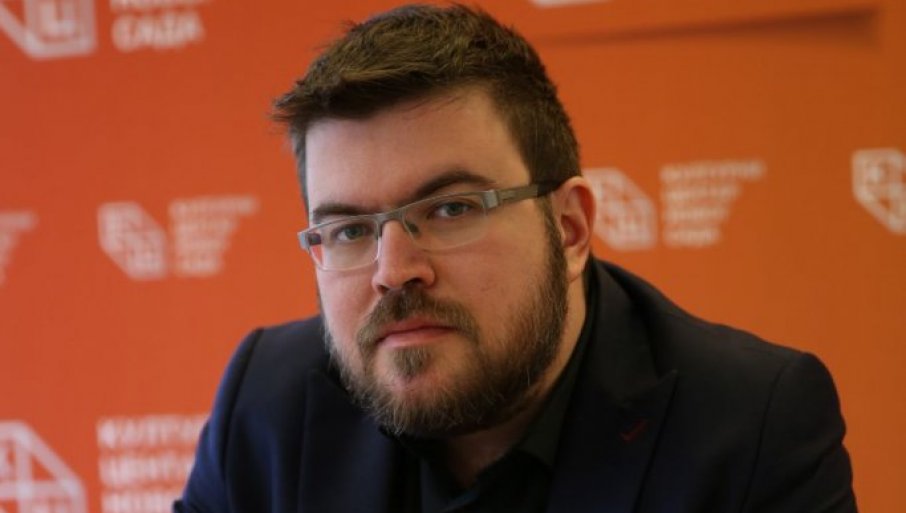
Stating that the abolition of visas for the citizens of Kosovo is actually a good thing and that Belgrade has nothing against them traveling to EU countries more easily, as this can contribute to the stability of the region, Rajic points out that the question is - how do the Europeans think they can persuade Kurti to do anything if they did not even threaten him with sanctions, but on the contrary, they fulfill the Albanian wishes in Kosovo, while the Albanians do nothing of their obligations.
"I don't expect anything from Lajcak's visit, only the continuation of pressure on Belgrade and the continuation of feigning pressure on Pristina, because there is no real European pressure on Pristina," Rajic is confident.
He believes that the outcome of the negotiations in Ohrid depends on how willing Western representatives are to persuade Kurti to form the CSM.
"The Europeans have already made it clear that they have neither the will nor the strength to do so, so the question arises whether the US will do something in that field. Everything depends on that. Without the CSM, there is no progress in the negotiations, everyone has said that even the EU and the US, and since the EU is still holding on to Borrell's belief that they cannot force Kurti to do anything, and the US says that the CSM will be formed with or without Kurti, then we are waiting to see that pressure on Pristina in action, but I don't see that anyone, Brussels or Washington, are truly pressuring Pristina to fulfill its obligation," Rajic said.
Even in Kosovo, those who follow the dialogue and relations between Belgrade and Pristina do not believe that Lajcak's "shuttle diplomacy" brings progress in the dialogue. Pristina analyst Dardan Sejdiu, although he has different expectations for the outcome of the dialogue, assesses for Kosovo Online that Lajcak has not achieved anything so far and that it remains to be seen what will happen in Ohrid.
"The state of permanent dialogue, permanent negotiations, always produces crises, so that should end with some agreement on mutual recognition so that we can continue with some other affairs. As long as we have these negotiations, then those who rule in Kosovo, whoever they are, and those who rule in Serbia also attack with this 'turbo-nationalism'. Then all the Serbs are bad, all Albanians are bad..." Sejdiu said.
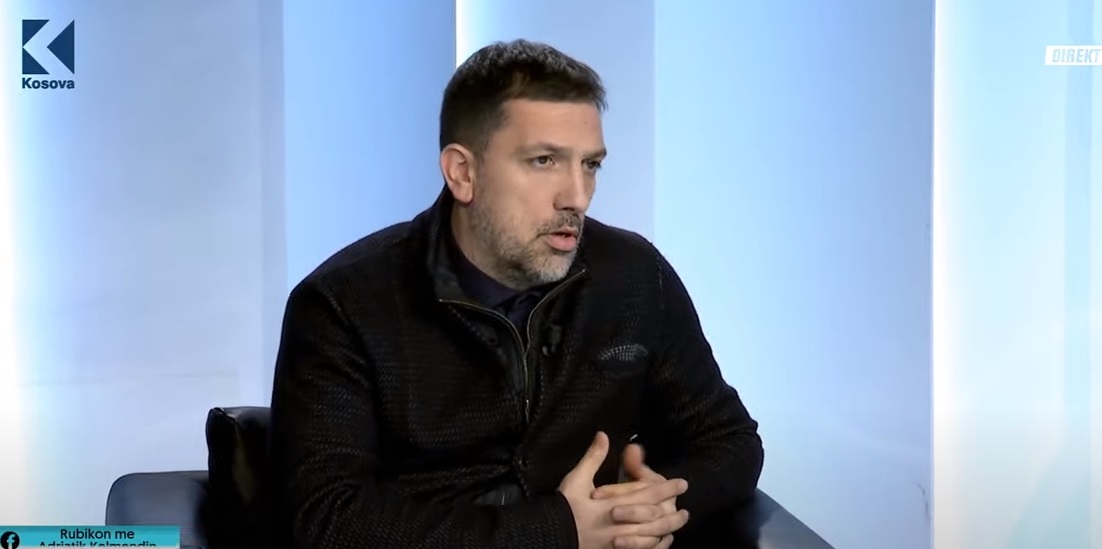
That is why he believes that - the more such talks there are, the state of conflict will continue, although not physical, there will always be tension between the two nations.
"It means that 25 years after the war, we have to come to an agreement again, which is not final, but the situation until another incident," he added.
When asked if Lajcak would achieve something today with Vucic in Belgrade, Sejdiu says the following.
"They will have coffee and lunch, and then they will agree to say that they are close, then Vucic will say that he is ready for compromises, but that Kosovo is not ready for compromises, and when you ask what the compromise is, there is no compromise. That is position – the CSM and that's it, and there is no recognition. Then you come to Kosovo and ask our prime minister, he says de facto recognition. We're going around in circles," Sejdiu concluded.

0 comments