
What is behind Pristina's intention to open the main bridge on the Ibar and who is forgetting Suvi Do?
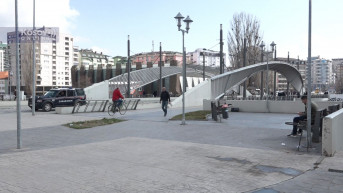
The Kosovo government intends to open the main bridge on the Ibar, which connects North and South Mitrovica, to vehicular traffic this summer. This announcement directly contradicts the agreements reached in the dialogue between Belgrade and Pristina, which stipulate that the administrative jurisdiction between North and South Mitrovica must be clearly delineated before opening the bridge. This has not yet been done in the Suvi Do area.
According to Kosovo Online's sources, the announced move would further pressure the already fearful Serbian population and is seen as a step towards abolishing the municipality of North Mitrovica, as well as part of the policy of provoking Serbs in the north led by Albin Kurti's government.
Arber Vokrri, Deputy Minister of Administration and Local Government, stated today that there is no exact date for the bridge's opening, but it will happen this summer. He also emphasized that "the European Union and other international organizations need to learn that managing municipal issues in Kosovo belongs to their institutions."
The EU Mission in Kosovo informed our portal yesterday that all decisions regarding the bridge in Mitrovica should be made within the dialogue framework with the participation of official delegations from both Kosovo and Serbia.
"Despite the EU's efforts to provide assistance over the years, the bridge remains closed to traffic. The EU continues to urge the parties to implement without delay all pending dialogue agreements, including the Bridge Agreement, without any preconditions or links to unrelated issues. The EU remains ready to facilitate discussions. The EU also calls on everyone to refrain from any provocative actions," stated the EU Mission in Kosovo.
According to the 2014 agreement, before the bridge opens, the administrative jurisdiction between North and South Mitrovica over the Brdjani and Suvi Do areas, which are of mixed ethnic composition, needs to be clearly delineated. The parties agreed that the Brdjani area is undoubtedly within the territory of North Mitrovica, but the delineation of North and South Mitrovica in the Suvi Do area remains unresolved to this day.
According to the agreement, only after the issue of delineation is settled can conditions be created for the Serbian side and the EU to agree on the simultaneous opening date of the bridge. In the 2018 Brussels dialogue, EU mediators confirmed that the EU also considers the delineation of North and South Mitrovica in the Suvi Do area necessary before the simultaneous opening of the bridge and King Peter pedestrian street in North Mitrovica. They then took the position that this delineation should be carried out in accordance with Article 3.3 of Kosovo's Law on Administrative Municipal Boundaries, which states that the boundary between the two municipalities will be "a line drawn through the cadastral zone of Suvi Do," which, according to that law, is part of South Mitrovica.
However, Pristina has taken the position that the current law is "wrong" and that all of Suvi Do administratively belongs to South Mitrovica. Since 2018, when all construction work on the bridge and pedestrian street was completed, Pristina has refused to discuss the delineation of North and South Mitrovica, claiming it is an internal matter.
Former Mayor of North Mitrovica Milan Radojevic believes that the announcement of the opening of the main bridge on the Ibar is a step towards the ultimate goal of the Pristina authorities to abolish the municipality of North Mitrovica.
"Such and similar announcements aim to further pressure the Serbian community in northern Kosovo and Metohija. I think the ultimate goal is to abolish the municipality of North Mitrovica, and the opening of the main bridge is just one step towards that ultimate goal that the Albanians in Pristina and Prime Minister Albin Kurti have," Radojevic told Kosovo Online.
He emphasized that the bridge symbolizes many conflicts and that there are justified reasons why KFOR troops have been stationed there since 1999.
"Since 1999, there have been many incidents and attacks from the south on the northern part of Kosovska Mitrovica. Much blood has been shed on that bridge, and there is certainly a justified reason why it is closed. I must point out that the bridge is only closed to vehicles, not to pedestrian traffic, and there are many bridges between the southern and northern parts of Kosovska Mitrovica that people use for transportation," Radojevic noted.
He recalls that the bridge dividing the two municipalities has seen more than 1,000 interethnic incidents recorded by KFOR and Kosovo police in the past. He appealed to the international community to stop issuing statements and see firsthand the conditions in which Serbs live in northern Kosovo.
Former President of the North Mitrovica Municipal Assembly Nemanja Bisevac told Kosovo Online that the initial reaction among residents following the announcement of the bridge's opening is one of fear and anxiety.
"People are disturbed by these announcements. Citizens would not mind if the situation were normal, but if conditions for opening the bridge were not met two years ago when we had our representatives in the Kosovo police and municipalities, they are certainly not met now. I think this is another form of pressure, I can freely say, terror, being carried out against our people in Kosovo and Metohija," Bisevac said.
Bisevac notes that in recent years, there have been initiatives to merge the municipalities of North and South Mitrovica and that this decision would have catastrophic consequences for the Serbian people.
“Opening the bridge is likely a step towards that goal. I think it would be another step backward in worsening relations between the two communities,” Bisevac said.
The timing of reopening the topic of the main bridge on the Ibar does not surprise political scientist Ognjen Gogic. He explains that this issue holds enormous symbolic significance for both communities, and a dispute over the bridge’s opening could mark the start of Albin Kurti’s campaign for the upcoming parliamentary elections.
“It seems like the bridge would be the place from which he would start his campaign,” Gogic told Kosovo Online.
Gogic notes that the Self-Determination Movement’s program includes the unification of North and South Mitrovica, and Kurti persistently pursues a policy of provoking Serbs in northern Kosovo.
“He constantly seeks topics that he knows can cause outrage, hoping to incite the Serbs and prompt them to take some perhaps more radical action,” Gogic said.
He emphasizes that Serbs “absolutely need to be consulted” on this issue, but he reminds that their stance is well known—they have never been in favor of opening the bridge to traffic.
“For the Albanian side, opening the bridge to traffic has no particular significance other than provoking the Serbian side. The only function and reason for opening it would be to create a new provocation towards the Serbs because other traffic connections between the north and south have been established. Therefore, that bridge would not mean anything in this regard, except for some sort of symbolic victory of the Albanian side over the Serbian side,” Gogic said.
From the perspective of the Serbian community in northern Kosovo, he states, there would never be the right moment to open the bridge to vehicular traffic because it opens old wounds, especially in North Mitrovica.
“At one time, that bridge represented a sort of boundary dividing Mitrovica into northern and southern parts, or Serbian and Albanian parts, and it was the site of various barricades and conflicts in the past when Serbs prevented Albanians from entering northern Kosovo. Serbs primarily associate the bridge with those events. Regarding security, opening it now would not have a significant impact, given that there are already special police bases freely present in northern Kosovo and the special police patrols the north. So, the bridge would not facilitate the passage of armed forces, and the security situation would not be worse than it already is,” Gogic believes.
He recalls that the Bridge Revitalization Agreement was reached in 2015 and some steps were taken, such as opening it for pedestrians, but the process stalled because the Serbs consistently opposed it.
The main bridge on the Ibar, it should be recalled, has been closed to traffic since the end of the conflict in 1999 and has since been the site of incidents, including attacks on Serbs and intimidation by Albanians. As a result, local Serbs placed barricades on the bridge, which were the subject of removal talks between the negotiating teams of Belgrade and Pristina, mediated by the EU, in 2014. The barricade was removed on June 17, 2014, and with the organization of the Office for Kosovo and Metohija and the local Serbian self-government, a green belt bordered by concrete planters, known as the "Peace Park," was built.


0 comments