
Gogic: It seems that Kurti could start his election campaign from the Ibar Bridge
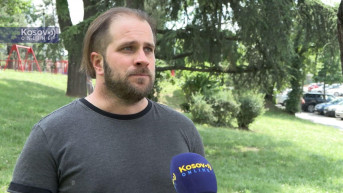
The timing of the renewed discussion about opening the main bridge on the Ibar is not surprising because this issue holds enormous symbolic significance for both communities. A dispute over the opening of the bridge could be the beginning of Albin Kurti's election campaign for the upcoming parliamentary elections. It seems as if that bridge would be the place from which he would start his campaign, political scientist Ognjen Gogic says for Kosovo Online.
He says that the program of the Self-Determination movement includes the unification of North and South Mitrovica, but also that Kurti persistently pursues a policy of provoking the Serbs in northern Kosovo.
"He constantly looks for issues that he knows can cause outrage, hoping to incite the Serbs to take perhaps more radical steps," Gogic says.
He emphasizes that the Serbs "absolutely need to be consulted" on this issue but recalls that their position is well-known and that they have never been in favor of opening the bridge to traffic.
"For the Albanian side, the opening of the bridge to traffic has no particular significance except to provoke the Serbian side. Thus, the only function and reason for opening it is to create a new provocation towards the Serbs because other traffic connections between the north and south have been established. So, that bridge would mean nothing in that regard except some sort of symbolic victory for the Albanian side over the Serbs," Gogic assesses.
From the perspective of the Serbian community in northern Kosovo, he says, there would never be a right moment to open the bridge to vehicular traffic because it reopens old wounds, especially in North Mitrovica.
"At one time, that bridge represented a kind of border dividing Mitrovica into northern and southern parts, that is, Serbian and Albanian parts, and it was the scene of various barricades and conflicts in the past when Serbs prevented Albanians from entering northern Kosovo. Serbs primarily associate the bridge with those events, and in terms of security, its opening now would not have great significance when there are already freely operating special police bases in northern Kosovo, and when the special police operate in the north. So, the bridge now would not facilitate the passage of armed forces, and the security situation would not be worse than it already is," Gogic believes.
However, he points out that this move could provoke some sort of outrage in the Serbian community, but he questions whether scenes from twenty years ago, when Serbs would gather at the bridge to block organized groups of Albanians, could be repeated. He believes that Serbs in northern Kosovo no longer have the potential for such resistance, especially after last year's events when, as he says, their resistance was broken.
"The agreement on the revitalization of the bridge was reached in 2015, and some steps were taken, it was opened for pedestrians but not for vehicles. And that is where things stalled because the Serbs persistently opposed it. Last year, the Assembly of North Mitrovica decided to open it to traffic after Serbian representatives left the municipal assembly, and representatives from the Albanian and Bosniak communities gained the majority. This already caused controversy and outrage, but it was not abandoned, perhaps only postponed, and Elshani's announcement actually indicates that it has not been abandoned," Gogic says.
He notes that the opening of the bridge is not a decision made by Veton Elshani, the deputy commander of the Kosovo Police for the North region, who announced this possibility yesterday, nor by the police at all.
"They only execute the decision made by other authorities, which in this case is the municipality of North Mitrovica, despite the lack of legitimacy of its bodies. They make such decisions. I assume that at some point the central authorities will get involved because they can refer to the 2015 agreement," Gogic concludes.


0 comments