
What comes after the elections in Serbia: Dialogue between European desires and the Kosovo reality
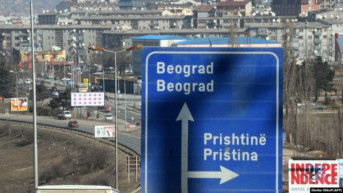
Serbia is entering the post-election process in which a new legislative and executive branch of government will be formed. EU officials expect one of the key tasks of the new Government in Serbia to be the normalization of relations with Pristina. However, analysts from Belgrade and Pristina assert that the dialogue has long been in a state of 'hibernation' and will certainly remain so in the first months of the coming year.
Vladimir Bilcik, the European Parliament rapporteur for Serbia, told Kosovo Online that the three key tasks before the new Government of Serbia are the normalization of relations between Belgrade and Pristina, reforms, and alignment of foreign policy with the EU.
"Progress in any of these areas fundamentally moves Serbia closer to EU membership. Progress in all ensures that Serbia is in the EU", Bilcik assesses.
Bilcik acknowledges that despite tensions, a lot of constructive work has been shown so far, but the first crucial task before Serbia is "sincere commitment to the normalization of relations between Belgrade and Pristina".
He expressed satisfaction that a large number of the Serbs from Kosovo had voted in central Serbia, noting that Kosovo had been a major topic in the campaign and that it was important that there had been no tensions during the election day.
"I hope that the future government will indeed make progress in normalizing relations, which includes resolving open issues, including the attack in Banjska in September. This issue will not disappear", Bilcik said.
As the second point, he emphasized the need for reforms.
"Reforms, reforms, reforms. I hope that the new government, the new ruling majority will fulfill its four-year mandate, that it will be stable, and that it will be able to focus on everything that needs to be done in the areas of the rule of law, democracy, but also structural reforms in the economy, energy. All of this together can bring Serbia closer to EU membership", he said.
He says that enlargement has returned to the European Union's agenda, which is why he hopes and would like to see this topic return to Serbia's agenda with the new government.
As the third most important thing, he mentioned aligning Serbia's foreign policy with the EU.
"I understand that there are certain issues, I understand that it's difficult, but as Serbia progresses toward the normalization of relations with Pristina, I hope that there will also be alignment with the Union's foreign policy, including sanctions against Russia. At a time when Russia attacked Ukraine, its territorial integrity, I hope that Serbia can stand with us on this issue", Bilcik emphasized.
This would also be a signal to all partners in the EU, he added.
On the question of the message for Pristina, he says that they need to be honest, work on implementing agreements, and form the Community of Serb-majority Municipalities as a key issue.
"The same message goes for Belgrade. Be honest and implement everything that has been discussed, because I think it is in the interest of all citizens of Kosovo and Metohija, all Serbs living there, and all monuments that must be protected. That is the reality on the ground. We need to focus on important details, not talk about emotions and big things. I think the new government has the mandate to do that", Bilcik said, emphasizing that the normalization of relations was an issue that must finally be resolved.
"Without resolving that, it will be difficult to solve many other issues. We keep our fingers crossed", Bilcik concluded.
Austrian People's Party (OVP) MP Reinhold Lopatka expresses hope that the recent extraordinary parliamentary elections in Serbia will contribute to a new beginning in the dialogue between Belgrade and Pristina and the preservation of peace.
Lopatka told Kosovo Online that the European Union must provide an honest perspective on EU membership for the Western Balkans, but the region must also make visible progress.
"This applies to all Western Balkan countries, but especially to Serbia, faced with the challenge of dialogue, which must continue with an honest approach from both sides", he emphasized.
Lopatka says that the process of normalizing relations between Serbia and Kosovo has suffered several heavy blows, which is why he hopes that the just-concluded elections in Serbia will contribute to a new beginning and peace.
When asked if the EU was capable of convincing Pristina to take an honest approach to the dialogue, he replied that the Union was very committed to it because its success was essential.
"If there is progress, it is primarily good for the citizens of Serbia and Kosovo, but also for the EU. We should not engage in blaming each other; instead, we should make additional efforts. It would be a shame if the Western Balkans missed the chance to join the EU due to not completing domestic tasks", the Austrian politician said, who led the short-term OSCE observer mission in the Serbian elections.
In response to the question of whether the agreements reached in the dialogue must be respected by the Kosovo side, he publicly states that if an agreement is reached, it applies to both sides.
"If an agreement is reached, it must be implemented. When contracts are concluded, they must be respected, as even the ancient Romans used to say. Otherwise, progress is not possible", Lopatka stated.
When asked whether he expected the enlargement process to remain a priority for the European Commission after the elections for the European Parliament, he said that the Union project was incomplete without the Western Balkans.
"A lot of time has passed since the last country was admitted to the EU. A decade has passed since the accession of Croatia. I hope it will not stop at Croatia having an EU member as a neighbor only in the north", Lopatka emphasized.
Lopatka emphasizes that Serbia was a very important partner for Austria, both economically and in terms of interpersonal relationships.
"Many Serbs live in Vienna and other parts of Austria. We are not far apart, and of course, we will have even closer relations when Serbia becomes a part of the EU", he emphasized.
Lopatka recalls that the Western Balkans is important to Austria for many reasons, not only economically but also in terms of security.
"The more stable the countries of the Western Balkans are, the greater the security of Austria. Without the help of these countries, we cannot address the issue of migration", Lopatka concluded.
In contrast to European officials and politicians, analysts from Belgrade and Pristina see reality in a completely different way.
Sociologist Vladimir Vuletic emphasizes that after the results of the parliamentary elections in Serbia, it is clear that Belgrade will not change its policy towards Pristina and the dialogue conducted under the auspices of the EU. Still, it is entirely unrealistic to expect that there will be talks in the coming months, especially not any "final solutions" regarding Kosovo.
"There have been no shifts for a very long time; it has been decades, and now expecting some problems to be solved in a matter of months just because it is someone's short-term political interest is not realistic", Vuletic says for Kosovo Online.
He says that it is much more realistic to expect not to reach a situation similar to the one in the previous 12 months.
"What is realistically expected is that when the dialogue process resumes, there will be no interruption, and we will not find ourselves in a situation like in the previous 12 months, which will be on the verge of some incidents that could escalate into conflicts, perhaps even broader conflicts", Vuletic notes.
Even a political analyst from Pristina, Mazllum Baraliu, does not expect any progress on the dialogue in the coming months.
Baraliu tells Kosovo Online that there is neither readiness nor serious engagement, neither from the European Union nor from Belgrade or Pristina.
The dialogue has stopped, Baraliu claims, and there are no signs that it will restart in the coming months because, as he emphasizes, Belgrade and Pristina do not agree on the draft of the CSM.
"Unfortunately, nothing practical can be expected from the dialogue. The dialogue, regardless of the elections in Serbia, will stop, as it has actually stopped because Belgrade does not want progress or recognition of these agreements in the spirit of implementation. Neither does it want the Community in the constructions proposed by Brussels and Washington. But Kosovo does not want it either", Baraliu emphasizes.
According to him, the European Union is also among the "brakes" and, he claims, is powerless.
"It is powerless in its internal policy to perceive, restructure, and harmonize its policy because you see Orban and some other things towards Ukraine and towards foreign policy in general. So, I do not see any shift, neither now nor in the coming months of next year because there are elections in Europe and America. Unfortunately, there is no willingness or serious engagement, neither from the European Union, nor from Kosovo, nor from Serbia in that direction", Baraliu concludes.
University professor Nexhmedin Spahiu believes that the recent elections in Serbia cannot be any obstacle to the continuation of the dialogue between Belgrade and Pristina because there is no longer a need for negotiations, but to fulfill what has been agreed upon.
Spahiu says that it remains to be seen what the formula of compromise will be and what Kosovo will give in return for Serbia's recognition, i.e., what level of autonomy for the Serbs in Kosovo is determined by the draft of the Community of Serb-majority Municipalities Statute adopted by Aleksandar Vucic and Albin Kurti.
"Now it only remains to be implemented. An agreement is not an agreement until it is implemented. There is nothing more to negotiate; now everything is clear, and the parties are simply expected to implement what has been agreed", Spahiu concludes.

0 comments