
What is contained in the indictment against Thaci and others (III): KLA leaders knew about the liquidations; they did not prevent them or punish the killers
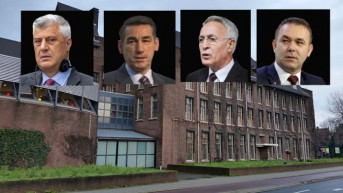
The over 300-page indictment of the Special Court for KLA Crimes accuses former Kosovo President Hashim Thaci and three other KLA commanders and leaders, Kadri Veseli, Jakup Krasniqi, and Rexhep Selimi of war crimes and crimes against humanity, including illegal detention, torture, murders and disappearances from March 1998 to September 1999.
The 10 counts of the indictment detail the crimes committed in 43 illegal KLA detention centers in Kosovo and Albania against approximately 407 detainees, of whom at least 102 were killed. In the amended indictment, in early March, the prosecutors announced the identity of 75 victims, 51 of whom were of Serbian nationality, 23 Albanians and one Rom died in KLA custody. The identity of another 27 victims will be disclosed during the trial.
The trial in The Hague began on Monday, with the presentation of the prosecution's opening statements, which accuse Thaci and three other former KLA leaders of supporting and aiding crimes as members of the Joint Criminal Enterprise (JCE), and even personally participating in some of them. Thaci, Krasniqi, Veseli, and Selimi declared not guilty.
Kosovo Online publishes the most important parts of the indictment in several installments.
Murders described on more than 30 pages
More than 30 pages of the indictment describe in detail the murders in illegal detention centers and camps of the KLA in several places in Kosovo and two locations in Albania, which were committed by members of the KLA. The prosecutor states that, Thaci, Veseli, Selimi, and Krasniqi "as superiors are responsible for the crimes committed by their subordinates".
"Thaci, Veseli, Selimi, and Krasniqi knew or had reason to know that the crimes listed in this indictment would be committed or had already been committed by their subordinates, and they failed to take necessary and reasonable measures to prevent such crimes or punish the perpetrators," the indictment states.
The Prosecution states that the evidence indicates that the KLA prisoners were abused and executed deliberately, as evidenced by, among other things, the degree of violence and the type of objects used for physical abuse, the refusal to provide medical care despite the victims' requests, other persons imprisoned with them, family members, that is, despite the doctor's advice, the confession of KLA members that they committed murders and other statements related to the liquidations.
The indictment states that KLA prisoners were deliberately abused and executed, evidenced by the circumstances under which the victims were taken and the fact that they were not released from KLA custody, the circumstances under which the victims died or were last seen alive, and the refusal of KLA members to inform the families of the victims where the victims are.
"All this shows that the members of the KLA who participated in the aforementioned acts of doing or not doing, wanted to kill the victims, or at least inflict serious injuries or mutilation on them, although they had reason to know that these injuries could lead to their death. Examinating accompanying material as a whole in relation to the mentioned features, the judge for the preliminary proceedings states that there is a well-founded suspicion that the persons who were arrested and imprisoned in the mentioned places throughout Kosovo and northern Albania in the period approximately from April 1998 to August 1999 were murdered, as a crime against humanity," the indictment states.
Executions of Serbian soldiers and policemen in Klecka in the presence of Limaj
In Klecka, municipality of Lipljan, the indictment states, in just one day, on April 18, 1999, five Serbian soldiers were executed - Bojan Cvetkovic, Zarko Filipovic, Dragoljub Tanaskovic, Zivota Todorovic, and Dragan Vucetic. Two weeks earlier, on April 5, members of the Ministry of Internal Affairs of Serbia, Veljko Markovic, Nebojsa Djuricic, Arben Avdyli, Ymer Xhafiqi, Sherafedin Ajeti as well as one person, whose name has not been published, were killed.
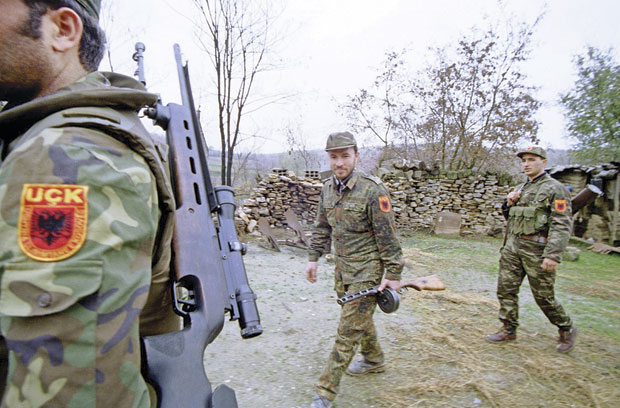
"Members of the Ministry of Internal Affairs of Serbia, Veljko Markovic and Nebojsa Djuricic disappeared on or around February 9, 1999. They were brought to the location of Klecka's detention and were held in and around that location. On or around April 5, 1999, they were taken over by certain KLA soldiers and shot nearby by the order of Fatmir Limaj. Their remains were subsequently found near that location," the amended indictment states.
Another part of the basic indictment describes the following events.
"On April 5, 1999, prison guards in Klecka took the prisoners, where they were executed and then buried by the order of Fatmir Limaj and in his presence and in the presence of members of the KLA," the indictment reads.
Fatmir Limaj, the president of the Social Democratic Initiative and a former member of the Assembly of Kosovo, has already been tried in The Hague but was acquitted.
The indictment further states that the soldiers of the then Yugoslav Army Cvetkovic, Filipovic, Tanaskovic, Todorovic, and Vucetic were imprisoned by some members of the KLA around April 11, 1999, between Suva Reka and Pristina.
"They were brought to the place of detention in Klecka and were kept in and around that location. On or around April 18, 1999, certain members of the KLA took them over and killed them at close range with firearms or knives. Their remains were subsequently found in a tomb near the place of detention," the indictment claims.
Albanians also died in Klecka, and the Prosecutor's Office describes Arben Avdyli's last days as follows.
"He was in prison in Klecka from March 21, 1999, to April 2. One day after he was released, he was arrested again and killed not far from the village of Klecka. Members of the KLA shot him with Kalashnikovs. His remains were never found," the indictment says.
It is also stated that members of the KLA kept the prisoners in a house in Klecka and beat them until April 5, 1999, and then "by the order of Fatmir Limaj, they took them in the direction of the mountains and killed them with Kalashnikovs."
Executions had also taken place on April 11, 1999, when, as stated in the indictment, members of the KLA intercepted persons whose identities had not been revealed, had taken them to a burned-out house in Klecka, and imprisoned them there.
"Members of the KLA took them to a nearby field. Shortly after they were taken to that field, shots from Kalashnikovs were heard," the indictment describes the tragic fate of these people whose remains were later found.
Kidnappings and crimes in Orahovac
Liquidations also took place in Orahovac, where, according to the indictment, 11 people were killed. Cvetko Pelevic, Panta Grkovic, Marko Jelic, Boban Dedic, Hysen Krasniqi, and six other unnamed persons were killed.
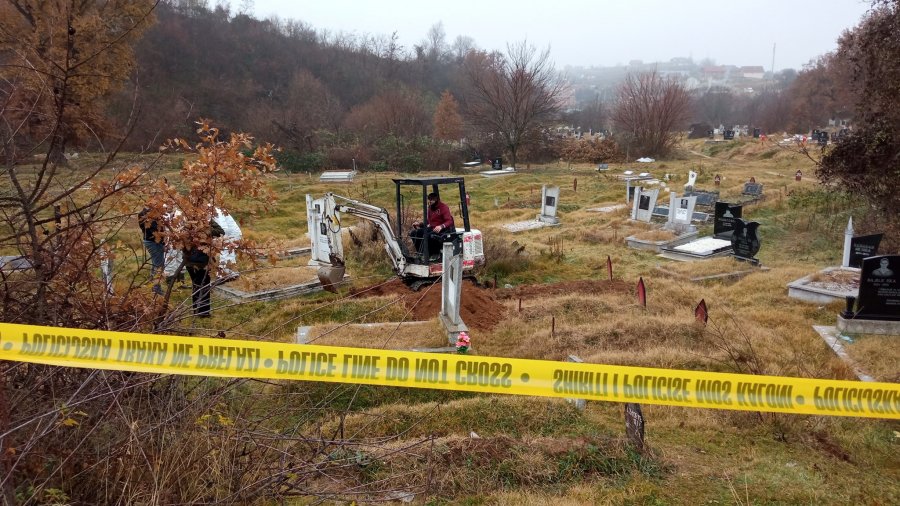
The murders of Pelevic and Grkovic are described in the indictment as follows:
"On or about June 16, 1999, certain members of the KLA took Pelevic and Grkovic from their houses in Orahovac. They were mistreated before they were taken. At least three people were kidnapped by certain members of the KLA on the same day. The remains of Grkovic were later found, and Cvetko Pelevic's body was never found,” the indictment says.
It is further stated that at the end of June 1999, Boban Dedic had been taken away in a car by some members of the KLA outside the 'No. 18' factory in Orahovac.
"He was last seen in the custody of certain members of the KLA, and his remains were never found," the prosecution claims.
According to the indictment, the same fate had been experienced by Marko Jelic who had been taken from his home in Orahovac by members of the KLA on August 9, 1999, while members of his family had been mistreated in the days after he had been abducted. Jelic had last been seen in KLA custody, and his remains had never been found.
According to the indictment, members of the KLA had taken the second victim from the house they had set on fire. His remains had been found later.
On or around June 16, 1999, the indictment further states, armed men wearing KLA masks and camouflage uniforms attacked an unidentified person in his house in Orahovac.
"Two armed members of the KLA in uniform then took him away, saying that they were taking him to the police station and that they would bring him back in 15 minutes. No one ever saw him again," the indictment reads.
The matrix of kidnapping and liquidation was the same in another case in Orahovac. According to the indictment, armed members of the KLA "wearing black uniforms and the 'UCK' (eng. KLA) emblem with a red eagle on their sleeves" broke into the house of a man from Orahovac, whose identity has not been revealed, and kidnapped him.
"One of the members of the KLA introduced himself in Albanian as the leader of the group in Albanian. They said that they had been taking him for an information interview and that they would then return him. The remains were never found," the indictment reads.
Massacre on Berisha Mountain
According to the indictment, two people were killed in Gjilan, approximately in July 1999 - Mirko Jovic and Dzemo Zuljic.
"Both of them were abducted by members of the KLA on July 12 and 14, 1999 respectively, and taken to a student dormitory in Gjilan. Jovic's body was found in June 2000. The cause of death was multiple gunshot wounds. Zuljic was abducted from his home, and his body was found in 2002. Jovic worked in prison during his life, and Zuljic as a policeman in the Ministry of Internal Affairs," the indictment says.
In Likovac, municipality of Srbica, members of the KLA killed eight persons, whose identity the prosecution did not reveal, in the period from April 1998 to January 1999.
"Gunshot wounds and signs of brutal beatings were visible on the bodies," the indictment on the events in Likovac states.
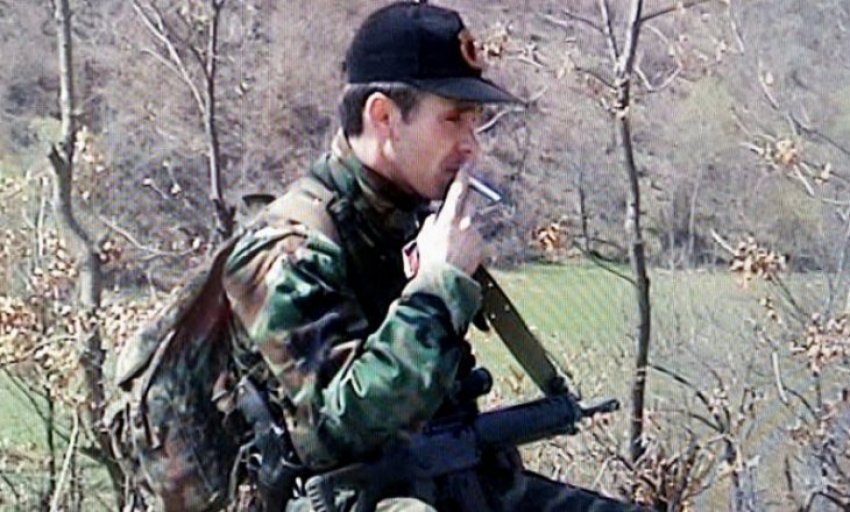
Ten people of Albanian nationality were killed in Llapushnik, who, according to the indictment, were liquidated on July 25, or 26, 1998.
"On July 25 or 26, 1998, the day when the Serbs attacked Llapushnik, members of the KLA took about thirty prisoners from the prison in Llapushnik to Berisha Mountain. When they arrived in the nearby forest, members of the KLA released 20 prisoners from that group of thirty and opened fire with Kalashnikovs on the remaining ten. They left the killed prisoners lying where they were shot. The bodies were exhumed and it was determined that the death was caused by gunshot wounds," the indictment states.
One person was killed on June 12, 1998, and the prosecution describes the crime as follows:
"The prisoner was brought to the courtyard of the prison in Llapushnik, where he was shot while the next members of the KLA were in the immediate vicinity. When it got dark, they removed the body from the prison in Llapushnik. Later, the body was seen by the side of the road, with gunshot wounds in the chest area," the indictment reads.
Liquidations were also carried out in Podujevo, where, according to the indictment, in April 1999, six men were killed in the villages of Potok, Majac, and Dobrotin, one of whom was a Rom.
"The judge for the preliminary proceedings notes that the accompanying material indicates that members of the KLA took the life of an unidentified Rom from the municipality of Podujevo at the end of March or the beginning of April 1999. Around the end of March or the beginning of April 1999, a Rom came to the village of Dobrotin. Military police the KLA and members of the KLA were stationed there. That Rom was kept tied up in the middle of the village, where he was abused by members of the KLA and civilians. They shot him and killed him on the orders of Latif Gashi and left him lying in the place where he was shot down by bullets multiple times," the indictment said.
According to the Prosecution's evidence, members of the KLA took the life of an unidentified elderly Serb in Pristina in July or August 1999, who had previously been beaten and abused.


0 comments