
What have six months of Albanian mayors' rule brought to the Serbs in the north and why are there no new elections?
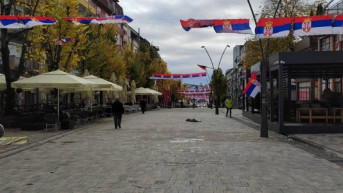
More than six months have passed since the illegitimately elected Albanian mayors took office in four municipalities in the north, and the situation on the ground has contradicted the messages of Kosovo Prime Minister Albin Kurti that they are at the service of all citizens: the Serbs in North Mitrovica, Zvecan, Leposavic, and Zubin Potok continue to live in uncertainty, constant crises, and face numerous controversial decisions of the new local authorities. Although Brussels and Washington expect new elections in the municipalities in northern Kosovo to be held "as soon as possible" as a key condition for de-escalation, and insist that the Serbs should participate in them "unconditionally", they are not in sight because mayors refuse to resign, and the Government in Pristina insists on a petition for their removal.
The mayors elected on behalf of Self-Determination in the April 23 elections, which the Serbs boycotted, Erden Atiq in North Mitrovica and Lulzim Hetemi in Leposavic, firmly adhere to the stance of their party leader Kurti and refuse to leave these positions, while members of the Democratic Party Izmir Zeqiri (Zubin Potok) and Ilir Peci (Zvecan) "shyly" stated several times that they were ready for that option if a political agreement was reached.
They entered the offices of the northern municipalities at the end of May with the support of the Kosovo Police, despite strong opposition from the local Serbian population, which continues to protest in front of municipal buildings due to their presence and demands for both them and the Special Forces to withdraw.
Instead of the Albanian mayors resigning, which is seen not only in Belgrade and the north but also by most political actors in Pristina as the best and fastest solution, the Government led by Kurti insists on reaching new elections through a petition in which at least 20 percent of voters from the north would demand a vote on the removal of the mayors. Although the US and EU demand new elections in the north, which is also a condition for considering lifting sanctions on Kosovo, and the Serb List stated that it was ready to participate in them, the Government in Pristina refuses to meet the demands for de-escalation.
In the meantime, North Mitrovica has entered the Association of Kosovo Municipalities, and the municipalities of Leposavic, Zvecan, and Zubin Potok have also submitted requests for membership in this organization. The Serbs from Kosovo and official Belgrade see this as another way for Kosovo to avoid the obligation to establish the Community of Serb-majority Municipalities.
In recent months, Atiq has made a series of controversial decisions that have further heightened tensions in the north. He attempted to relocate Serbian institutions from the building in the Bosniak Mahala, where the Office for Kosovo and Metohija, the Directorate of the Pension and Disability Insurance Fund, the Kosovska Mitrovica Administrative District, and the Social Work Center in Vucitrn are located. However, this decision was temporarily abandoned due to strong opposition from the Serbs, Belgrade, and representatives of the international community. Municipal inspectors halted the construction of apartments for socially vulnerable families, schools for children from disadvantaged categories, and the buildings of the University of Pristina with headquarters in Mitrovica. The purpose of the space behind the MTS building in North Mitrovica was changed to a parking lot for vehicles. The latest in a series of decisions is the choice to create a new coat of arms and symbol for North Mitrovica.
The actions of the mayor of North Mitrovica have also been criticized by the President of the Municipal Assembly, Nexhat Uglanin, who made serious accusations against Atiq, stating that "99 percent of people employed in municipal institutions are not from the north" and are politically imposed. Uglanin accused Atiq of a lack of transparency towards citizens and the media.
The situation in the other municipalities in the north, led by Albanian mayors for the past six months, is not much better.
Milica Andric Rakic, the Program Manager of the non-governmental organization New Social Initiative from Kosovo, points out that the situation in the northern municipalities has significantly worsened, making it difficult for citizens to access various services. Speaking about the effects of the six-month work of the new local authorities in the four northern municipalities populated by the Serbs, Andric Rakic told Kosovo Online that there had been no significant changes.
"The only one who announced potentially problematic decisions was the mayor of North Mitrovica, Erden Atiq. In the end, he did not implement those decisions. In terms of services, the situation is very bad, except for North Mitrovica. In other municipalities, it is not possible to obtain services from either the Serbian or the Kosovo system. In practice, everything has been moved to alternative locations in both systems. In this sense, citizens find it significantly more difficult to access services, and now they have to go to multiple locations to complete one administrative matter. From the perspective of services, the situation has worsened significantly, while from a political perspective, we cannot talk about any political decisions that have made a significant change on the ground. There were announcements for various decisions, but most of them did not materialize in the end", she said.
Andric Rakic also highlighted the impaired functioning of institutions since the new mayors took over their mandates.
"Most of the services provided in municipalities, in terms of cleaning and other city services, are provided by public utility companies from the Serbian system. We cannot see much effectiveness from institutions in the Kosovo system. Public utility companies from the Serbian system have certain limitations in their work. We have cases of halting the construction of certain facilities. Things are done out of necessity, with half the effort, and perhaps even less. This is truly felt and seen when it comes to maintaining roads or similar tasks. There is a certain moment of hesitation when Serbian institutions are probably unsure whether to react and Kosovo institutions, on the other hand, lack that capacity. It can be observed that there is no longer the kind of coordination that existed before", Andric Rakic emphasizes.
Regarding the impression that the issue of new elections in the four municipalities in the north has taken a back seat, our interviewee says that they are still a key condition for the international community, and that is why the punitive measures imposed by the EU on Kosovo have not been lifted.
"The messages from the international community are still that they prefer the mayors' resignations, not a petition. But I think now everyone understands, considering the elections in Serbia, that there will not be significant progress in the dialogue for a long time. Therefore, everyone is stepping back a bit in that sense. Also, the holiday season is approaching, most people will be on vacation, and we really cannot expect the kinds of pressures that existed before and frequent visits from representatives of the international community before mid-January. Overall, the situation in the world is getting complicated, and many hotspots are diverting attention from the Balkans", Andric Rakic concluded.
Illegitimately elected Albanian mayors, who have been in power for six months in the four municipalities in northern Kosovo, predominantly inhabited by the Serbs, have brought absolute chaos and a vacuum, Aleksandar Mitic says, a Research Associate at the Institute for International Politics and Economics. He points out that this situation is precisely what suits Kosovo Prime Minister Albin Kurti.
"He closely follows the data provided by Belgrade officials about how many Serbs have left Kosovo and Metohija in the last year in this process of discrimination, escalation, and ethnic cleansing carried out by Kurti in both the north and the south. Simply put, this kind of vacuum suits him perfectly. He intentionally delays any agreement on the Community of Serb-majority Municipalities because he knows that without that agreement, there are no new elections in the north. It's a vicious circle in which he and those who support him in the Quint countries gain time and engage in frightening things that we can clearly define as ethnic cleansing", Mitic says for Kosovo Online.
Explaining why almost no one mentions new elections in the north anymore, which were one of the key demands of the EU and the US to Pristina for de-escalation and a precondition for lifting sanctions on Kosovo, Mitic says:
"Some will say that there is no talk of elections in the north because there are elections in Serbia, and the two should not be mixed, so they are being postponed for that reason. Others will say that it is because there is no agreement on the CSM, and precisely that agreement on the Community will enable elections to be held in the north. I might be closer to the second thesis; I believe that some solution is being worked on", he says.
Regarding the statement of the US Ambassador to Belgrade, Christopher Hill, that the solution should be a "rational proposal" before Belgrade and Pristina, involving the formation of the CSM, and Serbia providing capacities to Kosovo in international organizations, Mitic says that when an American diplomat says something is rational, one should question whether it is always in Serbia's interest.
"It's important to know whether that is the CSM as planned and agreed upon in 2013 and 2015, with strong executive powers, with strong ties to the Republic of Serbia, in line with UN Security Council Resolution 1244 and the Constitution of Serbia. If it's not, then maybe it's rational for Hill, but it's completely detrimental to Serbia. So, I assume that some agreement of that kind is awaited before calling for elections in the north. Whether such an agreement will be possible in the current constellation of relations is hard to say. I'm not optimistic, especially not optimistic that even if an agreement were to be reached, it would be implemented", Mitic concludes.


0 comments