
What kind of dialogue with the Serbia Orthodox Church do they want in Pristina? The position of the Serbian Orthodox Chruch in Kosovo burdens the credibility of the Kosovo independence project
In recent days, it has been heard from Pristina about how the local authorities should establish a dialogue with the Serbian Orthodox Church. First, analyst Milazim Krasniqi, criticizing Prime Minister Albin Kurti for causing a farce by banning Serbian Patriarch Porfirije from staying in Kosovo for Christmas, stated that Kurti should start the process of a fundamental agreement with the Serbian Orthodox Church, and then the director of the Albanian Post, journalist Baton Haxhiu, a few days ago said that Kosovo, after the CSM, was awaiting for an even bigger challenge - a dialogue with the Serbian Orthodox Church.
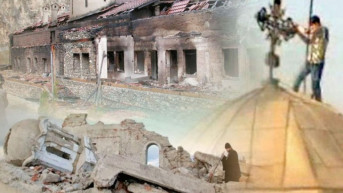
The question arises as to what kind of dialogue Haxhiu is talking about, even looking at it from Pristina's point of view. The attitude of Albanians towards the Serbian Orthodox Church, after 1999, is far from any dialogue. In the last two decades, about 150 Orthodox churches and monasteries were destroyed. The devastation of Serbian churches and monasteries is a symbol of the pogrom on March 17, 2004, when some of the world's cultural heritage pearls belonging to the Serbian Orthodox Church were destroyed.
The attitude of the authorities in Pristina towards the Serbian Orthodox Church is also shown by the multi-year refusal to return 24 hectares of land to the Visoki Decani monastery, despite the verdict of the Kosovo Constitutional Court in 2016 in favor of the monastery. The State Department also warned about the case of Visoki Decani in its annual report on the state of religious freedom. The organization "Europa Nostra" included the Visoki Dečani monastery on the list of the most endangered cultural heritage objects in Europe, explaining that "it is also facing groundless attempts to revise the cultural and historical identity of the religious heritage."
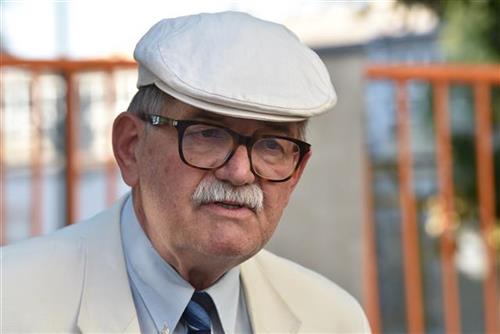
Former diplomat and ambassador of Serbia to UNESCO, as well as to the Holy See in the Vatican, prof. Dr. Darko Tanaskovic points out that it is no coincidence that Haxhiu opened the topic of dialogue with the Serbian Orthodox Church, as the next pressing problem that awaited Pristina.
"Journalist Baton Haxhiu, former editor of the newspaper 'Koha Ditore' and known, among other things, for having been accused of revealing the identity of a protected witness during the trial of Ramush Haradinaj, as well as for the statement that Albin Kurti did not like Kosovo, this time he is not announcing nothing sensational, but it confirms the fact that even in Pristina they are aware that the position of the Serbian Orthodox Church in 'Kosovo' is a problem that, even in the face of those who support it, greatly burdens the credibility of the project of an independent and internationally recognized Kosovo state," Tanaskovic says.
Tanaskovic reminds that it is no secret that even in the unadopted Ahtisaari plan in "Annex 5", which refers to the status and rights of the Serbian Orthodox Church, its central and specific position is highly respected.
"When Haxhiu says that after solving the CSM issue, Kosovo will have to negotiate with the Serbian Orthodox Church and that the Church will be forced to accept him as a negotiator, he is, of course, starting from the fact that 'Kosovo' is an indisputably independent and sovereign state, as well as from the hypothetical situation in which the CSM has already been established. Neither of these two assumptions has been realized," Tanaskovic emphasizes.
Tanaskovic adds that this is why the conclusion, that is, the prediction of Hazhiu, is on fragile feet.
"Otherwise, the Serbian Orthodox Church spiritually belongs to the entirety of the Serbian people and represents it in parliament. It does not negotiate separately politically with the states, that is, the administrative entities on whose territory the shepherd operates, and Serbia, as a country to which the province of Kosovo and Metohija belongs under international law, its attitudes towards the authorities in Pristina certainly takes shape in coordination with the Serbian Orthodox Church," Tanaskovic points out.
Tanaskovic assumes that in Pristina they see the Eparchy of Raska and Prizren as a negotiator, as a local organizational-administrative unit of the Serbian Orthodox Church.
"This fits in with the effort to discuss all the problems faced by the Serbs in Kosovo and Metohija in the current abnormal circumstances, except for Belgrade, only with those Serbs who live in the territory of 'Kosovo', because, according to the view of Pristina, they are 'citizens of the state of Kosovo' ', and not Serbia's. This weakens their overall position, and the pressure to comply with the imposed discriminatory order strengthens, which is 'democratically' camouflaged by the explanation that they know their real interests best and that Belgrade, allegedly, manipulates them. This logic and the argumentation is also accepted by some Serbs in 'Kosovo', who are admittedly in the minority, but it should also be analytically and politically taken seriously into account in Belgrade," Tanaskovic said.
According to him, the problem of Serbian-Albanian relations in Kosovo and in connection with Kosovo must be viewed on two levels; firstly, at the level of general political dialogue, as it is usually said, between Belgrade and Pristina, and secondly, at the level of daily life in Kosovo. At the general level, adds Tanaskovic, everything is clear - with international mediation, the dialogue is conducted by the officials of Belgrade and Pristina.
"Belgrade does not recognize 'Kosovo', but still negotiates with the representatives of the Pristina authorities. If we go to the level of everyday life, and without losing the connection with the general one, the representatives of the Serbs from the north of Kosovo and Metohija even, based on the assessment of political expediency, participated in the bodies of the Kosovo parastatal system," Tanaskovic says.
According to him, even those archbishops and clerics who represent the Serbian Orthodox Church and the Serbian faithful people in Kosovo cannot avoid certain types of communication with the bodies of local Kosovo institutions, because life's needs dictate it.
"These are imposed, unwanted, but unavoidable addresses. Of course, this does not mean that the Eparchy of Raska and Prizren or the brotherhood of the Decani monastery would have, for example, anything to negotiate with Albin Kurti, which he constantly calls for, regarding the implementation of the decision of the Constitutional Court "Kosovo" about the return of the usurped monastery land, and let's not even talk about some kind of separate dialogue of the Eparchy of Raska and Prizren about the status of the Serbian Orthodox Church. Although those two situations cannot be compared in any way, it should be remembered that in independent Montenegro "The fundamental contract" with the president of the local government was signed by Patriarch Porfirije. And "Kosovo" for Serbia and a large part of the world community is not a state under international law," Tanaskovic emphasizes.
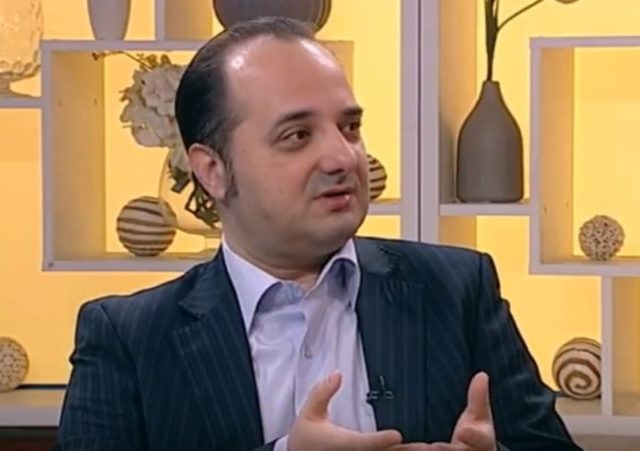
Historian and scientific advisor of the Institute for Recent History of Serbia, Aleksandar Rakovic, believes that the Serbian Orthodox Church would enter into any talks that Baton Haxhiu announces, if they ever happen, only after reviewing the situation with the Serbian authorities.
"At this moment and for the foreseeable future, there is no framework for any talks between the Serbian Orthodox Church and the Albanian administration in Pristina, even if the West tried to impose them," Rakovic says.
Rakovic shares the opinion that Albanians would prefer to talk only with the Eparchy of Raska and Prizren. However, as he adds, that is not possible.
"The Serbian Orthodox Church is a unique and indivisible whole, which has taken a position on the issue of Kosovo and Metohija. In accordance with that position, the Holy Assembly of Bishops and the Holy Synod of Bishops make decisions; determine coordinates, and give guidelines. Therefore, it would not be possible for the authorities Albanian separatists to talk only with the Eparchy of Raska and Prizren on issues that concern the entire Serbian Orthodox Church and the Serbs," Rakovic emphasizes.
In addition, the Eparchy of Raska and Prizren announced more than a year and a half ago that it had cut off all contact with Pristina institutions.
Rakovic also adds that any conversation with the authorities in Pristina must take into account the fact of what intentions of the Albanians are.
"Albanian separatists intend to seize the Serbian sanctuaries in Kosovo and Metohija and expel the Serbian Orthodox Church from its eight centuries-long canonical territories. Any conversation with the authorities in Pristina must start from this fact about the malignant ultimate intentions of the Albanian authorities - that in Kosovo and Metohija there would be neither the Serbian Orthodox Church nor the Serbs," Rakovic says.
Rakovic concludes that this makes talks impossible until fair conditions are created that completely and permanently guarantee the order and property of the Serbian Orthodox Church in Kosovo.
0 comments