
What will be heard from UNSC members about the situation in Kosovo - specific messages or just phrases?
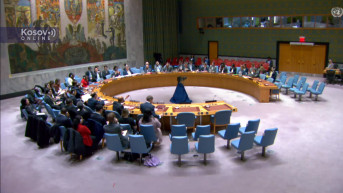
The United Nations Security Council (UNSC) will discuss tomorrow the new six-month report by UN Secretary-General António Guterres on the work of UNMIK and the situation in Kosovo for the period from March 16 to September 15. Sources from Kosovo Online point out that, although these reports are generally of a broad nature, the session should highlight what the Serbian community in Kosovo is going through, as the UNSC is the place for this.
Written by: Dusica Radeka Djordjevic
In his report, the UN Secretary-General mentioned some of the unilateral actions taken by the Kosovo authorities over the past six months, such as closing institutions funded by Belgrade and steps toward reopening the main bridge over the Ibar River, noting that these actions "raise tensions among communities and institutions."
"The situation in northern Kosovo is tense, with the potential for escalation," Guterres stated, urging all sides to reaffirm their commitment to EU-mediated dialogue.
In addition to the diplomatic representatives of the five permanent UNSC members—China, France, Russia, the United Kingdom, and the United States—the Secretary-General’s report will also be presented to representatives of the ten current non-permanent members: Algeria, Ecuador, Guyana, Japan, Malta, Mozambique, the Republic of Korea, Sierra Leone, Slovenia, and Switzerland, the latter of which is concluding its one-month presidency of the UNSC in two days.
Serbia will be represented at the session by Foreign Minister Marko Djuric, while Pristina has not yet announced who will speak on its behalf.
Serbian Prime Minister Milos Vucevic stated today that he is not optimistic that tomorrow’s session will lead to any major conclusions, given the polarized positions of the countries participating in the discussion—those that recognize Kosovo as an independent state and those that respect international law and the UN Charter.
“Those who believe it is independent either glorify or justify the actions of Albin Kurti, while those who respect international law will point out violations of basic human rights, which unfortunately happen daily, primarily to Serbs or the non-Albanian population in the territory of Kosovo and Metohija,” Vucevic said.
Although UNSC meetings dedicated to Kosovo are generally marked by divisions within the P5 regarding its status, the existence of the UNMIK mission, and the frequency of UNSC discussions on Kosovo, Assistant Professor at the Faculty of Political Sciences Milan Krstic notes that there are certain topics around which consensus still exists in the Security Council. These include issues related to stability in the Western Balkans, regardless of differing views on the causes of instability.
"There are numerous documents that Pristina violates through its actions, demonstrating that without more concrete pressure—manifested through economic and political mechanisms—on the authorities in Pristina, they will not change their behavior," Krstic told Kosovo Online.
He recalls that status issues are still formally with the United Nations and that Resolution 1244, which states that the territory of Kosovo and Metohija is part of Serbia, is still formally active.
"We must never abandon the position that the UN should have a say on this issue. Unfortunately, however, the UN is no longer an organ capable of effectively implementing certain actions," Krstic believes.
According to former Serbian ambassador to the United Nations Vladislav Jovanovic, it is important for Serbia that the Kosovo issue remains on the Security Council agenda, even if only twice a year, as this keeps two facts alive: that Resolution 1244 exists both formally and substantively, and that there is a UN mission in Kosovo, namely UNMIK.
"Insisting on the existence of the Resolution and UNMIK, no matter how diminished its role and limited its influence in resolving issues, irritates the Western powers that created the so-called state of Kosovo, as it keeps them perpetually 'in the dock,' reminding them of their unlawful actions. What is lawful is what the UN has done: the Resolution and UN trusteeship over Kosovo and Metohija. Everything else that the Western powers have produced is unilateral and unlawful from the standpoint of core UN principles," Jovanovic said to Kosovo Online.
He believes that the latest UN Secretary-General's report comes at a particularly significant moment when the interests of major powers are seriously clashing on several fronts, with the Kosovo issue being just one unresolved point on which, as he says, not all political debts among the powers have been settled.
"All these reports are more or less of a general nature because, after the declaration of the so-called state of Kosovo, the Western powers effectively usurped the United Nations' authority, creating a new situation that was neither foreseen by Resolution 1244 nor within anyone’s jurisdiction other than the United Nations. Only the UN has legitimate political and legal authority over the territory until a political solution is found," Jovanovic emphasized.
Sava Mitrovic, a researcher at the Faculty of Political Sciences in Belgrade, assesses that when a minority community is discriminated against and subjected to racial and national segregation—in this case, the Serbian community—the Security Council must be involved in addressing the issue.
“It is clear that this might not suit Pristina, and perhaps some Western countries as well, but it is in Serbia’s interest for this to be discussed in the Security Council,” he told Kosovo Online.
From a legal standpoint, he points out, the unresolved status of Kosovo has a significant security dimension, making it both appropriate and obligatory for the Security Council to address this issue. The recent security incident in Banjska, he adds, demonstrated that the situation could easily spiral out of control and escalate.
“The Security Council includes permanent members like Russia and China, which have a greater degree of understanding for Serbia’s position, but there are also various non-permanent member countries, depending on the year, many of which do not recognize Kosovo. A majority of UN member states do not recognize Kosovo’s unilaterally declared independence—this actually accounts for two-thirds of the world’s population—and in this regard, the UN is a platform where Serbia can seek a greater degree of understanding,” Mitrovic explains.
Some media in Pristina reported that Guterres, in his report, mentions the possibility for the Security Council to consider adopting a presidential statement calling on all sides to refrain from unilateral actions and to resolve open issues through EU-mediated dialogue. Analyst Artan Muhaxhiri believes that if such a document were adopted, it would hold only symbolic significance and would not have a specific impact.
“But it could be used as an additional component in the negotiators' efforts to get Kosovo and Serbia to take concrete steps and speed up the dialogue, which is currently almost blocked,” Muhaxhiri told Kosovo Online.
In his view, the UN has a more symbolic rather than practical or concrete influence, unlike the EU or specific countries like the USA or Germany, but he points out that the UN is also part of the effort to normalize the Balkan region.
Given that there are many conflicting interests within the UN, he adds that the only statement that all sides might agree on would likely be a general one, with demands that are more of a principled nature.


comments