
Mitrovic: Serbs in Kosovo face national segregation, UN Security Council must address this
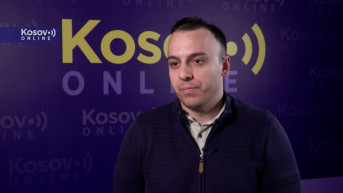
When a minority community faces discrimination and suffers from racial or national segregation, as is the case with the Serbian community, the Security Council must be involved. It is clear that this doesn’t suit Pristina, and perhaps some Western countries, but it is in Serbia’s interest that this issue be discussed within the Security Council, Sava Mitrovic, a researcher at the Faculty of Political Sciences in Belgrade, told Kosovo Online ahead of tomorrow’s UN Security Council session, which will review the regular report by the UN Secretary-General on the situation in Kosovo.
Mitrovic states that, from a legal perspective, the unresolved status of Kosovo carries significant security implications, making it both appropriate and essential for the Security Council to address this issue. He adds that the security incident in Banjska demonstrated that the situation could spiral out of control and escalate.
“Russia and China, which have a better understanding of the Serbian position, are permanent members of the Security Council. In addition, there are other countries as non-permanent members, which vary from year to year, and many of these do not recognize Kosovo. I would like to remind you that the majority of United Nations members do not recognize Kosovo's unilaterally declared independence, and this represents about two-thirds of the world’s population, meaning that the United Nations is indeed a forum where Serbia can seek greater understanding,” Mitrovic said.
The European Union, as he adds, remains the direct venue for dialogue and mediator between Belgrade and Pristina and is, in his view, the only party that can offer tangible incentives for both Belgrade and Pristina to move forward in the dialogue process.
“Whether through financial aid, the prospect of membership, or infrastructure projects, the EU and its member states can provide these incentives, while the United Nations, as a different kind of forum, cannot,” he explained.
He also expresses disappointment that the EU has not insisted that the establishment of the Community of Serb Municipalities or the status of the Serbian minority in Kosovo be part of the Reform Agenda that Kosovo submitted to the European Commission, which will determine funding under the new Growth Plan.
“Kosovo almost doesn't even mention the status of the Serbian minority or improvements for minority communities in general, and it also almost doesn't even mention the implementation of agreements signed with Belgrade. This means that Kosovo won’t be required to meet these conditions to access additional funding, though it could have been. Such a mechanism would be an effective way for the European Union to encourage Pristina to finally honor the signed agreements,” Mitrovic concluded.


0 comments