
What Would Granting Kosovo Special Guest Status in PACE Entail?
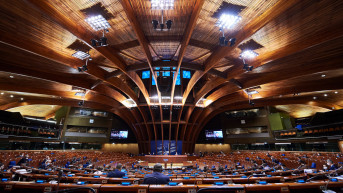
Granting Kosovo the status of a special guest in the Parliamentary Assembly of the Council of Europe (PACE) would not provide significantly greater rights than those it already holds under its current designation as an "other delegation," as it would still lack voting rights in the institution. However, from the perspective of countries that do not recognize Kosovo, such a change could open the doors of PACE to a kind of "Trojan horse."
By Dusica Radeka Djordjevic
The status of a special guest is, in principle, reserved for parliaments of "states that have applied for membership in the Council of Europe," whereas Kosovo is currently treated in PACE with an asterisk and a footnote that specify its status remains undetermined.
The asterisk and accompanying footnote, which state that "any reference to Kosovo, whether concerning its territory, institutions, or population, shall be understood fully in accordance with United Nations Security Council Resolution 1244 and without prejudice to the status of Kosovo," are prominently displayed these days on the homepage of the Parliamentary Assembly of the Council of Europe's website. The page features a report on a pre-election visit to Pristina by a PACE delegation.
Despite applying for membership in the Council of Europe and completing much of the required procedures, Kosovo remains without full membership. Last year, PACE recommended Kosovo's accession to the Council of Europe, but it has since stumbled on its unfulfilled 12-year-old obligation from the dialogue with Belgrade to establish the Community of Serb Municipalities, leaving it without final approval from the Committee of Ministers. According to interlocutors of Kosovo Online, Kosovo’s upgrade in status within PACE could be interpreted as an undeserved reward for Pristina, given its disregard for agreements from Brussels concerning the rights of Serbs in Kosovo.
Pristina formally requested special guest status in PACE through a letter sent in late November last year. However, this issue was not included in the December agenda of PACE's Political Committee, which is responsible for deliberating on such matters. The request is also absent from the current draft agenda for the committee’s January session next week. Theoretically, a member of the Council of Europe could propose adding the topic to the agenda during the voting process.
Currently, national delegations in PACE represent either member states of the Council of Europe (46), observers (Canada, Israel, Mexico), or Partners for Democracy (Jordan, Kyrgyzstan, Morocco, Palestine). Kosovo is the sole delegation under the category "Other Delegations." Special guest status was previously granted to the National Assembly of Belarus on September 16, 1992, but was suspended by the Council of Europe Bureau on January 13, 1997.
Commenting on Pristina’s initiative, Biljana Pantic Pilja, head of Serbia’s delegation to PACE, told Kosovo Online that Serbian MPs pointed out to PACE members that raising this issue would once again create divisions within the Council of Europe. Another argument presented was that the ongoing election campaign in Kosovo is not the right moment to grant Pristina any sort of reward, as human rights violations against Serbs in Kosovo remain frequent.
"Special guest status is reserved for states, and Kosovo is not a state; it is an entity, and this is something we constantly emphasize. Although their legal and formal position in PACE would not change much, it would still signify progress and give them momentum to push further for full membership in the Council of Europe. Special guest is a category recognized in PACE’s Rules of Procedure, while the 'Other Delegations' category does not exist formally. This would give them a significant boost for their campaign to become full members of the Council of Europe," Pantic Pilja explained.
According to her, Serbia has garnered considerable support among PACE members on this issue, primarily from MPs from Hungary and Spain, but also others.
"The chairman of the Political Committee, where this issue should be addressed, deferred the topic in December to January. Since it is not on the current agenda, I believe this is a clear signal to Kurti that they are dissatisfied with his unilateral actions and disregard for previously signed international agreements. The Brussels Agreement and the Community of Serb Municipalities are regularly emphasized by all members of our delegation. This was one of the arguments included in the letter we sent, making it clear that Kosovo cannot continue receiving rewards while refusing to engage in dialogue and while the human rights of Serbs in Kosovo and Metohija are consistently violated," Pantic Pilja concluded.
If Kosovo were to succeed in obtaining special guest status in the Parliamentary Assembly of the Council of Europe (PACE) in the future, this could, according to Biljana Pantic Pilja, potentially impact the Committee of Ministers of the Council of Europe, which holds the final say on Kosovo's application for full membership in the organization.
"Although PACE, unfortunately, clearly stated its recommendation for Kosovo's membership, this would be another milestone for them. They could argue, ‘Look, we are already recognized; now you just need to let us into the Council of Europe as full members.’ This would provide significant momentum for so-called Kosovo in its bid for full membership, and I believe it would be viewed more favorably. That’s why it’s crucial for us to monitor every step of this process and to fight diplomatically to prevent it from happening," emphasized Pantic Pilja.
Legal expert Milan Antonijevic stated that anyone familiar with international law would find it surprising if PACE were to include a proposal for enhancing Kosovo's status on its agenda, given the clear message from April last year that Kosovo must first fulfill its obligation to establish the Community of Serb Municipalities.
"Now is neither the time nor the place for advancing Kosovo's status in PACE. One must not forget that Kosovo has elections in the coming weeks, and this move, in my opinion, would support one side while discouraging Serbs from participating in the elections and sending a clear signal that they want to be part of Kosovo’s institutions, to exercise their rights, and to insist on Kosovo fulfilling its obligations under the Brussels Agreements," Antonijevic told Kosovo Online.
Since special guest status is reserved for states, Antonijevic believes that countries within the Council of Europe that have not recognized Kosovo will not allow such a step to be smuggled into the system.
"Moreover, such a decision could create significant long-term turbulence, which is why I don’t believe there will be attempts to adopt it covertly," Antonijevic added.
Meanwhile, Mazlum Baraliu, a university professor from Pristina, argued that obtaining special guest status in PACE would bring no benefits to Kosovo and that such a status should not even be sought.
"If approached with such an attitude, it could lead Kosovo down the wrong paths in foreign policy, especially since the Council of Europe’s assembly already accepted, with an absolute majority, the position that Kosovo has met all the criteria for membership. Although full membership hasn’t happened yet, Kosovo should focus on pursuing it," Baraliu told Kosovo Online.
He further argued that the Council of Europe and the European Union are playing a political game by imposing additional conditions on Kosovo whenever it applies to join an international body or organization.
"It should be full membership or nothing. Kosovo should wait for circumstances to align and solidify awareness that Europe must include Kosovo and the entire Western Balkans within the European Union. This would be an added value for the EU and for Western Europe as a whole," Baraliu concluded.



0 comments