
When do minority candidate votes constitute a "deviation of voter will"?
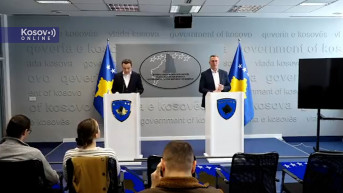
Preliminary election results, according to which the Serbian party "For Freedom, Justice, and Survival" led by Nenad Rasic secured a parliamentary seat with votes from municipalities that are not majority-Serb, have once again sparked a discussion on the legitimacy of mandates reserved for a specific community but secured through votes from voters who do not belong to that community.
According to interlocutors of Kosovo Online, parliamentary seats won in this manner represent a distortion of electoral will, are morally questionable, and cast doubt on the legitimacy of such mandates. It is suggested that changing the law could prevent such situations in the future.
Written by: Dusica Radeka Djordjevic
This is not the first time it has happened. In the previous parliamentary elections in 2021, Kosovo's Election Complaints and Appeals Panel annulled votes received by the Bosniak "United Community" Citizens' Initiative led by Adriana Hodzic, explaining that most of the votes had come from the Serbian community, which constituted a "deviation of the will of the Bosniak electorate and an undermining of the electoral process."
Hodzic's appeal to the Kosovo Supreme Court against the decision of the Election Complaints and Appeals Panel was rejected as unfounded, leading to the annulment of 4,205 votes that the "United Community" had received in Serbian-majority municipalities.
Additionally, more than 800 votes received by the Roma Initiative in Serbian areas of Kosovo were annulled at that time, and their appeal was also rejected by the Supreme Court.
This time, the Serb List claims that Nenad Rasic’s mandate, which he secured based on preliminary results, is illegitimate because he did not receive votes exclusively from Serbs.
The Mayor of Strpce, Dalibor Jevtic, stated that Rasic’s party received "votes from Albanians in Malisevo, Glogovac, Djakovica, and Prizren." He pointed out that based on preliminary results from all polling stations where Serbs voted, the ten guaranteed mandates for the Serbian community were won by the Serb List.
"The Serb List received a certain number of votes in the village of Muslikovo near Prizren, where Serbs live. However, in the part of Prizren where Albanians live, Rasic received votes. A total of 74 Bosniaks and Albanians voted for Rasic in the rural part of Prizren, while in the part of Prizren where only Albanians live, Rasic received 83 votes. Altogether, he obtained 421 Albanian votes, which secured him a seat in the Assembly. It is very clear that Rasic was not elected by Serbs but by Albanians," Jevtic stated.
He also announced that the Serb List would file an appeal.
Rasic rejected the accusations that he secured his parliamentary mandate with Albanian votes, arguing that his work as Minister for Communities and Return in the Kosovo government had earned him the trust of other minority communities in Kosovo, not just the Serbian one.
To recall, in the Kosovo Assembly, Albanian representatives hold 100 seats, while minorities have 20 guaranteed seats, 10 of which are reserved for the Serbian community.
Political analyst Artan Muhaxhiri stated that, from a moral standpoint, it is inappropriate for members of one nationality to vote for representatives of another nationality, considering that the Kosovo parliament has a designated allocation of 10 reserved seats for the Serbian minority.
The debate over votes received from outside a candidate's ethnic community, which was also a major topic after the elections four years ago, remains unresolved. Kosovo's institutions, in cooperation with the international community and the Serbian community, have yet to find an appropriate solution for regulating how voting should take place. The same issue, analysts say, affects other minorities, including Roma, Ashkali, and Egyptians.
"One possible solution could be to create a separate list exclusively for minority candidates in minority areas. However, this is a highly complex issue. If these ten MPs are supposed to represent the Serbian minority, then the Serbian minority should be the ones voting for them, as they are their representatives, while Albanian voters already have many parties to choose from," Artan Muhaxhiri told Kosovo Online.
Milos Pavkovic, a researcher at the Center for European Policy in Belgrade, stated that although Nenad Rasic's election on February 9 was not necessarily illegal, it is problematic from both a democratic and legitimacy standpoint regarding minority representation.
"This raises questions about the legitimacy of Rasic or any other representative of his party as a member of parliament. It certainly opens a broader issue of representation and trust within the Serbian community. In a way, it constitutes an abuse of votes," Pavkovic said.
He believes that the appeal announced by the Serb List regarding electoral manipulation will not change the situation, as no institution in Kosovo can determine who actually voted for Rasic.
"The votes are there. Statistically, he won a mandate, and there is no dispute about that. However, the reaction of the Serb List and the Serbian community will send a signal to the central institutions in Pristina and the international community that Rasic is not their chosen representative. This is crucial because there is speculation that Rasic will once again be appointed as a minister, which would bypass institutional procedures and the will of Serbian voters," Pavkovic explained.
Marko Blazic, a researcher at the Center for Social Stability, considers the election of Rasic’s party "For Freedom, Justice, and Survival" to one of the ten guaranteed Serbian seats through votes from non-Serbian-majority municipalities a manipulation of the electoral system. He compared it to the situation in Bosnia and Herzegovina, where Zeljko Komsic was elected as the representative of the Croatian people through votes from Bosnian Muslims.
Blazic claims that Kosovo has witnessed a distortion of the electoral will of local Serbs, arguing that the electoral law must be urgently changed to ensure that only votes from Serbian-majority municipalities count for the guaranteed Serbian seats in parliament.
"We are seeing a successful attempt to distort the electoral will of Kosovo Serbs in the provincial elections. Albanian votes from Albanian-majority areas were used to take a mandate away from the Serb List and create a false impression that the unity of the Serbian people is fractured—that the Serbian people do not unanimously support the only true option advocating for their interests in the southern province, which is the Serb List," Blazic stated for Kosovo Online.
He emphasized the need for an electoral law reform, suggesting that such a change could be part of a broader legislative package once the Community of Serb Municipalities (CSM) is finally formed. According to him, the law should explicitly state that votes for the ten guaranteed Serbian seats must come only from municipalities included in the CSM, where Serbs constitute a majority.
Amid accusations from the Serb List that Albin Kurti "pushed" Rasic into parliament, analysts speculate on why Rasic is valuable to Kurti. Muhaxhiri believes Rasic is extremely important because Kurti wants to show that he has an ally within the Serbian community.
"It is highly beneficial for Kurti that Rasic managed to secure a parliamentary seat. However, under Kosovo’s Constitution, Kurti needs the support of the majority of Serbian MPs to decide who will be the minister representing the Serbian community and to form his government," Muhaxhiri explained.
Pavkovic pointed out that since Kurti does not hold an absolute majority after the February elections, Rasic provides him with one crucial vote in parliament. Additionally, if Kurti appoints Rasic as the Serbian community’s minister, he would secure a loyal official within the government.
"Under Kosovo’s Constitution, the Serbian community must have at least one minister in the government. Naturally, Kurti would prefer Rasic, with whom he already cooperates, rather than someone appointed by the Serb List, who might oppose his policies. This is a ‘win-win’ situation for Kurti—he gains a parliamentary vote and appoints a loyal person as a minister, fulfilling his constitutional obligation," Pavkovic concluded.
Blazic also emphasizes that every parliamentary seat is crucial for Kurti at this moment, which is why he has "resorted to manipulations to ensure that Self-Determination can form a new government." However, for Rasic to become a minister in a potential new Self-Determination -led government, Kurti would still need to consult with the Serb List MPs.
Nonetheless, Blazic argues that holding a ministerial position is not Rasic’s primary goal.
"Unfortunately, for him, the financial benefits he gains from cooperating with Albin Kurti and other privileges he will receive for supporting the formation of a Self-Determination government will be sufficient satisfaction. So, the ministerial position itself is not crucial for him. He will receive some other form of compensation for his support of Kurti’s government," Blazic concluded.




0 comments