
Who cares more about a stable Western Balkans - the EU or the USA?

The current crisis in the north of Kosovo and the noticeably different approaches of the United States of America and the most influential countries of Europe in an attempt to reduce tensions, especially when it comes to influencing the decisions made by the government of Albin Kurti, impose a logical question - to whom the stability of the Western Balkans is more important - Washington or Berlin and London.
For the interlocutors of Kosovo Online, who know the situation in the region and the politics of the EU and the USA, there is no doubt that both have an interest in the Balkans being peaceful, but they also indicate that there are overlaps in strategy and tactics.
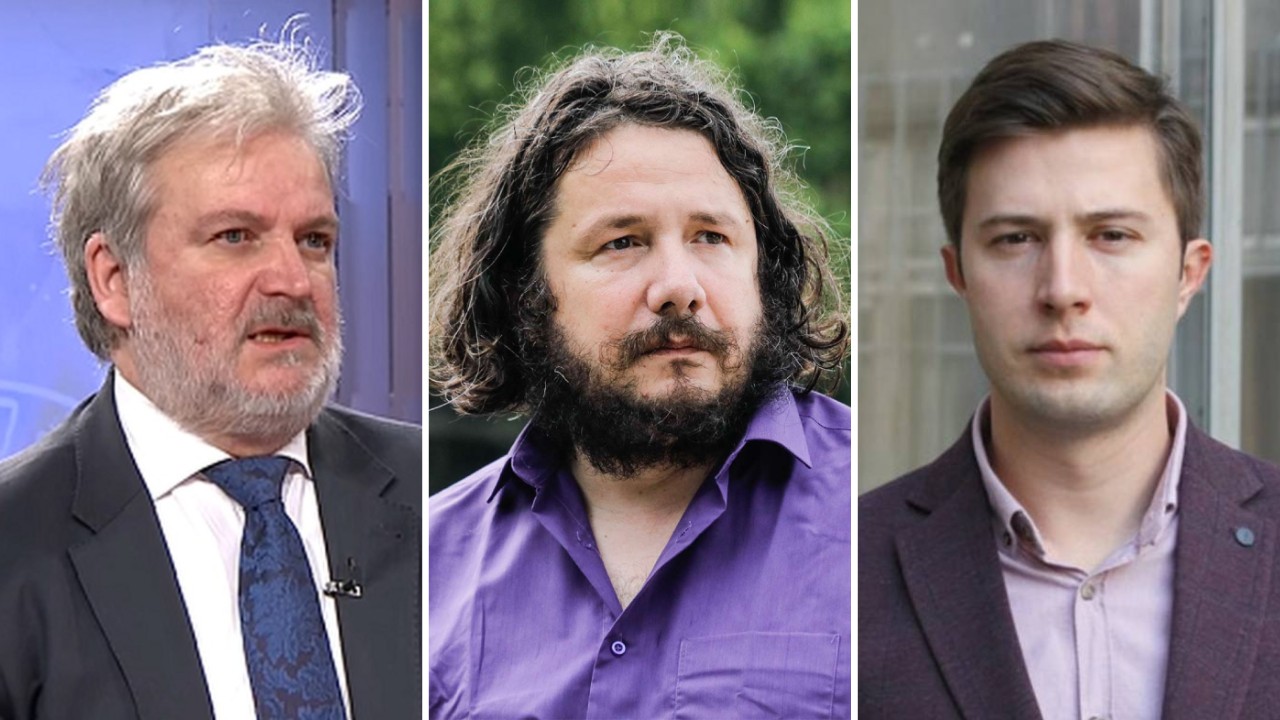
Journalist Dragan Bisenic tells Kosovo Online that the EU and the US have different positions and ambitions towards the Western Balkans. He states that Brussels nominally wants the Western Balkans in the membership of the Union, while the USA gains special importance precisely because of the fact that the EU has been delaying the region's inclusion in the membership for a long time.
"On the example of the Open Balkan initiative, the EU has shown that it also wants to have its own so-called Monroe Doctrine, which the USA has, which is that they do not want the interference of other powers in their field of affairs. And they reacted quite hostile to that initiative, which was supported by the USA. Now we are witnessing discussions about the future of the Open Balkan, bearing in mind that some countries that are the backbone of that concept are clearly turning to the Berlin process, that is, the EU process," Bisenic says.
He points out that the Open Balkan came about because the EU practically "froze" the Berlin process in 2018.
"The EU believes that because it financially supports projects in the countries of the Western Balkans, it should also have some special rights. Or that the countries of the Western Balkans should have a special regard for the EU. However, the USA has other kinds of pretensions. With the Law on Prosperity and Democracy in the Western Balkans, which is now being prepared, they want to define their policy, to create space and support for their action, where they emphasize two things. The first is that the USA should have a leading role in the region, and the second setting undoubtedly leads to that, in some way, both the US and the EU will appear in a certain competitive relationship in the Western Balkans. That law foresees, among other things, assistance to the governments of the region, non-governmental organizations, and the media in order to, as they point out, fight against Russian and Chinese influence in these countries and to attract the region to the West," Bisenic states and concludes that there should be no doubt that each of these subjects wants the Western Balkans to be arranged in accordance with their interests.
The writer and journalist, Muharem Bazdulj, believes that a stable Western Balkans is much more important to the European Union than to the United States of America, no matter how much the situation may sometimes appear to be the opposite.
"The matter is actually extremely banal. Imagine that you live in a building of thirty-four apartments, for example, and that in thirty apartments live well-to-do and respectable families, while in the remaining apartments, there are some kind of semi-criminals, unemployed poor people, and the like. Well, now, is it more important for the tenants of that building that their neighbors become civil, or is it more important for the tenants of another building, in the same city, but still in a completely different neighborhood?" Bazdulj points out.
He adds that it has been said many times that the Western Balkans is the "soft belly" of Europe and the "black hole" between Croatia and Greece, that is, Bulgaria.
"You sit in a car in Amsterdam with the intention of going to Greece and you don't show your passport to anyone until Batrovci. Then you have to show it at the Serbian-Macedonian or Macedonian-Greek border, and to get to Athens, for example. Without the integration of the Western Balkans into the Schengen area, you don't have a truly united Europe," Bazdulj says.
He continues that everything is still good, while the only problem is border control. But if instability becomes a security problem, then, he says, we have the possibility of abolishing the most elementary freedom of movement. Bazdulj also points out that the unstable Western Balkans is by definition a problem for the European Union.
"It's a little different with the USA. The USA replies that it has a training ground for instability, and it suits them that the EU should be an eternal "work in progress". As Brzezinski said, the unfinished Europe was ideal for the US, since neither Brussels was a real competitor, nor Berlin and Paris. A real EU would be fierce competition for the US, and the disappearance of the EU would mean that Paris, Berlin, Rome, and Madrid become free players with a tendency to oppose Washington in some matters. Such a "neither this nor that" EU is the optimal solution for America. And it is precisely the unstable Western Balkans that is American 'foot in the door,'" Bazdulj says.
According to him, both the Dayton and Kumanovo Agreements have in common that systemic instability and the constant generation of new crises are embedded in them.
"The Americans are more agile in 'handling' these crises than the Europeans, so it may seem that they care more about stability. In fact, these crises are what America needs and what makes it an indispensable factor of influence in the Western Balkans and Europe as a whole," he believes.
Assistant Professor at the Faculty of Political Sciences, Stefan Surlic, says that both the EU and the USA want stability in the region and that they are committed to it, but they have completely different perceptions of that stability.
"When it comes to the USA, their position is more comfortable. They are still a global power and have pressure mechanisms that can be felt on the ground, and yet they do not suffer any consequences of any instability in the region. So, the minimum stake, and the maximum use when it comes to American diplomacy in the Western Balkans. When it comes to the EU, each of the hotspots can threaten the European continent and affect the member states as well," Surlic says.
He adds that the problem is that the US has more understanding for different parties, and especially for Belgrade, because they understand that imposed solutions will not lead to lasting stability in the region, but will only produce a different form of crisis. That crisis may die down, but if you impose a solution, it will turn into another form and continue to exist in the Balkans.
"The EU does not have that level of awareness because the leading EU countries believe that the problem cannot be solved unless a final comprehensive solution is reached. And that solution requires deep cuts. That is why they believe that if, for example, Serbia recognizes Kosovo, that will mean actually a solution to the problem. That everything else, any other subvariant does not bring a permanent solution. At the moment, according to the agreement based on the Franco-German proposal, recognition of independence is not required, but it is also emphasized that Serbia is expected not to oppose Kosovo's membership in international organizations, including the UN," he says.
In this sense, the leading EU countries, according to Surlic, believe that the problem cannot be solved without some cuts, not realizing the complexity of the problem.
"Secondly, what is expected from the EU is that some reward follows from them if something is resolved on the ground. That kind of delusion that politicians, but also the public in general, creates in the Balkans - let's be good, let's do something, and in return, we get from the EU, for example, an accelerated movement towards membership. However, no one has ever promised such a thing," our interlocutor points out.
He says that the different styles of the EU and the US on how to achieve stability in the region sometimes complicate the situation on the ground and produce crises. He points out that the US respects both sides more, and the EU generally comes with a ready-made political solution that it expects to be accepted by everyone. We could see this, he says, in the example of the north, where the leading EU countries are of the opinion that the matter has been resolved, that the Serbs in the north should be fully integrated into the existing institutions, and that Belgrade should not question anything about it, and should not be a kind of mediator.
"On the other hand, the US diplomacy consulted Belgrade and made key decisions and pressures towards Pristina based on the messages and consultations it had with Serbia. And that's where you can see those finesse. Of course, the US and the EU on the key topic, the independence of Kosovo, they have no disagreements. But there is a way to achieve a goal. I think the US has easier and more powerful instruments of pressure, and they also have no consequences close to their territory," Surlic says.
He does not believe that US policy will be directed toward a more formal presence in the region.
"They are quite comfortable with this framework in which the EU conducts dialogue, in which the EU takes the greatest credit in the event of reaching an agreement on the normalization of relations, but essentially the role that suits them is that there is no solution without their presence and coordination with them. The capacity of the US can grow "only within that role, but by no means that they formally take over from the EU the management of the process. That is not in their interest," he says.
He also notes that neither the EU nor the US is interested in opening another hotspot.
"It would be most convenient for them if such an agreement were reached that Belgrade could present as a political victory, but which might at the same time oblige it to be closer to the West. It would be a 'win-win' situation. Gaining Serbia as a key regional actor, if not in full capacity, then at least as a safe and stable partner. And that is impossible without an agreement on normalization that could be implemented on the ground and that Belgrade could present as a political gain, not as a defeat." Surlic concludes.



0 comments