
Why did Zelenskyy "forget" that he saw Kurti in Athens?

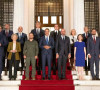
Volodymyr Zelenskyy's message to the citizens of Ukraine after returning from a diplomatic tour in Europe caused a lot of attention in Kosovo as well because, among the leaders he met the day before yesterday in Athens, the Ukrainian President skipped mentioning the name of Albin Kurti.
The fact that Zelenskyy, in a tweet, "forgot" that he had met with the Prime Minister of Kosovo at the meeting in Athens, on the occasion of two decades since the Thessaloniki Summit, is unlikely to be a mere political oversight by the Ukrainian President, but rather has a deeper political meaning and message, according to the interlocutors of Kosovo Online.
They also indicate that Zelenskyy, who came to the meeting in Athens as a special guest, by omitting Kurti from the list of meetings, practically completely cooled the expectations of the authorities in Pristina that Ukraine would recognize the independence of Kosovo.
"I spoke with the leaders of Bulgaria, Serbia, Croatia, Montenegro, North Macedonia, Moldova, and representatives of the European Commission. We are returning home with new political support and agreements that make Ukraine stronger," Zelenskyy said, without mentioning the Kosovo Prime Minister.
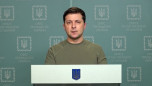
Zelenski obavestio građane Ukrajine o posetama, nije pomenuo susret sa Kurtijem
And the messages that Zelenskyy sent from Athens itself, especially after the meeting with Serbian President Aleksandr Vucic, had an unexpected tone for Pristina. Namely, he stated that he had talked with Vucic about "respect for the UN Charter and the inviolability of borders" and pointed out that "mutual support for territorial integrity and sovereignty is an important part of the partnership between Ukraine and Serbia."
Zelenskyy's messages were received in Pristina as a "cold shower", especially considering that Kurti and his closest associates are using the Ukrainian-Russian conflict and the fact that Belgrade did not join the sanctions against Moscow as one of the arguments to position Kosovo as "the biggest supporter of Kyiv in the region". The former mayor of Pristina, Shpend Ahmeti, also "reprimanded" Zelenskyy for his forgetfulness, telling him that he "thought he met the Prime Minister of Kosovo in Athens."
Stefan Surlic, Assistant Professor at the Faculty of Political Sciences in Belgrade, tells Kosovo Online that Zelenskyy's message about respecting mutual territorial integrity and sovereignty means that Ukraine will certainly not recognize Kosovo's independence in the future.
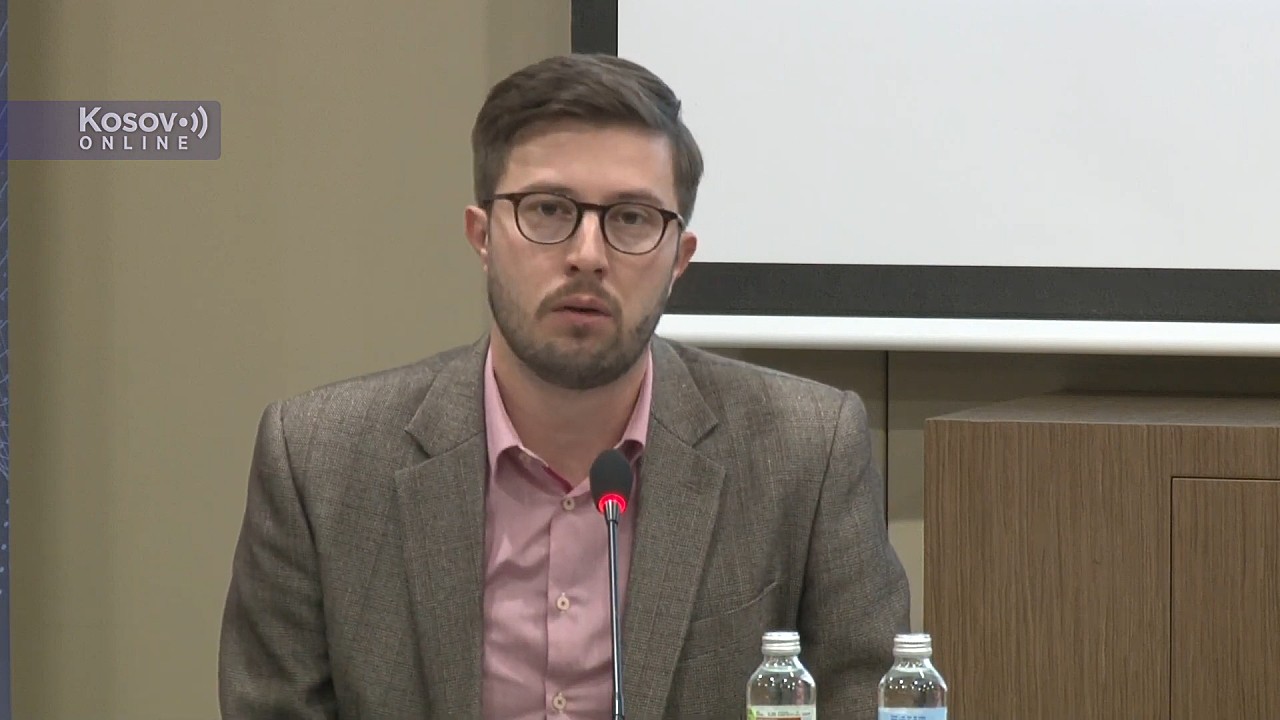
"Many hoped and expected that the main contribution of the meeting in Athens would be the pressure of the European leaders, but also Kurti himself, on the Ukrainian President to gradually soften his position on the issue, that is, to recognize Kosovo. There were several signals that it would be a great moral victory if only at this moment Ukraine, on which all the eyes of the world are focused, would make that move. Some European representatives, including MEP Viola von Cramon, are sending messages that it is a big disappointment that Ukraine did not do it and they are looking for excuses as to why it didn't happen, although it was expected. At various forums and gatherings, there were 'whispers' about how Ukraine would change its position in the coming period. But, after the meeting between Zelenskyy and Vucic, it is clear that nothing will come of it," Surlic says.
He believes that the omission of Kurti from the list of meetings that Zelenskyy had in the capital of Greece cannot be considered as an overlook.
"The fact that he did not mention Kurti only confirms the position that Zelenskyy expressed about the mutual respect for the territorial integrity of Serbia and Ukraine, as well as that he views Kosovo only as an entity, and not as a state representative at the meeting in Athens. This is important for Serbia, especially since is in some way 'branded' in that European perspective as a Russian ally in the Balkans, which is an enemy of Ukraine. After this meeting, the fact is that Serbia once again stood side by side with countries that respect the territorial integrity and sovereignty of Ukraine. After all, Belgrade has been saying that since the beginning, but this has further mitigated the negative effect due to the non-introduction of sanctions. In Athens, it was shown that this was not an obstacle for the Ukrainian side to hold a direct meeting between Zelenskyy and Vucic, to confirm respect for the principle of territorial integrity and to extend each other a kind of support," Surlic points out.
He adds that the main trump card was knocked out of the hands of those who wanted to use the war in Ukraine as a means of putting pressure on Serbia.
"In Kyiv, they are also aware of the implications that a possible change of attitude towards Kosovo would have for them. It would open a Pandora's Box of interpretations. Officials in Kyiv are also aware that their act of recognition of Kosovo's independence would automatically serve as an argument for a different interpretation and the status of Crimea, Donetsk, Luhansk, and other areas that are currently cut off from Ukraine," our interlocutor believes.
He also points out that Russia has nothing to blame Serbia for, which has not supported Moscow's actions in Ukraine from the beginning, but because of the past and NATO aggression, it does not consider it moral to talk about sanctions at this moment, especially if they would affect the citizens of Russia.
"This does not diminish the fact that in a political sense, Serbia condemned the acts of Russia, and voted for resolutions in the UN. Essentially, Russia has nothing to blame Serbia for, it is in line with international law, aware of the very difficult positions of our country, especially in the context of the struggle to determine the final status of Kosovo. No one can object to Serbia's clear and principled policy," he concludes.
Nemanja Zavisic, an analyst at the Center for Social Stability, is of the opinion that the fact that of all the politicians present, Zelenskyy was the only one who did not meet bilaterally with Kurti, is a clear message that relations between Serbia and Ukraine are still good and stable.
"It is also a good thing that Zelensky confirmed that Ukraine would continue to respect the territorial integrity and sovereignty of Serbia, and in that sense, I hope he put an end to the story that his country will recognize the so-called Kosovo. President Vucic skilfully used this meeting in Athens to send key political messages, which are that Serbia will continue to lead its policy sovereignly and independently, that even though it has been quite betrayed, it still remains on the European path because it is in the interest of its citizens, as well as that it will not spoil its relations with traditional friendly countries such as Russia and China," Zavisic states.
He says that there is no criticism from the public regarding the meeting between Vucic and Zelenskyy and reminds that Ukraine is an internationally recognized country that respects the territorial integrity and sovereignty of Serbia and that we as a people and a country have not had any conflicts with them so far.
"In that sense, I don't see anything controversial in that meeting, especially if you take into account that President Vucic directly communicated our country's policy to Zelenskyy, which boils down to two principles - respecting international law and, in principle, not imposing sanctions on anyone when it is not in our interest, and especially not to friendly countries like Russia. In Athens, President Vucic once again showed how one should fight for his country. He consistently defended our national interests and official state policy," our interlocutor says.
He adds that the key purpose of the informal meeting in Athens was for the EU to show that it is still in Brussels' strategic interest that the countries of the Western Balkans remain committed to the European path.
"This year marks the 20th anniversary of the famous summit in Thessaloniki when the EU made a promise to the countries in this region that they would join full membership in the Union. That promise has not been fulfilled even two decades later, and Euroscepticism is growing among citizens, as expected and justified. This meeting was aimed at putting the topic of European integration of the Western Balkan countries high on the agenda again, from which it had already been removed for a long period of time," Zavisic points out.
Political analyst Shkelzen Maliqi tells Kosovo Online that perhaps there is some hidden meaning in the fact that Zelenskyy "forgot" Kurti.
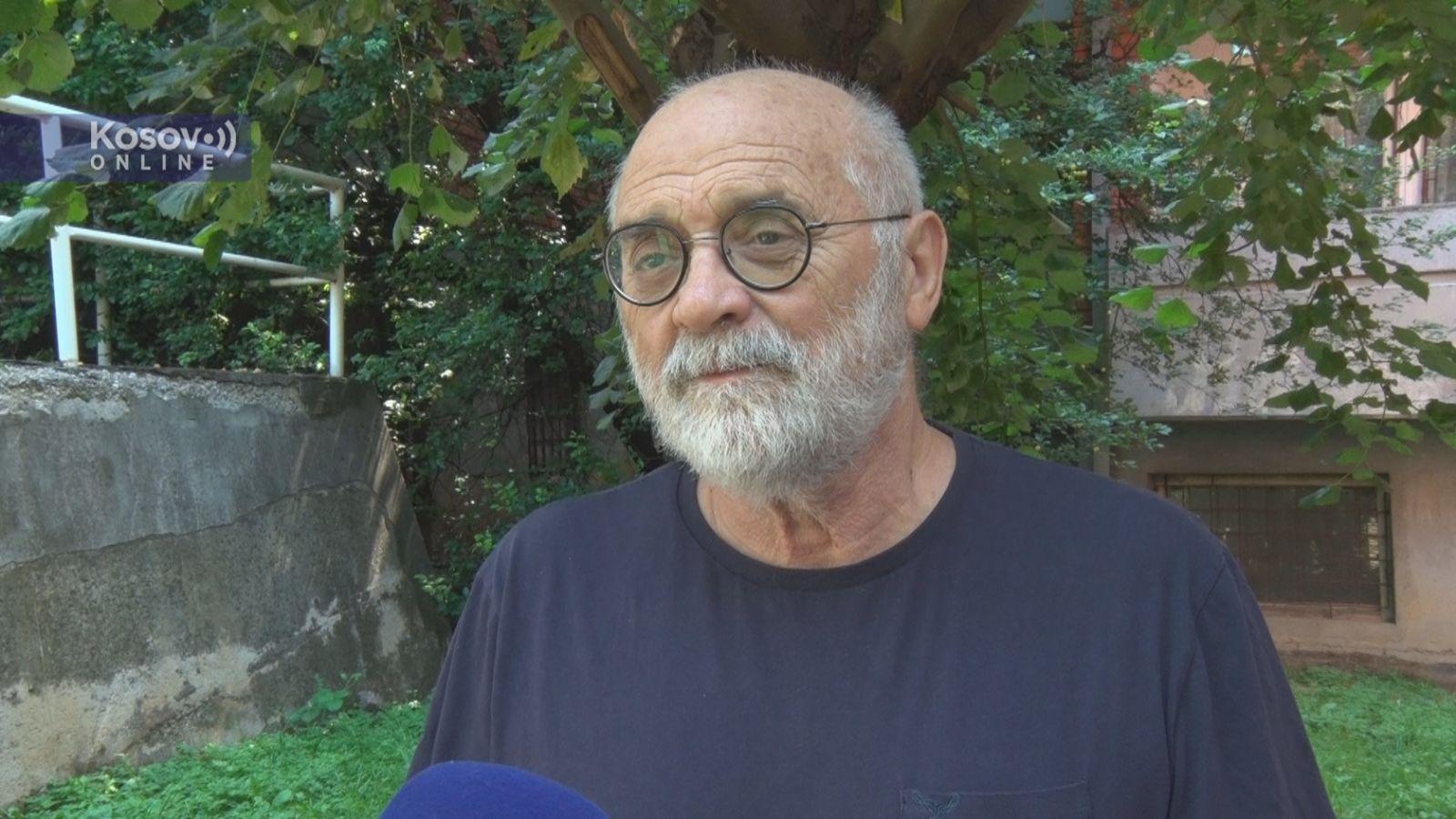
"It could be an oversight, a political overlook, or a certain signal of deeper meaning; Zelenksyy should be asked that. In Ukraine, there is this initiative to recognize independent Kosovo; I don't know how realistic and possible it is to happen under these circumstances. I think that Ukraine will not recognize Kosovo anytime soon," Maliqi says.
The fact that Zelenskyy sent a message about respecting the Charter of the United Nations and the inviolability of borders means for Maliqi that official Kyiv will stick to the principles that Belgrade insists on.
"It may mean something to Belgrade because of Resolution 1244 of the UN Security Council, but that document is something that is only on paper and is not something that is effective. The Resolution is overcome by the very fact that more than 100 countries have recognized Kosovo, that it is practically recognized by the entire West, and that it is possible that some of the five EU members who do not recognize may change their position. It is expected that the agreement between Serbia and Kosovo will move things from the 'dead end'. Certainly, it is a situation that must be resolved as soon as possible." Maliqi says.
comments